Petrol and Diesel Price Hike of Rs 4 to 5 Per Litre Under Government Consideration: First Fuel Price Increase in Four Years Could Come Within Days

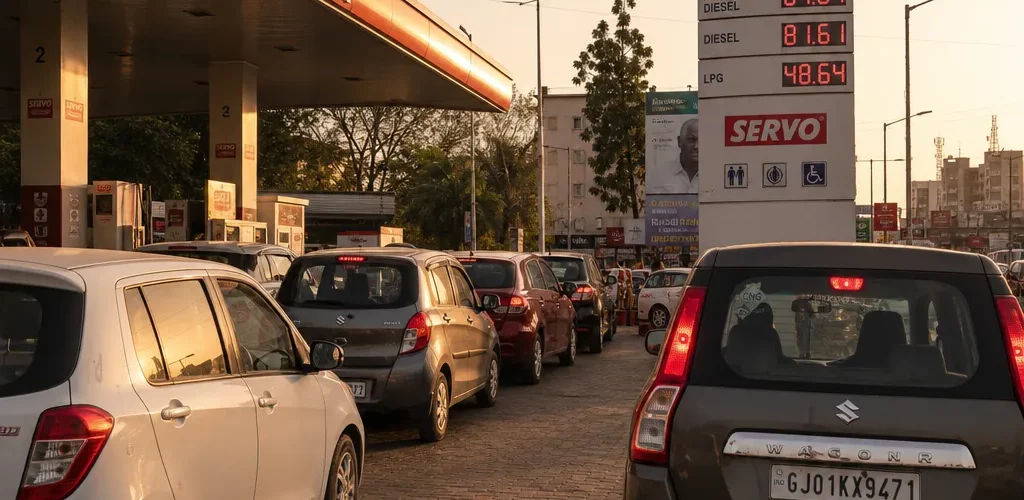
Government Sources Confirm Petrol and Diesel Price Revision Under Active Discussion
Top official sources have confirmed that the Indian government is actively considering a long-awaited revision in retail fuel prices, with petrol and diesel likely to be hiked by Rs 4 to 5 per litre. Domestic LPG cylinders may also see an increase of Rs 40 to 50 per cylinder. If approved, this would mark the first increase in petrol and diesel prices in nearly four years, ending the longest price freeze in India’s fuel pricing history. A final decision is expected within the next five to seven days.
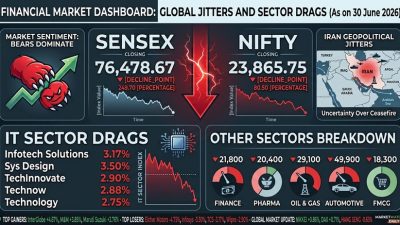
The potential revision comes at a time when global crude oil markets have been thrown into turmoil by the ongoing military conflict in West Asia and the disruption of shipping through the Strait of Hormuz. Brent crude oil has been trading above $120 per barrel for weeks, and Indian financial markets have already shown significant volatility in response to the energy price shock.
Why Fuel Prices Must Rise: The Rs 270 Billion Monthly Drain
Retail petrol and diesel prices in India have been effectively frozen since 2022, even as global crude oil prices have surged dramatically. State-run oil marketing companies — Indian Oil Corporation (IOCL), Bharat Petroleum Corporation Limited (BPCL), and Hindustan Petroleum Corporation Limited (HPCL) — have been absorbing the difference between their procurement costs and the retail selling price, resulting in massive accumulated losses.
According to Kotak Institutional Equities, the three companies are collectively losing approximately Rs 270 billion (Rs 27,000 crore) per month due to the frozen prices. The brokerage estimated in its April report that petrol and diesel prices may ultimately need to rise by Rs 25 to 28 per litre if they were to fully align with international crude oil prices at the $120 per barrel level. The proposed Rs 4 to 5 increase, therefore, represents a calibrated first step rather than a complete realignment.
The government had already taken partial measures to ease the burden. In March 2026, it cut excise duty by Rs 10 per litre and reinstated windfall export taxes on petroleum products. However, analysts described these as temporary relief measures that did not address the fundamental gap between cost and retail price. The strong GDP growth of 7.6 per cent in FY26 has provided the government with some fiscal room, but the sustained drain on oil company finances is unsustainable in the medium term.
The Political Calculus Behind the Timing
The timing of the proposed hike is significant. The West Bengal assembly elections concluded with Phase 2 voting on 29 April, and Tamil Nadu went to the polls in a single phase on 26 April. Counting for both states is scheduled for 4 May 2026. The government’s decision to freeze prices through the election period was widely expected, and the possibility of a revision emerging within days of the last vote being cast aligns with a pattern seen in previous election cycles.
The Ministry of Petroleum and Natural Gas issued a statement on 1 May categorically denying that any proposal for a fuel price hike was under consideration, calling media reports “mischievous and misleading.” The Ministry added that India is the only country where petrol and diesel prices have not increased in the last four years. However, multiple news outlets have cited unnamed official sources who confirmed that internal deliberations are ongoing, with a decision expected within a week.
This pattern — public denial followed by eventual revision — has been observed before. Government officials are understood to be evaluating multiple options that balance fiscal stability against the political risk of raising household fuel costs at a time when food prices remain elevated.
Impact on Consumers and the Broader Economy
A Rs 4 to 5 per litre increase in petrol and diesel would push retail prices to approximately Rs 107 to 108 per litre for petrol and Rs 94 to 95 per litre for diesel in Delhi. In Mumbai, where state taxes are higher, petrol could cross Rs 115 per litre. The impact on household budgets would be direct — affecting commuting costs, auto-rickshaw and taxi fares, and the cost of goods transported by road.
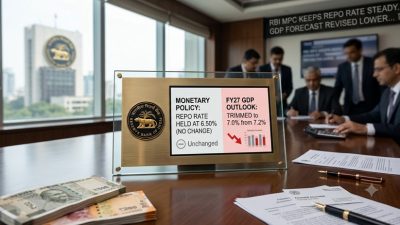
Diesel, which is the primary fuel for India’s trucking fleet, has an outsized impact on inflation. An increase in diesel prices raises transportation costs for virtually every consumer good, from food grains to manufactured products. The Reserve Bank of India has already flagged energy prices as a key upside risk to its inflation forecast for FY27, and a fuel price hike could push consumer price inflation above the RBI’s 4 per cent target in the near term.
On the other hand, continued losses by oil marketing companies pose a risk to their capital expenditure plans and to the broader equity market sentiment. IOCL, BPCL, and HPCL shares have been under significant pressure, and analysts have warned that without price revisions, the companies may need to scale back investment in refinery upgrades and clean fuel infrastructure.
What About the Rs 40 to 50 Domestic LPG Hike
In addition to petrol and diesel, sources indicated that domestic LPG cylinders could see an increase of Rs 40 to 50. Currently, a 14.2 kg domestic LPG cylinder costs approximately Rs 803 in Delhi after the government subsidy. An increase of this magnitude would bring the price to around Rs 843 to 853. While modest compared to the Rs 993 hike on commercial LPG announced on 1 May, any increase in household cooking gas prices is politically sensitive, particularly for lower-income families and rural households.
The government’s Ujjwala scheme, which provides free LPG connections to below-poverty-line families, currently covers over 10 crore households. These beneficiaries receive a subsidy that partially offsets the market price, but any increase in the base price reduces the effective relief provided by the subsidy. Consumer groups have urged the government to increase the per-cylinder subsidy for Ujjwala beneficiaries if domestic LPG prices are revised upward.
Global Crude Oil Outlook and India’s Options
The trajectory of global crude oil prices will be the decisive factor in how aggressively the government revises fuel prices. The conflict in West Asia shows no immediate signs of resolution, and the UAE’s departure from OPEC and OPEC+ has introduced additional uncertainty into global oil supply forecasts. India’s strategic petroleum reserves, maintained at locations in Visakhapatnam, Mangalore, and Padur, provide approximately 45 days of import cover — a limited buffer against prolonged supply shocks.
Economists have suggested that a phased approach to price revision — small increases spread over multiple months — would be less disruptive than a single large adjustment. The proposed Rs 4 to 5 increase appears to follow this logic, with the understanding that further revisions may follow if crude prices remain elevated.
For India’s 140 crore citizens, the next few days will determine whether the fuel price freeze that has held since 2022 finally comes to an end.