India Housing Sales Fall 4 Per Cent in Q1 2026 as Mumbai and Delhi-NCR Drag Amid Global Uncertainty

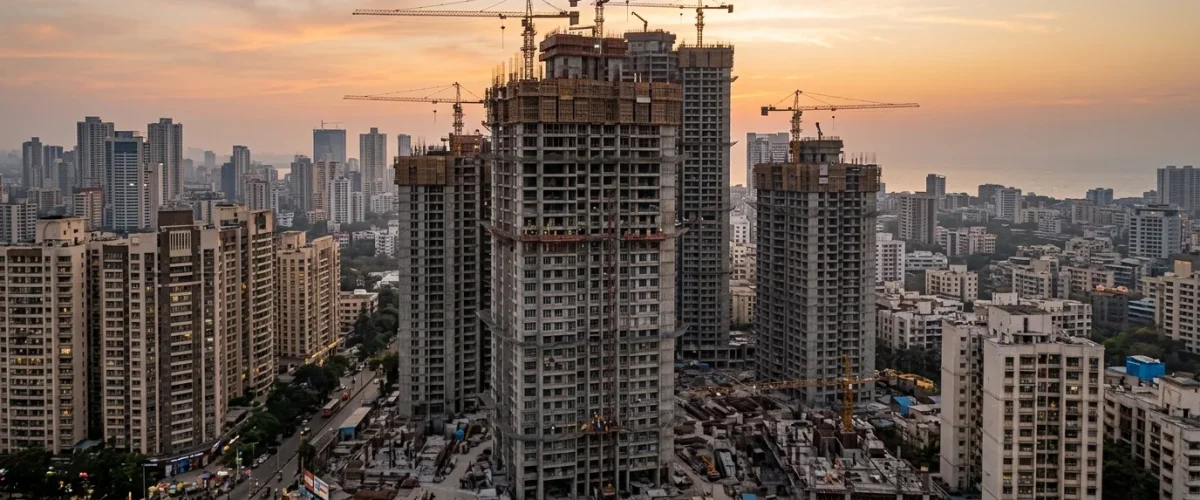
Housing sales across India’s top eight cities fell 4 per cent year on year in the first quarter of 2026 to 84,827 units, according to Knight Frank’s latest quarterly report released on 7 April. The decline signals early signs of market recalibration after years of sustained growth, with geopolitical uncertainties and elevated prices tempering buyer sentiment in key markets.
Mumbai, Delhi-NCR and Pune Lead the Decline
Mumbai recorded the steepest absolute drop, with sales falling 7 per cent to 23,185 units from 24,931 units in Q1 2025. The city remains India’s largest residential market by volume but faces mounting affordability pressure as average ticket sizes climb beyond Rs 1.5 crore in most micro-markets.
Delhi-NCR sales declined 11 per cent to 12,734 units, while Pune mirrored the slide with an identical 11 per cent drop to 12,711 units. Knight Frank attributed the NCR slowdown partly to global uncertainties, including the US-Iran conflict, which dampened investor confidence during the quarter.
Southern Markets Show Resilience
In contrast to the northern and western markets, demand in southern India remained firm. Bengaluru grew 5 per cent to 13,092 units, supported by sustained technology sector hiring and a steady flow of new professional migrants. Hyderabad edged up 1 per cent to 9,541 units, and Chennai outperformed all cities with a 9 per cent increase to 4,763 units.
Ahmedabad and Kolkata also recorded positive growth, reinforcing the view that India’s real estate market is increasingly divergent across geographies rather than moving as a single bloc.
Luxury Segment Continues to Outperform
Despite the overall dip, luxury and premium housing maintained strong momentum. Premium housing prices rose up to 36 per cent in early 2026, driven by India’s expanding base of high-net-worth individuals and a preference for amenity-rich, branded developments.
ANAROCK Group Chairman Anuj Puri noted that “the luxury segment is the most resilient corner of the market.” While mid-income and affordable segments face headwinds from rising prices, ultra-premium projects in Mumbai’s Worli and South Delhi’s Lutyens zone continue to sell out within weeks of launch.
New Supply Also Moderates
New residential launches fell 2 per cent to 94,855 units during the quarter. NCR recorded the sharpest decline in new launches at 8 per cent, followed by Hyderabad and Kolkata at 6 per cent each. Bengaluru, Chennai and Ahmedabad bucked the trend with increased launch activity, reflecting stronger developer confidence in these markets.
The supply moderation may prove beneficial in the medium term. With unsold inventory declining steadily over the past three years, developers have maintained pricing discipline. RERA compliance and improved transparency have also contributed to healthier market dynamics compared to the 2015-2019 period.
Outlook for the Rest of 2026
Analysts expect the second half of 2026 to see a gradual recovery as geopolitical tensions ease and interest rate stability supports buyer confidence. The impact of rising oil prices and the weak rupee on India’s broader economy will be a key variable. For now, the business landscape in Indian real estate remains cautiously optimistic, with fundamentals intact despite the quarterly dip.