TMC Challenges West Bengal Election Results in Supreme Court Claiming SIR Voter Deletions Affected Outcomes in 31 Assembly Seats

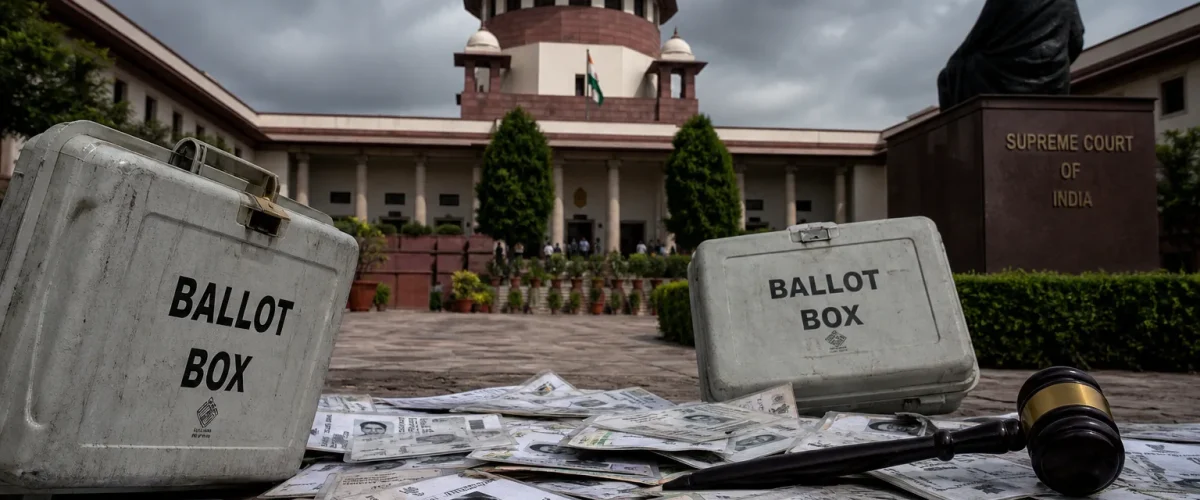
The Trinamool Congress (TMC) mounted a dramatic legal challenge in the Supreme Court on Monday, alleging that large-scale deletion of voter names during the Special Intensive Revision (SIR) of electoral rolls had materially influenced election outcomes in West Bengal. Senior advocate Kalyan Banerjee, appearing for the TMC, told the bench that in at least 31 Assembly constituencies, the margin of victory was lower than the number of voters removed during the SIR exercise — a claim that, if proven, could have far-reaching implications for the legitimacy of the BJP’s historic election victory in the state.
The hearing, before a bench comprising Chief Justice Surya Kant and Justice Joymalya Bagchi, laid bare the TMC’s central argument: that the systematic removal of voters from electoral rolls — many of whom were allegedly legitimate electors — had tipped the scales in closely contested seats, enabling the BJP to win the 207 of 294 seats that gave it an unprecedented majority in the state.
The Numbers That Tell the Story
Banerjee presented the court with detailed constituency-level data that painted a disturbing picture of the SIR process. In one particularly striking example, he told the bench that a TMC candidate had lost by just 862 votes, while more than 5,000 names were deleted from the electoral rolls in that constituency alone. The implication was clear: had those deleted voters been allowed to exercise their franchise, the outcome could have been different.
The advocate further argued that the overall vote difference between the TMC and the BJP in the state stood at nearly 32 lakh votes, while over 35 lakh appeals challenging voter deletions were still pending disposal. The figure is staggering — it suggests that the number of contested deletions exceeds the total vote margin between the two parties, raising fundamental questions about the integrity of the electoral process.
Senior advocate Menaka Guruswamy, representing the petitioners, raised additional concerns about delays in the appellate mechanism dealing with voter deletion disputes. She told the bench that at the current pace, appellate tribunals could take nearly four years to clear the backlog of pending appeals — a timeline that would render the remedy meaningless, as the current assembly’s term would be well underway by then.
The Court’s Response
The Supreme Court’s response was measured but significant. The bench observed that if the margin of defeat was indeed lower than the number of deleted voters, affected parties were “free to move an appropriate application before the court.” The observation assumes importance because the court, during an earlier hearing, had indicated that cases involving narrow victory margins and disputed voter deletions may warrant judicial scrutiny.
However, the court stopped short of ordering immediate relief, such as a stay on the formation of the government or a direction for re-election in affected constituencies. Instead, it suggested that the existing system for hearing electoral roll appeals may require “strengthening and procedural improvements to ensure timely adjudication.”
The Election Commission of India (ECI), for its part, maintained that the legal position on the issue was “absolutely clear” and reiterated that the appropriate remedy in election-related disputes is the filing of an election petition under the Representation of the People Act. The ECI’s stance reflects its consistent position that the SIR process was conducted in accordance with established procedures and that individual grievances should be addressed through existing legal channels.
What Is the SIR Process?
The Special Intensive Revision (SIR) is an exercise conducted by the Election Commission to update and clean electoral rolls. It involves door-to-door verification of voter details, identification of duplicate entries, removal of deceased voters, and deletion of names where the elector is found to have shifted residence or is otherwise ineligible. The process is routine in electoral management, but in West Bengal, the scale and timing of the exercise became deeply controversial.
The TMC has alleged that the SIR in West Bengal was conducted with unusual intensity in constituencies where the party had strong support bases, particularly among Muslim-majority areas and urban slum clusters. The party claims that genuine voters were deleted without adequate notice or opportunity to correct errors, effectively disenfranchising lakhs of citizens before the election.
The BJP has dismissed these allegations as “excuses for electoral failure,” arguing that the SIR was conducted transparently and that the TMC’s loss was the result of anti-incumbency, governance failures, and the consolidation of the Hindu vote. The post-election violence in the state and the subsequent political developments have only deepened the bitterness between the two sides.
I-PAC Controversy Adds Another Layer
Adding to the TMC’s woes is an internal controversy over the role of I-PAC (Indian Political Action Committee), the political consultancy firm founded by Prashant Kishor, which managed the party’s election campaign. Several TMC leaders have publicly alleged that I-PAC “hijacked and sabotaged” the party’s electoral strategy, leading to a disastrous campaign that failed to counter the BJP’s messaging effectively.
A former TMC spokesperson, Riju Dutta, who was suspended from the party for making anti-party remarks, went further, alleging corruption within the organization and claiming that former Chief Minister Mamata Banerjee’s defence of I-PAC during ED raids “could land her in jail.” The internal recriminations suggest that the TMC’s legal challenge is as much about finding external explanations for its defeat as it is about genuine concerns over electoral integrity.
What Happens Next
The legal battle is expected to continue over the coming weeks, with the TMC likely to file detailed applications in specific constituencies where it claims the SIR deletions affected outcomes. The Supreme Court’s observation that affected parties can move applications gives the TMC a procedural pathway, but the burden of proof will be substantial — the party will need to demonstrate not just that voters were deleted, but that those specific deletions would have changed the result in each constituency.
For the BJP, the TMC’s legal challenge is an irritant rather than a threat. The party’s 207-seat majority is overwhelming, and even if a handful of seats were to be overturned on legal grounds, it would not affect the government’s stability. Chief Minister Suvendu Adhikari has already taken charge and begun implementing the new government’s agenda.
However, the symbolic and political significance of the Supreme Court hearing should not be underestimated. If the court eventually finds that the SIR process was flawed in specific constituencies, it could set precedents for electoral roll management across India and force the Election Commission to reform its verification procedures. For the TMC, even a partial legal victory would provide validation of its narrative that the Bengal election was not fought on a level playing field.

- Indian Army Gets New Chief as General Dwivedi Hands Over Command Amid Push for Indigenous Defence Tech - July 1, 2026
- Ayodhya Ram Temple Donation Scandal Deepens as Trustees Resign and SIT Arrests Eight - June 29, 2026
- Bengal Seven Weeks On: Modi’s Historic Win and the Questions That Won’t Go Away - June 28, 2026