West Bengal Assembly Elections 2026: Repolling Ordered at 15 Booths in Diamond Harbour and Magrahat Paschim After EVM Irregularity Complaints

Election Commission Orders Repolling at 15 Polling Stations in South 24 Parganas District
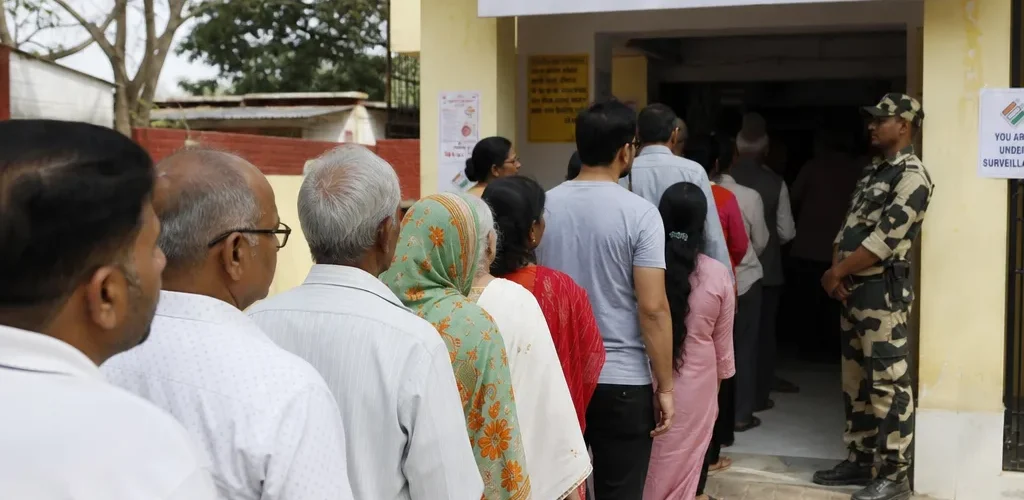
Repolling began at 15 polling stations across West Bengal’s South 24 Parganas district on Saturday, 2 May 2026, after the Election Commission of India (ECI) ordered fresh voting following multiple reports of irregularities during the second phase of assembly elections held on 29 April. The affected booths are spread across two constituencies — 11 in Magrahat Paschim and 4 in Diamond Harbour — and voting was conducted from 7 AM to 6 PM under heightened security and strict monitoring.
The ECI’s decision to nullify voting at these 15 stations came after special observers appointed by the commission conducted detailed inspections and identified what were officially described as “disturbing findings.” The move adds another layer of controversy to the West Bengal assembly elections 2026, which have been among the most bitterly contested in the state’s history.
What Irregularities Were Found at the 15 Booths
According to sources within the Election Commission, the complaints that triggered the repolling order included several serious allegations. Multiple CCTV cameras installed at polling stations were reported to have been deliberately disabled or malfunctioned during voting hours, making it impossible to verify the conduct of polling through video evidence. In some booths, party symbols on electronic voting machines (EVMs) were allegedly obscured with tape, potentially influencing voter choice by making it difficult to identify and select the preferred candidate.
Returning Officers from both constituencies submitted detailed reports to the ECI documenting the irregularities. Opposition parties, primarily the Bharatiya Janata Party (BJP), had demanded repolling at a much larger number of booths, alleging widespread manipulation in several Phase 2 constituencies. However, the poll body limited its order to 15 stations based on verified inputs from observers and returning officers, rejecting demands for broader repolling.
The Trinamool Congress (TMC), which is the ruling party in West Bengal under Chief Minister Mamata Banerjee, has denied all allegations of irregularities, calling them politically motivated attempts by the opposition to undermine the credibility of the electoral process.
Security Arrangements for the Repoll
The Election Commission deployed enhanced security measures for Saturday’s repolling. Central Armed Police Forces (CAPF) were deployed at all 15 polling stations, maintaining the same level of paramilitary deployment that was in place during the original Phase 2 voting. Over 700 CAPF companies remain stationed in West Bengal ahead of the 4 May counting day to prevent post-poll violence.
Polling officers at the 15 repolling stations were instructed to ensure that all CCTV cameras were functional throughout the day, with live feeds being monitored by observers in real time. Additional micro-observers were posted at each station to document the voting process and flag any irregularities immediately. The EVMs used in Saturday’s repolling were fresh machines that had been tested and sealed in the presence of representatives from all contesting parties.
Voter Turnout During the Repoll
Early reports indicated strong voter turnout at the repolling stations. By mid-afternoon, Magrahat Paschim had recorded a turnout of approximately 38 per cent, while Diamond Harbour was at approximately 35 per cent. Election officials expressed satisfaction with the conduct of the repoll, noting that no significant complaints had been received during the day. The relatively lower turnout compared to the original polling day — the Phase 2 overall turnout had exceeded 80 per cent — was partly attributed to voter fatigue and the inconvenience of a second polling day on a weekend.
Broader Context of the West Bengal 2026 Elections
The repolling controversy is the latest in a series of disputes that have defined the West Bengal 2026 assembly elections. The two-phase election — covering all 294 assembly constituencies — saw Phase 1 record a historic 92.59 per cent voter turnout on 25 April and Phase 2 on 29 April cover the remaining 142 constituencies. The election has been characterised by intense polarisation between the TMC and the BJP, with allegations of booth capturing, voter intimidation, and EVM manipulation from both sides.
Exit polls released on 1 May predicted a tight contest, with most surveys giving the BJP a narrow edge with approximately 150 to 192 seats in the 294-member assembly. The TMC, which has governed West Bengal since 2011, is projected to win between 90 and 130 seats in most surveys, though the party has dismissed exit polls as unreliable predictors of actual results.
The counting of votes for both phases is scheduled for 4 May 2026, and the political temperature in the state remains high. Mamata Banerjee has made repeated visits to the strongrooms where EVMs are stored, alleging that the security of the machines could be compromised. The BJP has accused her of attempting to undermine public confidence in the electoral process.
What the Repolling Means for the Final Results
While 15 booths represent a tiny fraction of the total polling infrastructure in West Bengal — Phase 2 alone involved thousands of polling stations — the outcome in closely contested constituencies can hinge on a few hundred votes. Both Magrahat Paschim and Diamond Harbour are seats where the TMC and BJP have historically been competitive, and a swing of even a few percentage points at the repolling stations could influence the final tally.
The repolling results will be counted alongside the original votes on 4 May. Election Commission officials confirmed that the process for integrating repolling data into the overall count follows established protocols and that there would be no delay in the declaration of results due to the repoll.
The credibility of India’s electoral machinery remains a matter of intense debate, and the political transitions across multiple states in 2026 have kept the Election Commission at the centre of public scrutiny. The commission’s decision to order repolling — while limited in scope — has been viewed by some analysts as an attempt to demonstrate its commitment to free and fair elections in the face of mounting criticism from opposition parties.
All eyes now turn to 4 May, when the votes that will determine West Bengal’s next government will be counted.

- Fentanyl Vaccine Breakthrough: Scripps Research Develops Shot That Blocks Deadly Overdoses Before They Reach the Brain - June 13, 2026
- Nipah Virus Returns to Kerala — First Case of 2026 Confirmed, State Declares High Alert - June 12, 2026
- Jill Biden Reveals She Wanted to Keep PM Modi’s 7.5-Carat Diamond Gift but Returned It After State Department Valued It at $20,000 - June 8, 2026