West Bengal Exit Poll 2026: BJP Predicted to Win 192 Seats as EVM Controversy Erupts Before May 4 Counting

BJP Set to Breach Bengal With Massive Mandate, Says Today’s Chanakya Exit Poll
The West Bengal Assembly elections 2026 have reached a fever pitch as exit polls released on April 30 predict a historic victory for the Bharatiya Janata Party in the state. According to Today’s Chanakya exit poll, the BJP is projected to win 192 seats (plus or minus 11 seats) out of the 294-member assembly, while the ruling Trinamool Congress under Chief Minister Mamata Banerjee is predicted to secure around 100 seats (plus or minus 11 seats). Other parties and independents are forecast to win roughly two seats. If these projections hold, it would mark the end of the TMC’s 15-year rule in West Bengal and a seismic shift in the state’s political landscape.
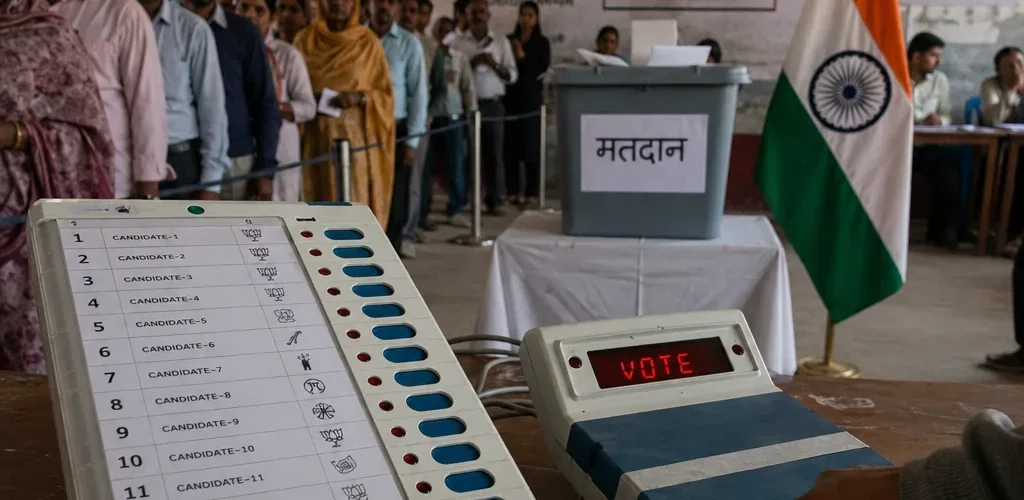
The elections were held in two phases on April 23 and April 29, with Phase 2 covering over 142 constituencies across the state. The actual results will be declared after votes are counted on May 4, 2026. However, the exit poll predictions have already triggered a political storm, with the TMC alleging potential tampering and the BJP asserting its confidence in winning a historic mandate.
Mamata Banerjee Visits Bhabanipur Strongroom, Flags Counting Irregularities
In a dramatic late-night development, Chief Minister Mamata Banerjee personally visited the EVM strongroom in Bhabanipur early on Friday, May 1. She warned against any attempt to tamper with the counting process and alleged possible malpractice. The visit came just hours after TMC workers launched a sit-in protest outside a strongroom at Netaji Indoor Stadium in central Kolkata, where electronic voting machines for several assembly constituencies in north Kolkata are stored.
The Trinamool Congress has alleged that ballot boxes were opened without the presence of authorised party representatives, raising serious concerns about the integrity of the counting process. BJP leaders have dismissed these claims as “pure rumours” and accused the TMC of creating a narrative to preemptively discredit the election results. The Election Commission has not yet issued a formal response to the allegations but is expected to address them before counting begins on May 4.
Security has been tightened across the state, with 700 paramilitary companies deployed to prevent post-poll violence ahead of the counting day. The Central Armed Police Forces will remain stationed across all districts until the final results are declared and the situation is deemed stable.
2021 Exit Polls vs Reality: Why Bengal Remains Unpredictable
Political analysts are urging caution in interpreting these exit poll numbers, pointing to the 2021 West Bengal elections where exit polls had significantly underestimated the TMC’s eventual victory. In 2021, the aggregated “poll of polls” suggested Mamata Banerjee’s party would win around 156 seats while the BJP was projected to secure about 121 seats. The actual results told a dramatically different story. The TMC swept the elections with a commanding 215 seats, while the BJP managed only 77 seats.
The sharp gap between projections and results in 2021 continues to cast a long shadow over exit polls for Bengal. Several factors make the state notoriously difficult to predict, including the TMC’s grassroots organisational strength, the influence of local issues in individual constituencies, and the state’s complex caste and religious demographics. However, BJP leaders argue that 2026 is fundamentally different from 2021 given the party’s expanded ground-level organisation and the anti-incumbency wave against the Mamata government.
Key Factors Driving the BJP’s Predicted Surge
Home Minister Amit Shah has claimed that the BJP could win over 110 of the 152 seats that went to polls in Phase 1 alone. The party’s confidence stems from several factors. First, the BJP has made significant organisational investments in Bengal over the past five years, building booth-level committees across all 294 constituencies. Second, issues like the Sandeshkhali controversy, alleged corruption in government schemes, and deteriorating law and order have provided the party with a strong anti-incumbency narrative.
Third, the BJP’s aggressive Hindutva campaign, focusing on issues related to demographic change in border districts, has resonated with a section of Hindu voters in the state. Fourth, the party has fielded a mix of established leaders and new faces, with several TMC defectors strengthening its candidate list across multiple districts.
TMC’s Counter-Strategy and Mamata’s Last Stand
On her part, Mamata Banerjee has maintained that early voting trends suggest the TMC remains firmly in the lead. She has pointed to the party’s welfare schemes, including Lakshmir Bhandar (monthly cash transfer to women), free ration distribution, and Swasthya Sathi health insurance, as reasons why voters would continue to back the TMC. The party has also highlighted its development record in infrastructure, healthcare, and education over the past decade.
The TMC’s campaign has focused heavily on protecting “Bengali identity and culture” and has warned voters that a BJP government would impose “outside rule” on the state. Banerjee has personally led rallies in her Bhabanipur constituency and across south Bengal, which remains the party’s strongest region.
EVM Controversy Adds Fuel to Pre-Counting Tensions
The 2026 assembly elections across India have been closely watched, and the Bengal result is considered the most consequential. The EVM controversy has added a volatile dimension to the already tense political atmosphere. Social media is trending with hashtags related to “EVMs” and “Bengal Exit Poll,” with both parties mobilising their digital armies to shape the narrative.
Opposition leaders from other states, including the Congress, have demanded that the Election Commission ensure transparent and secure storage of all EVMs ahead of counting day. The TMC has also threatened to approach the courts if adequate safeguards are not put in place.
What Happens on May 4: The Road Ahead
Counting of votes is scheduled to begin at 8 AM on May 4 across all 294 constituencies simultaneously. The Election Commission has set up multi-tier security at every counting centre. Postal ballots will be counted first, followed by EVM counting rounds. Given the scale of the election and the tight security arrangements, final results are expected by late evening.
If the BJP does breach the 148-seat majority mark, it would be the first change of government in West Bengal in 15 years and only the second change in 34 years, following the TMC’s own landmark victory over the Left Front in 2011. A BJP government in Kolkata would give the party control of yet another major state, significantly strengthening its position in national politics ahead of the 2029 general elections.
For now, West Bengal holds its breath as the countdown to May 4 begins.
Browse more stories on Social Trends and Culture & Lifestyle on DailyTips.in.

- Fentanyl Vaccine Breakthrough: Scripps Research Develops Shot That Blocks Deadly Overdoses Before They Reach the Brain - June 13, 2026
- Nipah Virus Returns to Kerala — First Case of 2026 Confirmed, State Declares High Alert - June 12, 2026
- Jill Biden Reveals She Wanted to Keep PM Modi’s 7.5-Carat Diamond Gift but Returned It After State Department Valued It at $20,000 - June 8, 2026