Historic First: Women NDA Cadets Commissioned Into Indian Army and Air Force With Permanent Commission

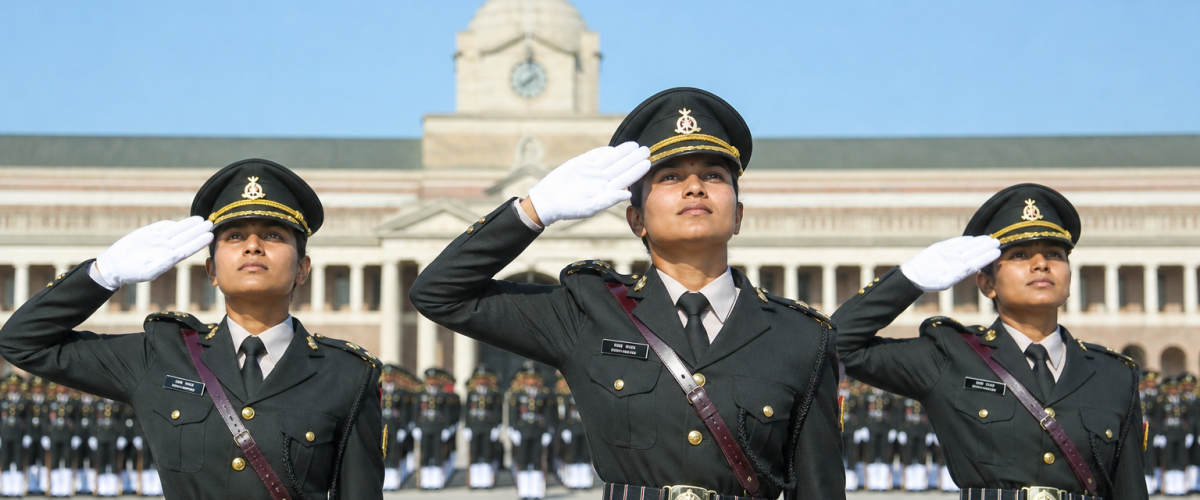
In a watershed moment for India’s military history, the first batch of women officers who joined the armed forces through the National Defence Academy (NDA) have been commissioned into the Indian Army and Indian Air Force with permanent commission from day one. The historic commissioning ceremony, held at their respective service academies on June 13, 2026, ends over seven decades of the NDA being an exclusively male institution and marks a fundamental shift in how India’s military approaches gender equality.
Of the 17 women who graduated from the NDA in 2025, ten have been commissioned into the Indian Army, six into the Indian Air Force, and three into the Indian Navy — each receiving permanent commission from the outset of their careers, a privilege that was previously unavailable to women officers in many branches of the armed forces.
Breaking a Seven-Decade Barrier
The National Defence Academy in Khadakwasla, Pune, was established in 1954 as the joint training institution for cadets of all three services. For 67 years, it admitted only male cadets, with women entering the armed forces through separate entry schemes such as the Short Service Commission. The Supreme Court of India’s landmark 2021 ruling directing the government to allow women to take the NDA entrance examination opened the doors, and the first batch of women cadets entered the academy in June 2022.
The journey from admission to commissioning was not without challenges. The women cadets underwent the same rigorous three-year training programme as their male counterparts — including physical training, weapons handling, drills, swimming, horse riding, and academic coursework. They lived in the same barracks environment, participated in the same outdoor exercises, and were held to identical performance standards across all evaluations.
“There was no dilution of standards at any point,” confirmed a senior NDA instructor. “These women earned their commission through the same blood, sweat, and tears as every NDA cadet before them. The only difference is that they had to do it while knowing the whole country was watching.”
Permanent Commission: A Game Changer
Perhaps the most significant aspect of this milestone is that the women officers have received permanent commission from day one. Previously, women entering the armed forces through the Short Service Commission route served on fixed-term contracts, typically of 10-14 years, with no guarantee of permanent absorption or career progression to senior ranks.
This limitation meant that women officers often faced career uncertainty, could not compete for command positions, and were effectively barred from reaching the highest ranks of military leadership. The NDA route eliminates this barrier entirely, placing women officers on the same career trajectory as their male peers from the moment of commissioning.
The implications are profound. These women officers can now aspire to command battalions, lead operational units, and eventually reach the rank of General or Air Chief Marshal — possibilities that were structurally denied to women in the Indian military until very recently. While the journey to senior leadership will take decades, the structural foundation has been laid.
Personal Stories of Determination
Behind the historic milestone are individual stories of extraordinary determination. Several of the commissioned officers come from military families, following in the footsteps of fathers and grandfathers who served in the armed forces. Others are first-generation military officers from civilian backgrounds, inspired by patriotism, the desire for adventure, or simply the conviction that gender should not determine who can serve their country.
The training period was physically and mentally demanding. NDA cadets undergo a gruelling regimen that includes long-distance runs, obstacle courses, combat training, and field exercises in diverse terrains — from the Western Ghats to desert conditions. The women cadets completed every element of this programme, and several earned distinction for their performance in specific disciplines.
Defence Minister’s Response
Defence Minister Rajnath Singh, who attended one of the commissioning ceremonies, described the occasion as “a proud moment for India” and a validation of the government’s commitment to gender equality in the armed forces. “These officers have proven that courage, discipline, and patriotism know no gender,” Singh said. “They will inspire generations of young women to consider military service as a viable and rewarding career.”
The Chief of Army Staff and the Chief of Air Staff both emphasised that the integration of women through the NDA route has proceeded smoothly, with no reported incidents of discrimination or harassment — a testament to the institutional preparation that preceded the women cadets’ entry and the professionalism of the NDA’s training staff.
Global Context and the Road Ahead
India’s move aligns with a global trend toward greater gender integration in military forces. Countries including the United States, United Kingdom, Israel, and Australia have progressively opened combat and leadership roles to women over the past two decades. India’s NDA integration, while later than some peer nations, has been notable for its comprehensive approach — placing women in the same training pipeline as men from the earliest stage of military education.
Challenges remain. The infrastructure at some military installations still needs adaptation to accommodate mixed-gender units. Cultural attitudes within the broader military establishment, while improving, continue to evolve. And the true test of integration will come as these officers progress through their careers, take on command responsibilities, and serve in operational environments.
But for now, the commissioning of India’s first NDA women officers stands as an unambiguous milestone — a moment when seven decades of tradition gave way to a more inclusive vision of military service, and when 17 young women proved that they belong on any parade ground, in any cockpit, and at any command post in the Indian armed forces.
Also Read
- India Fast-Tracks Rs 27000 Crore Military Satellite Constellation With 52 Satellites for Round-the-Clock Defence Surveillance Across Indo-Pacific
- DRDO and Indian Air Force Successfully Test TARA Indigenous Glide Weapon System Off Odisha Coast in Major Defence Milestone
- India Plans 55-Satellite Military Constellation for Round-the-Clock Defence Surveillance
- ICC Women’s T20 World Cup 2026 Kicks Off in England — India Set for Blockbuster Pakistan Clash on June 14
- Mission Sudarshan Chakra Gets Fresh Push: Rajnath Singh Unveils India’s Multi-Layer Missile Defence Roadmap