India Bans Telegram Before NEET Re-Test; CEO Pavel Durov Accuses Reliance of Global Sabotage

In an extraordinary collision of technology regulation, exam security, and corporate rivalry, India has temporarily banned the Telegram messaging platform ahead of the NEET UG re-test scheduled for June 21, while Telegram CEO Pavel Durov has accused Indian telecom giant Reliance of sabotaging Telegram’s global network — allegedly to benefit Meta’s WhatsApp. The twin controversies have thrust the messaging app into the centre of India’s most contentious debates about digital governance, exam integrity, and corporate power.
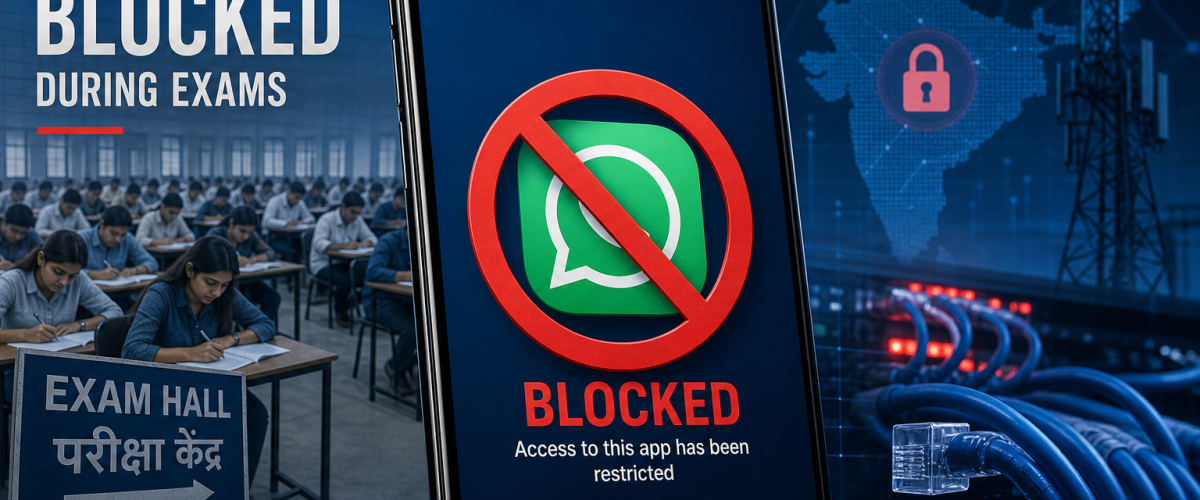
The Central Government’s decision to impose a temporary ban on Telegram was announced as part of a comprehensive set of measures aimed at preventing the circulation of examination-related material and curbing organised cheating networks. The ban, which took effect this week and will remain in place until the NEET UG re-test is completed, follows multiple instances of leaked exam papers being distributed through Telegram channels — a problem that has plagued India’s competitive examination system for years.
Why Telegram? The NEET Paper Leak Crisis
Telegram has become the platform of choice for organised cheating networks in India due to its unique combination of features: end-to-end encrypted channels, the ability to create anonymous groups, self-destructing messages, and limited cooperation with law enforcement. These features, designed to protect privacy, have been exploited by criminal networks that sell leaked exam papers to desperate students through encrypted channels.
The NEET UG examination, which determines admission to India’s medical colleges and is taken by nearly two million students annually, has been particularly vulnerable to paper leaks. The 2024 NEET controversy — which led to the establishment of the National Testing Agency’s re-examination protocols — demonstrated the scale of the problem and the role that encrypted messaging platforms play in facilitating it.
The government’s decision to ban Telegram rather than simply blocking specific channels reflects the severity of the situation. Officials argued that the platform’s architecture makes it impossible to target individual bad actors without restricting the service entirely — a position that Telegram disputes.
Telegram Fights Back in Court
Telegram has moved the Delhi High Court challenging the ban, with the matter being heard by Justice Tejas Karia on Wednesday. In its petition, Telegram argues that the blanket ban is disproportionate, violates the platform’s right to conduct business in India, and punishes millions of legitimate users for the actions of a criminal minority.
The legal challenge raises fundamental questions about the relationship between platform regulation and free expression in India’s digital economy. Telegram has over 200 million users in India, making it one of the country’s most popular messaging platforms. A temporary ban, even for a few days, affects businesses, communities, educational institutions, and individuals who rely on the platform for legitimate communication.
The government’s counter-argument is straightforward: the integrity of the NEET examination — which determines the futures of millions of students — takes precedence over temporary inconvenience to Telegram users. The balance between these competing interests will be decided by the court, but the precedent set by the ruling could have implications for digital platform regulation in India far beyond the NEET context.
Durov vs Reliance: The BGP Hijacking Allegation
In a parallel development that has added a dramatic corporate dimension to the controversy, Telegram CEO Pavel Durov took to X (formerly Twitter) to accuse Reliance Jio of using a technique known as Border Gateway Protocol (BGP) hijacking to disrupt Telegram’s network routes — not just in India, but globally, including in the United Arab Emirates.
BGP hijacking is a sophisticated network attack in which a telecom operator redirects internet traffic intended for a specific service through its own infrastructure, effectively blocking or degrading access. Durov alleged that Reliance is deliberately interfering with Telegram’s connectivity to benefit WhatsApp, which is owned by Meta and has a dominant market position in India through its partnership with Jio Platforms.
Reliance has not publicly responded to Durov’s allegations. However, if substantiated, the claims would represent a serious violation of net neutrality principles and could attract regulatory scrutiny from the Telecom Regulatory Authority of India (TRAI) and potentially international telecommunications bodies.
The Bigger Picture: Digital Regulation in India
The twin Telegram controversies illuminate broader tensions in India’s approach to digital regulation. The country has the world’s largest population of internet users, a rapidly growing digital economy, and a regulatory framework that is still evolving to address the challenges posed by encrypted communications, platform monopolies, and the intersection of technology with social institutions like the examination system.
For students preparing for the NEET re-test on June 21, the immediate concern is practical: will the ban prevent paper leaks and ensure a fair examination? For Telegram’s 200 million Indian users, the question is whether temporary bans will become a recurring feature of India’s regulatory approach. And for the broader technology ecosystem, the Durov-Reliance confrontation raises unsettling questions about whether India’s digital infrastructure is being used to favour some platforms over others.
The answers to these questions will shape not just the future of Telegram in India but the country’s credibility as a fair and transparent digital market — a reputation that is central to its ambitions as a global technology leader.
Also Read
- Reliance’s Ambani Green Energy Giga Complex Ships First Batch of High-Efficiency Solar Modules from Jamnagar — India’s Clean Energy Push Gets Major Boost
- India-Bangladesh Border Tensions Rise After Stone-Pelting Standoff at Meghalaya Frontier
- Meta Partners With Reliance to Build First AI Data Centre in India — 168 MW Facility in Jamnagar, Gujarat
- Indian Embassy Issues Urgent Advisory: ‘Leave Iran Immediately’ — Travel Ban Imposed as Conflict Escalates
- NEET 2026 Re-Exam Confirmed for June 21 in Pen-and-Paper Format — Supreme Court Rejects CBT Plea as CBI Probe Into Paper Leak Continues