US-Iran Standoff Deepens: Trump Rejects Iran’s New Peace Proposal as Strait of Hormuz Dual Blockade Enters Third Week and Gas Prices Soar Worldwide

The diplomatic standoff between the United States and Iran over the Strait of Hormuz deepened on Sunday, 27 April 2026, as reports emerged that President Donald Trump is unlikely to accept Iran’s latest peace proposal. Tehran has offered to reopen the critical maritime chokepoint — through which approximately 25 per cent of the world’s seaborne oil trade passes — but only on the condition that Washington lifts its blockade of Iranian ports and agrees to a long-term or permanent truce. Trump, however, is insisting on a broader deal that addresses Iran’s nuclear programme, its missile capabilities, and its support for regional proxy groups.
The impasse comes as the dual blockade of the Strait of Hormuz enters its third week, with the continued closure sending gas prices soaring worldwide and threatening to plunge the global economy into a fresh crisis. With neither side willing to make concessions, diplomats and analysts are warning that the situation could deteriorate further before any resolution is reached.
Iran’s Proposal: Reopen the Strait in Exchange for Lifting Blockade
According to two regional officials with knowledge of the closed-door negotiations who spoke on condition of anonymity, Iran’s latest proposal centres on a straightforward exchange: Tehran would end its choke hold on the Strait of Hormuz if Washington lifts the blockade it imposed on Iranian ports on 13 April, and if both sides agree to a long-term ceasefire that would effectively end the military conflict that began on 28 February 2026.
Crucially, the proposal defers negotiations on Iran’s nuclear programme to a future date. This is a non-starter for the Trump administration, which has consistently maintained that preventing Iran from acquiring nuclear weapons capability is the central objective of its military campaign. White House Press Secretary Karoline Leavitt confirmed that the administration views the proposal as “insufficient” because it does not address what she called “the core threat to regional and global security.”
The proposal is also silent on Iran’s ballistic missile programme and its network of regional proxies, including Hezbollah in Lebanon and various militia groups in Iraq and Yemen. These issues have been central to Trump’s demands for a “comprehensive deal” that goes far beyond the 2015 JCPOA nuclear agreement, which the United States withdrew from during Trump’s first term.
Timeline: How the Strait of Hormuz Crisis Escalated
The current crisis has its roots in the US-Israeli air strikes against Iran launched on 28 February 2026, which resulted in the assassination of Supreme Leader Ali Khamenei. In retaliation, Iran launched missile and drone attacks on Israel, US military bases, and US-allied Gulf states. The Iranian Revolutionary Guard Corps (IRGC) then issued warnings forbidding passage through the Strait of Hormuz, boarded and attacked merchant ships, and laid sea mines in the waterway.
On 9 March, Trump falsely claimed that Iran’s military had been destroyed and that the strait had reopened, stating that the US would “take control” of the waterway. On 15 March, he demanded that NATO and China help reopen the strait. By late March, Trump was repeatedly threatening to destroy Iran’s remaining infrastructure if it did not comply.
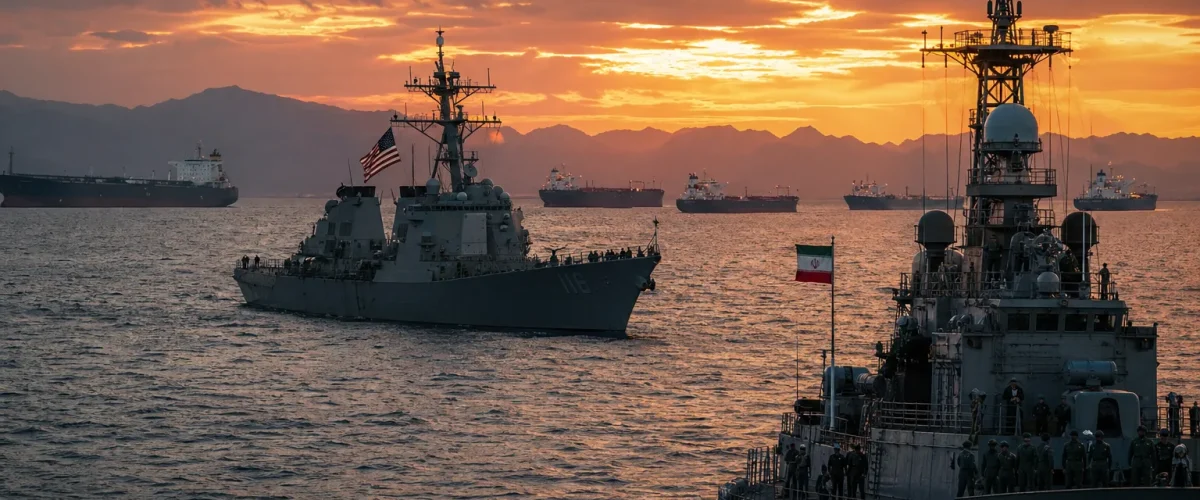
A temporary ceasefire was agreed on 8 April, which was supposed to include the reopening of the strait. However, Iran began selectively controlling traffic through the waterway rather than fully reopening it, leading to the breakdown of the ceasefire. On 13 April, the United States imposed its own blockade of Iranian ports, creating the “dual blockade” that currently exists — with Iran controlling the strait itself and the US blockading Iran’s port access from the Gulf of Oman side.
Global Economic Impact: Soaring Gas Prices and Supply Chain Chaos
The continued closure of the Strait of Hormuz has had a devastating impact on global energy markets and the broader economy. Before the crisis, approximately 21 million barrels of oil and significant volumes of liquefied natural gas (LNG) passed through the strait daily. The near-total disruption of this flow has sent Brent crude prices above $130 per barrel, while US gasoline prices have hit record levels in many states.
For India — the world’s third-largest oil consumer — the crisis poses an acute challenge. India imports approximately 85 per cent of its crude oil, with a significant portion transiting through the Strait of Hormuz. While the Indian Navy’s Operation Urja Suraksha has helped rescue stranded ships and maintain a limited flow of Indian-flagged vessels, the broader disruption to supply chains has pushed domestic fuel prices to uncomfortable levels and raised concerns about India’s strategic petroleum reserves, which currently cover approximately 45 days of imports.
The economic fallout extends beyond energy. Global shipping routes have been disrupted, with vessels being rerouted around the Cape of Good Hope, adding weeks to journey times and significantly increasing freight costs. Insurance premiums for vessels transiting the region have skyrocketed, further inflating the cost of goods. Economists are warning that if the blockade continues beyond May, the global economy could tip into recession.
What Happens Next: Diplomacy, Escalation, or Stalemate?
With both sides entrenched in their positions, the near-term outlook is for continued stalemate. Diplomatic channels remain open — Oman and Qatar are both reported to be facilitating backchannel communications — but neither side appears willing to make the first significant concession. The clock is ticking for both: the US faces midterm elections in November 2026, and high gas prices are politically toxic; Iran’s economy is being strangled by the dual blockade, with shortages of essential goods becoming increasingly severe.
Military analysts have warned that the risk of accidental escalation remains high. With naval forces from multiple countries operating in close proximity in the confined waters of the Persian Gulf and the Strait of Hormuz, a miscalculation or unintended confrontation could rapidly spiral into a wider conflict. China, which depends heavily on Gulf oil, has been conducting its own naval operations in the region, adding another layer of complexity to an already volatile situation.
The international community, led by the United Nations and European Union, continues to call for restraint and a return to negotiations. However, without a fundamental shift in the positions of either Washington or Tehran, the Strait of Hormuz crisis appears set to continue, with all the economic and geopolitical consequences that entails.