Russia and North Korea Agree Long-Term Military Cooperation Plan for 2027-2031 as Defence Minister Belousov Meets Kim Jong Un in Pyongyang

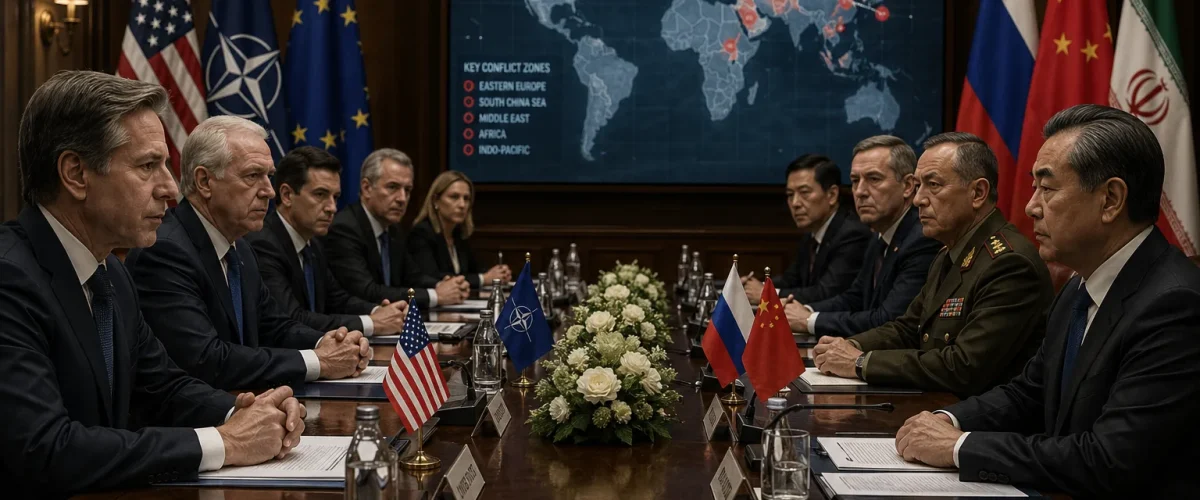
Russia and North Korea have agreed to establish a “stable, long-term” military cooperation framework spanning 2027 to 2031, according to a statement issued by Russia’s defence ministry on 27 April 2026. The announcement came after Russian Defence Minister Andrei Belousov held extensive talks with North Korean leader Kim Jong Un in Pyongyang, marking the latest escalation in a strategic partnership that has drawn intense scrutiny from Western nations and regional powers including India, Japan, and South Korea.
What Did Russia and North Korea Agree To?
During the Pyongyang meetings, Belousov and his North Korean counterparts agreed to “place our military cooperation on a stable, long-term footing,” according to the Russian defence ministry’s statement. Belousov specifically stated: “We are ready to sign a plan this year for Russian-Korean military cooperation for the period of 2027-2031.”
While the specific details of the cooperation plan have not been publicly disclosed, analysts believe it is likely to encompass joint military exercises, intelligence sharing, defence technology transfers, and potentially the continuation of arrangements that have seen North Korean troops deployed in Russian military operations. The agreement builds on the Comprehensive Strategic Partnership Treaty signed by Russian President Vladimir Putin and Kim Jong Un in June 2024, which included a mutual defence clause committing both nations to provide “military and other assistance without delay” if either is subjected to armed aggression.
The Russian Parliament Speaker also thanked North Korea’s Kim for what was described as Pyongyang’s contribution to the “liberation of Kursk,” a reference to the ongoing conflict in Ukraine, where North Korean troops have been reported fighting alongside Russian forces. This acknowledgement is significant because it marks one of the most explicit Russian confirmations of North Korean military involvement in the Ukraine war.
Why This Matters for Global Security
The formalisation of a five-year military cooperation plan between Moscow and Pyongyang represents a structural deepening of an alliance that was previously characterised by transactional, ad hoc arrangements. By committing to a multi-year framework, both nations are signalling that their military partnership is not a temporary wartime expedient but a long-term strategic alignment.
This has significant implications for global security. First, it provides North Korea with access to advanced Russian military technology — potentially including missile guidance systems, submarine technology, and satellite capabilities — that could accelerate Pyongyang’s weapons programmes. Second, it gives Russia access to a willing source of military manpower and conventional ammunition at a time when its own defence industrial base is under severe strain from the prolonged Ukraine conflict.
The agreement has also raised concerns about potential Russian assistance to North Korea’s nuclear and intercontinental ballistic missile programmes, although Moscow has officially denied any such transfers. UN Security Council resolutions prohibit the transfer of military technology to North Korea, but enforcement has become increasingly difficult given Russia’s veto power at the Security Council. Separately, the escalating tensions in the Strait of Hormuz have further complicated the global security landscape.
International Reactions and Condemnation
The United States, the European Union, and key Asian allies have condemned the deepening Russia-North Korea military ties. A US State Department spokesperson stated that the agreement “directly threatens peace and stability in the Indo-Pacific region and represents a flagrant violation of multiple UN Security Council resolutions.”
South Korea’s National Security Council held an emergency meeting following the announcement, with a government spokesperson warning that Seoul would “take all necessary measures to protect national security.” Japan’s Prime Minister echoed these concerns, calling the Russia-North Korea axis “the most dangerous development in East Asian security in a generation.”
NATO Secretary General also weighed in, noting that “the growing military partnership between Russia and North Korea shows that threats to Euro-Atlantic and Indo-Pacific security are deeply interconnected.” The alliance has been increasing its engagement with Asian partners, including Japan, South Korea, Australia, and New Zealand, in recognition of this link.
India’s Position and Implications for New Delhi
India finds itself in a complex position regarding the Russia-North Korea military axis. New Delhi maintains a historically close defence relationship with Moscow, remaining one of the world’s largest buyers of Russian military equipment. At the same time, India has strategic concerns about any development that could enhance North Korea’s nuclear and missile capabilities, given that long-range North Korean missiles could theoretically reach Indian territory.
India has traditionally maintained a balanced approach, advocating for denuclearisation of the Korean Peninsula while avoiding direct confrontation with Russia on the issue. However, the formalisation of a five-year military cooperation plan may test this balancing act, particularly as India deepens its strategic partnerships with the US, Japan, and Australia through the Quad framework.
What Comes Next
The Russia-North Korea defence cooperation plan is expected to be formally signed later in 2026, likely during a reciprocal visit by North Korean military officials to Moscow. Intelligence agencies across the West and Asia are closely monitoring developments, with particular attention to any transfers of advanced weapons technology that could alter the strategic balance in Northeast Asia.
Also Read: How the shooting at the White House Correspondents’ Dinner unfolded
Also Read: India-US trade deal explained: the 18 per cent tariff agreement and $500 billion commitment
Also Read: Indian Navy’s Operation Urja Suraksha and the rescue of 18 ships from Hormuz
Also Read: Trump amplifies ‘Hellhole’ remark about India: full controversy explained