Mumbai-Pune Expressway Missing Link Opens on May 1: India’s Longest Twin Tunnel Cuts Travel Time by 30 Minutes

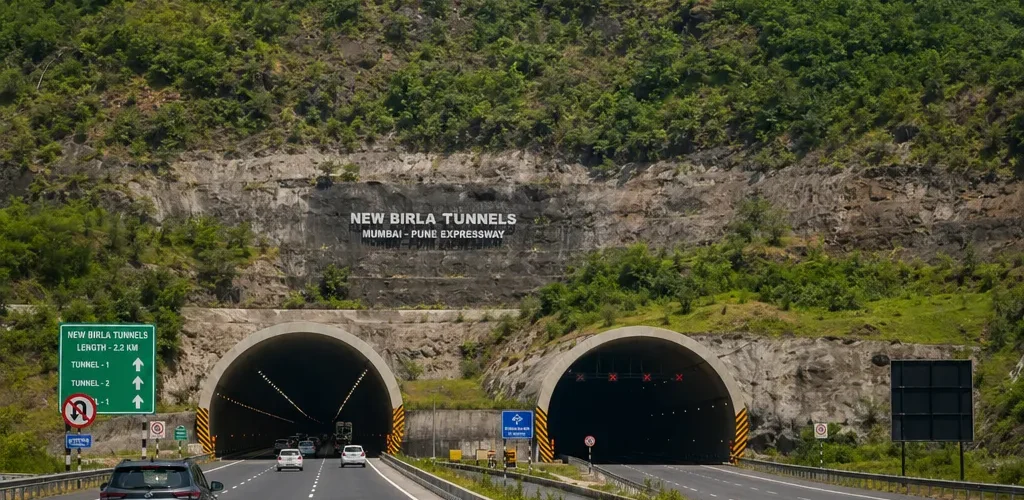
New Bypass Section With 8.87 km Twin Tunnel Officially Opens to Traffic
The long-awaited “missing link” section of the Mumbai-Pune Expressway officially opened to traffic on May 1, 2026, marking a major milestone in India’s highway infrastructure. The new section features India’s longest twin tunnel measuring 8.87 kilometres, each tunnel 23 metres wide, and is designed to bypass the congestion-prone hill section near Khandala and Lonavala. Once fully operational, the route will shorten the Mumbai–Pune distance by approximately 6 kilometres and cut travel time by nearly 30 minutes.
The project addresses a chronic bottleneck that has plagued the expressway since its inception, where the winding ghat section causes severe traffic congestion, especially on weekends and holidays. The broader transformation of India’s expressway network continues at pace, but the Mumbai-Pune missing link stands out as one of the most technically challenging and commercially impactful road projects completed in recent years.
Why the Missing Link Was Needed
The Mumbai-Pune Expressway, officially known as the Yashwantrao Chavan Expressway, was India’s first six-lane, access-controlled, tolled expressway. It spans 94.5 kilometres connecting Kalamboli in Raigad district’s Navi Mumbai to Kiwale in Pune. The expressway was fully operational from April 2002 and introduced new standards of speed and safety to Indian roads, becoming one of the country’s busiest corridors.
However, the expressway has suffered from increasing congestion over the years, most notably in the incline section where National Highway 48 merges with the expressway near the Khandala and Lonavala ghat. The movement of heavy vehicles on the steep gradient causes regular traffic jams, adding 30 to 60 minutes to journey times during peak periods. Accidents on the ghat section are also a recurring problem, with the steep curves and gradient making it hazardous, especially during the monsoon season.
To alleviate this, the Maharashtra State Road Development Corporation proposed the construction of an alternative bypass route — the “missing link” — that would allow traffic to completely avoid the ghat section. Construction began in March 2019 and was originally expected to be completed by March 2024. However, the deadline was extended multiple times due to engineering challenges related to the tunnelling work, land acquisition issues, and pandemic-related disruptions.
Engineering Marvel: Inside India’s Longest Road Tunnel
The missing link project is an engineering feat of significant scale. At its centrepiece are two parallel tunnels, each 8.87 kilometres long and 23 metres wide, making them the longest road tunnels in India. The tunnels pass through the Western Ghats, one of the most geologically complex mountain ranges in the country. The tunnelling work required advanced techniques including New Austrian Tunnelling Method (NATM) and tunnel boring machines adapted for the specific rock conditions of the Sahyadri hills.
In addition to the twin tunnels, the project includes two viaducts, one of which is a cable-stayed bridge, adding to the visual and structural distinctiveness of the route. Remarkably, a section of the alignment passes below the lake in Lonavala, requiring specialised waterproofing and structural reinforcement to ensure safety during monsoons when the water level rises significantly.
Safety Features and Modern Infrastructure
The tunnels are equipped with state-of-the-art safety features, including:
- 24/7 CCTV surveillance with AI-based traffic monitoring for incident detection
- Advanced ventilation systems to manage air quality inside the long tunnels
- Emergency evacuation passages connecting the two parallel tunnels at regular intervals
- Fire suppression systems installed throughout the tunnel length
- LED lighting that adjusts dynamically based on external light conditions and traffic density
- Electronic variable message signs to communicate real-time information to drivers
These features bring the tunnel infrastructure up to international standards, comparable to road tunnels in European countries like Switzerland and Norway.
Impact on Commuters and the Pune-Mumbai Economic Corridor
The opening of the missing link is expected to have a transformative impact on the daily commute between India’s financial capital and its cultural and educational hub. An estimated 60,000 to 80,000 vehicles use the Mumbai-Pune Expressway daily, a number that has been growing steadily as both cities expand and economic activity along the corridor intensifies.
The 30-minute reduction in travel time will benefit not just daily commuters but also the logistics and freight sector. Trucks carrying goods between Mumbai’s ports and Pune’s manufacturing clusters will be able to make the journey more predictably and quickly, reducing transportation costs and improving supply chain efficiency. This complements other major expressway projects inaugurated recently across the country.
Real Estate and Tourism Boost
Real estate developers along the corridor are already anticipating a boost in demand. Towns like Lonavala, Khandala, and Karjat have seen growing interest from Mumbai-based buyers looking for weekend homes and investment properties. The improved connectivity is expected to push property prices higher in these hill station towns and along the expressway’s access points.
The tourism sector is equally optimistic. Lonavala and Khandala attract millions of visitors annually, and the reduced travel time will make these destinations more accessible for day trips and short getaways. The Mumbai-Ahmedabad bullet train project and the missing link together represent a new era of connectivity for Maharashtra’s key cities.
What About the Existing Ghat Section
With the missing link now open, the question arises about the future of the existing ghat section of the expressway. Authorities have confirmed that the old route will remain operational. However, it is expected that a significant portion of through traffic will shift to the new tunnel route, reducing congestion on the ghat section considerably. The old route may gradually transition into serving primarily local traffic for communities in the Khandala and Lonavala area.
The Maharashtra State Road Development Corporation has also been progressively expanding other sections of the expressway from three lanes to four lanes in each direction, adding further capacity to accommodate the growing traffic volumes.
Project Cost and Future Plans
The missing link project cost is estimated at approximately Rs 6,695 crore, funded through a combination of government budgetary allocation and toll revenue projections. The toll structure for the new section has not yet been finalised, but officials have indicated that it will be reasonable given the time and fuel savings for commuters.
Looking ahead, the government is studying the feasibility of a dedicated freight corridor between Mumbai and Pune to further separate commercial and passenger traffic. If approved, this would be the next phase of the Mumbai-Pune connectivity upgrade.
Explore more on Rail & Road and Travel & Tourism at DailyTips.in.