India Premium Housing Prices Rise Up to 36 Per Cent as Luxury Real Estate Outperforms in 2026 and Buyers Shift Toward Amenity-Rich Homes

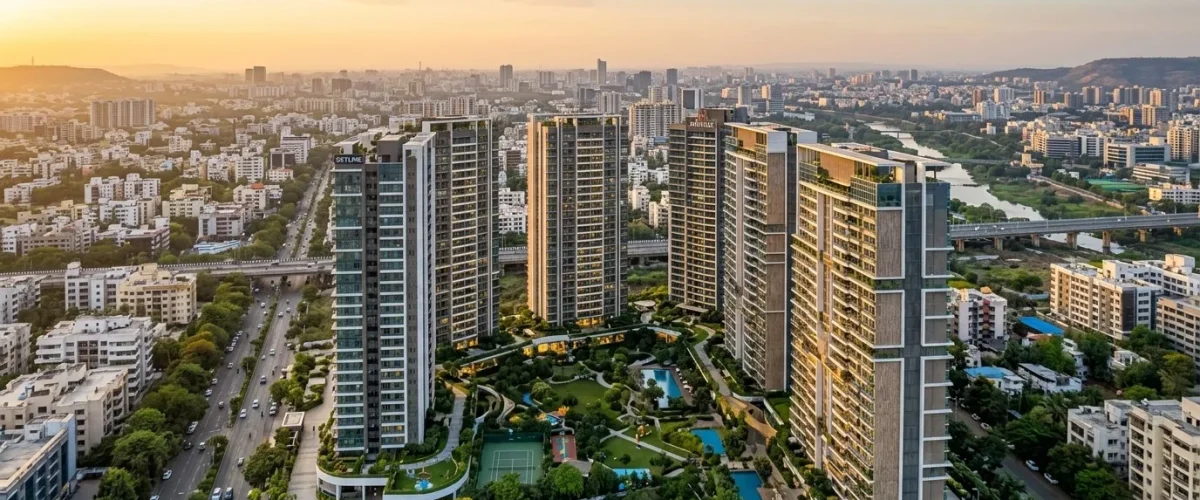
India’s premium housing segment has posted price growth of up to 36 per cent year-on-year in 2026, significantly outpacing the broader residential market as rising incomes, NRI demand, and improved infrastructure connectivity drive buyers toward larger, amenity-rich homes, according to data from Savills India and the 1 Finance Housing Market Index. The growth is most pronounced in under-construction projects in NOIDA and Gurugram, where developers are commanding higher launch prices for sustainably designed apartments in transit-oriented corridors.
The trend marks a deepening of the two-speed dynamic in Indian real estate: the luxury and premium end continues to boom, while the affordable housing segment (below Rs 45 lakh) faces slower absorption and rising unsold inventory. This divergence has significant implications for developers, investors, and the broader Indian economy, which relies on real estate for roughly 7 per cent of GDP and 15 per cent of total employment.
Where Prices Are Rising Fastest
Savills India’s latest data shows that under-construction premium homes outperformed completed assets in terms of price appreciation during the past 12 months. Capital values in this segment rose as much as 36 per cent YoY across major cities, reflecting higher launch benchmarks, increasing land and construction costs, and robust demand.
NOIDA recorded the widest range of appreciation at 9 to 36 per cent YoY, driven by the Noida International Airport development at Jewar and upgraded expressway connectivity. Gurugram followed with a 2 to 19 per cent YoY increase, concentrated along the Dwarka Expressway and Southern Peripheral Road corridors. Bengaluru posted healthy gains of 13 to 15 per cent YoY, supported by IT-sector hiring and infrastructure upgrades including the Phase 2 metro expansion.
Completed premium homes showed steadier but still resilient growth, with values rising up to 20 per cent YoY. Bengaluru led this segment at 12 to 14 per cent, followed by Delhi (10 to 18 per cent) and NOIDA (10 to 20 per cent). Mumbai saw a more modest 4 to 7 per cent increase, though select micro-markets in the Bandra-Kurla Complex corridor outperformed significantly.
The Broader Market Picture
The 1 Finance Housing Market Index, based on RERA-registered transaction data, delivered a 10.2 per cent CAGR over five years, reaching 276 in December 2025. While earlier growth was driven by strong end-user momentum, the current phase is more measured, with inventory discipline shaping outcomes across cities.
New launches are expected to exceed 300,000 units in 2026, with Cushman and Wakefield projecting that the luxury segment will account for over 30 per cent of all new launches — up from 22 per cent in 2024. This shift reflects developers’ strategic pivot toward higher-margin products as land costs and regulatory compliance expenses under RERA continue to rise.
However, not all markets are thriving equally. Same-quarter absorption rates — the percentage of newly launched units sold within the quarter — softened through 2025 in Hyderabad, Delhi NCR, and Bengaluru for non-premium segments. Total housing sales data from earlier in 2026 confirms that the affordable segment is under pressure from inventory build-up and cautious buyer sentiment.
What Is Driving Premium Demand
Several factors are converging to sustain demand in the luxury segment. First, India’s growing high-net-worth population — estimated at 8.5 lakh households in 2026 — is increasingly viewing real estate as both a lifestyle asset and inflation hedge. Second, NRI buyers, attracted by a weaker rupee and improved RERA transparency, have significantly increased purchases in Bengaluru, Goa, and parts of Mumbai, according to industry data.
Third, the post-pandemic preference for spacious homes with wellness amenities, private terraces, and work-from-home infrastructure has persisted. Developers who invested in sustainable design — green-certified buildings, EV charging, and energy-efficient construction — are seeing faster sell-through rates and are commanding 10 to 15 per cent premiums.
The impact on personal finance and investment patterns is notable: the Union Budget 2026’s enhanced tax deductions for home loans up to Rs 5 lakh annually have further incentivised ownership in the premium segment, particularly among salaried professionals in the Rs 25 lakh to Rs 50 lakh annual income bracket.
Outlook and Risks
Analysts remain cautiously optimistic. Knight Frank India forecasts that residential prices across the top eight cities will rise 6 to 10 per cent in 2026, with the premium end outperforming the average. However, risks include the impact of global geopolitical tensions on financial markets and the RBI’s interest rate trajectory — any delay in anticipated rate cuts could slow mortgage demand in the second half of the year.
For buyers, the window for value purchases may be narrowing in high-growth corridors like NOIDA and Bengaluru’s outer ring road, where prices have already moved substantially. For developers, the challenge is maintaining quality and delivery timelines to justify premium pricing — a crucial factor as RERA enforcement tightens nationwide.
Source: Economic Times