Bangladesh Measles Outbreak: Over 250 Dead — Mostly Children — as Supreme Court Seeks Travel Ban on Muhammad Yunus Amid Vaccination Neglect Allegations

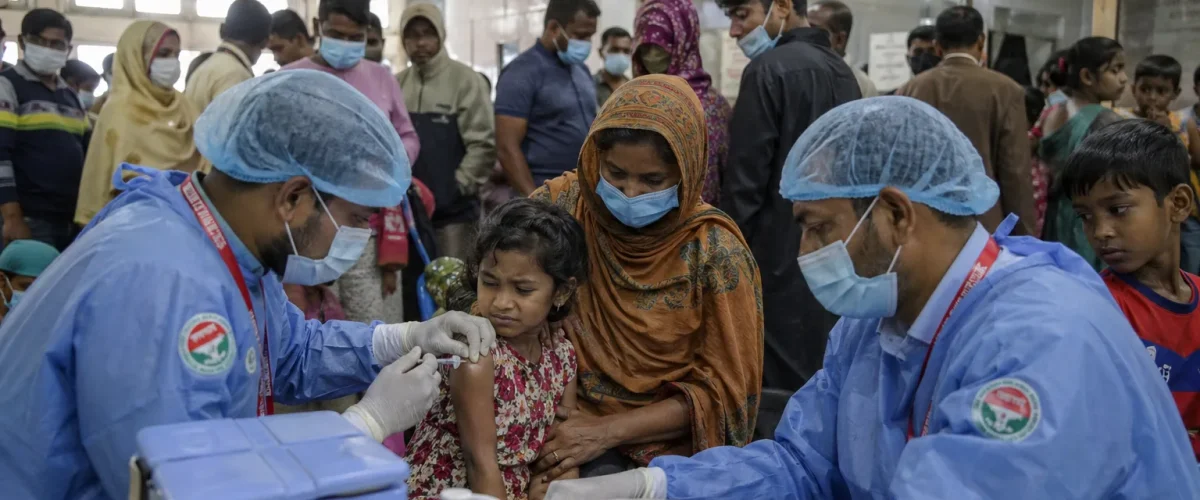
A devastating measles outbreak that has been sweeping across Bangladesh since mid-March 2026 has now claimed over 250 lives — the vast majority of them children under the age of five — making it the deadliest measles crisis the country has faced in two decades. The outbreak, which has overwhelmed hospitals and triggered emergency vaccination campaigns, has also ignited a fierce political controversy, with a Supreme Court petition seeking to impose a travel ban on former interim chief adviser Muhammad Yunus over allegations that his regime’s decision to privatise and neglect vaccination programmes directly contributed to the catastrophe.
The crisis has drawn international attention, with the World Health Organization mobilising emergency support and deploying epidemiological teams to assist Bangladesh’s overwhelmed healthcare infrastructure. As the death toll continues to climb, questions about governance failures, vaccination policy, and the politicisation of public health have dominated national discourse.
Scale of the Outbreak: 250+ Dead, Thousands Hospitalised
According to data from Bangladesh’s Directorate General of Health Services (DGHS), the outbreak has resulted in over 250 deaths with suspected measles symptoms since mid-March 2026. As of the latest official figures in early April, 4,628 people had been hospitalised with suspected measles symptoms, alongside 826 confirmed cases and 98 confirmed deaths. However, health officials acknowledge that the actual toll is likely significantly higher, as many deaths in rural areas go unreported and diagnostic capacity remains limited outside major urban centres.
The Minister of Health and Family Welfare, Sardar Shakhawat Hossain Bokul, confirmed that 82 per cent of the measles and rubella infected patients were children aged below five years. This statistic has fuelled public outrage, as it points directly to gaps in routine childhood immunisation that should have prevented the majority of these infections.
The outbreak has been particularly severe in Dhaka, Mymensingh, and Barishal, where population density and inadequate sanitation have facilitated rapid transmission. Hospitals in these regions have reported overflow conditions, with makeshift wards set up to accommodate the surge in patients. Several paediatric intensive care units in Dhaka have been operating at full capacity for weeks.
How Did Bangladesh’s Vaccination Programme Fail?
The roots of the crisis can be traced to a systematic weakening of Bangladesh’s once-robust immunisation programme. According to the World Health Organization, in April 2020, many countries suspended measles vaccination programmes due to the impact of the COVID-19 pandemic. While most nations resumed services relatively quickly, Bangladesh’s programme suffered prolonged disruption during the political instability that followed the ouster of Prime Minister Sheikh Hasina’s government.
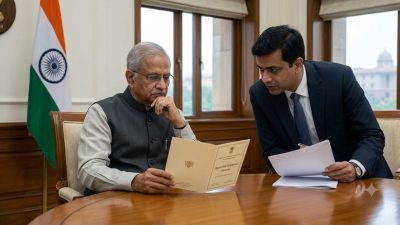
The interim government led by Muhammad Yunus — the Nobel Peace Prize-winning economist who served as chief adviser during a transitional period — has been accused of largely neglecting the vaccination programme. Critics allege that administrative disruption, budget cuts, and a misguided push to privatise immunisation services created a catastrophic gap in coverage. With routine measles-rubella vaccination rates dropping sharply, millions of children were left unprotected, creating the conditions for the current outbreak.
Immunisation experts have pointed out that measles requires over 95 per cent population coverage to maintain herd immunity. When coverage drops below this threshold — as it did in Bangladesh during the period of political transition — outbreaks become inevitable. The current crisis is a tragic demonstration of this epidemiological principle.
Supreme Court Petition and Travel Ban on Yunus
The political fallout from the outbreak has been severe. A petition filed in Bangladesh’s Supreme Court seeks to impose a travel ban on Muhammad Yunus, alleging that his regime’s push to privatise vaccination services and its overall neglect of public health infrastructure directly caused the measles crisis. The petitioner argues that Yunus bears personal responsibility for policy decisions that left millions of children vulnerable to a preventable disease.
Yunus’s supporters have rejected the allegations, arguing that the vaccination gaps pre-date his tenure and that the political instability following Hasina’s removal was the primary cause of administrative dysfunction. They have also pointed to the global trend of declining immunisation rates during the COVID-19 pandemic as a contributing factor that cannot be attributed to any single government.
The Supreme Court has yet to rule on the petition, but legal observers note that the case raises important questions about governmental accountability for public health outcomes. Regardless of the court’s decision, the political damage to Yunus’s reputation has been significant, with opposition parties using the crisis to question his fitness for any future role in governance.
Emergency Response and WHO Intervention
The Bangladesh government has mounted an emergency mass vaccination campaign, which was launched on 5 April 2026. The initial phase covered Dhaka North and South City Corporations, as well as Mymensingh and Barishal Districts. The Minister of Health announced that a nationwide mass vaccination drive covering all districts will begin from 3 May. The Ministry of Health and Family Welfare has identified 30 “hotspots” across 20 districts where emergency measures are being prioritised.
The Minister of Home Affairs, Salahuddin Ahmed, has vowed to bring the outbreak under control within 2026. Medical staff leaves have been cancelled across the country, and additional healthcare workers have been deployed to the worst-affected areas. The World Health Organization’s South-East Asia Regional Office has deployed emergency response teams and provided technical assistance for surveillance, case management, and vaccination logistics.
International health organisations have warned that the outbreak could spread to neighbouring countries if not contained quickly, particularly given the porous border between Bangladesh and India’s eastern states. Indian health authorities in West Bengal and the northeastern states have been placed on heightened alert, with screening measures intensified at border crossings.