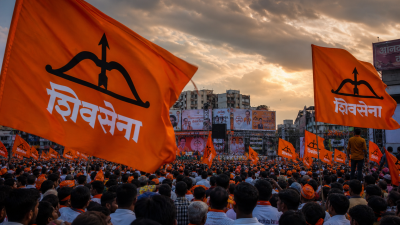
West Bengal Election Results 2026: BJP Storms to Historic Victory as Mamata Banerjee’s TMC Faces Shock Defeat After 15 Years in Power

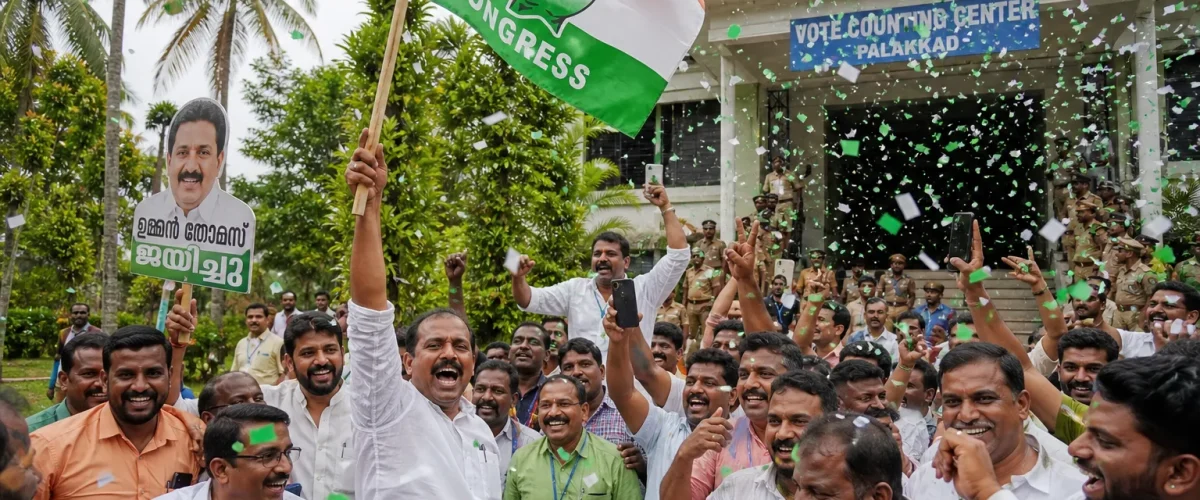
BJP Makes History in Bengal as Early Trends Show Massive Lead Over TMC
In what is shaping up to be one of the most dramatic political upheavals in recent Indian history, the Bharatiya Janata Party (BJP) is storming to a historic victory in the West Bengal Assembly Elections 2026, with early counting trends on Monday, 4 May 2026, showing the saffron party leading in a commanding number of seats across the state’s 294 constituencies. If confirmed, this would mark the first time BJP has won the state assembly, ending the Trinamool Congress (TMC) and Chief Minister Mamata Banerjee’s 15-year reign that began in 2011.
Counting of votes commenced at 8:00 AM IST at designated counting centres across all 23 districts, with early postal ballot trends immediately signalling a seismic shift in Bengal’s political landscape. As rounds of EVM counting progressed through the morning, the BJP’s lead continued to consolidate, particularly in North Bengal and the tribal belt where the party had been steadily building support over the past two election cycles.
Mamata Banerjee Leads in Bhabanipur but TMC Faces Statewide Rout
In a striking dichotomy that encapsulates the election’s complexity, Mamata Banerjee personally leads in her Bhabanipur constituency in south Kolkata, the seat she has represented since winning a by-election in 2021. However, her personal victory appears increasingly pyrrhic as the TMC’s overall seat tally remains far short of the 148-seat majority mark needed to form the government.
The state voted in two phases — Phase 1 on 14 April covering 152 constituencies and Phase 2 on 23 April covering the remaining 142 constituencies. The exit polls released after the second phase had predicted a tight contest, with some surveys giving BJP a slight edge and others predicting a narrow TMC win. However, the actual counting trends have blown past most predictions, with BJP performing significantly better than even the most optimistic exit poll projections.
North Bengal Delivers a Decisive Verdict
The BJP’s surge has been most pronounced in North Bengal, encompassing districts such as Jalpaiguri, Cooch Behar, Alipurduar, North Dinajpur, and South Dinajpur. These regions, which have significant tribal and tea garden worker populations, have swung decisively towards the BJP after years of careful organisational groundwork. The party’s promise of addressing underdevelopment and ethnic identity concerns appears to have resonated deeply with voters.
In the Jangalmahal belt — comprising districts of West Midnapore, Bankura, Purulia, and Jhargram — which was once a Maoist stronghold before TMC won it in 2011, the BJP has made significant inroads. The tribal communities here, who formed the backbone of TMC’s anti-Left Front movement, appear to have shifted allegiance in large numbers.
700 Paramilitary Companies Deployed to Prevent Post-Poll Violence
The Election Commission’s deployment of over 700 companies of Central Armed Police Forces (CAPF) across the state reflects the high-stakes nature of this election and concerns about potential post-poll violence. West Bengal has a history of political violence during election seasons, and the massive security deployment is aimed at ensuring peaceful counting and transition of power.
The repolling ordered at 15 booths in Diamond Harbour and Magrahat Paschim constituencies after EVM irregularity complaints during Phase 2 added to the election drama. These re-conducted polls, held on May 2, were among the final pieces of the electoral puzzle now being counted.
Key Constituencies to Watch
Beyond Bhabanipur, several constituencies are being closely monitored. Nandigram, the seat that became the epicentre of the TMC-BJP rivalry in 2021 when Suvendu Adhikari narrowly defeated Mamata Banerjee by 1,956 votes, is again witnessing a fierce contest. Adhikari, who defected from TMC to BJP in 2020, has been BJP’s most effective weapon in Bengal.
In Singur — the site of the Tata Nano controversy that propelled Mamata Banerjee to power — the results carry deep symbolic significance. The constituency’s verdict will be seen as a referendum on whether the anti-industrialisation narrative that defined Bengal politics for two decades still holds currency.
Stock Markets Rally on BJP’s Strong Showing in Bengal
Indian stock markets surged on Monday morning, with the Sensex jumping nearly 1,000 points, partly driven by positive sentiment around BJP’s strong showing in Bengal. Market analysts noted that investors view a BJP government in Bengal favourably, expecting it to bring the state closer to the Centre’s industrial and investment policies.
The previous sharp market decline of 583 points on April 30 had been triggered by rising crude oil prices and FII outflows, making today’s recovery particularly significant. Analysts believe that a BJP victory in Bengal, combined with easing US-Iran tensions, could sustain the rally in coming sessions.
What a BJP Win Means for Indian Politics
A BJP victory in West Bengal would represent a seismic shift in India’s political landscape. The party, which won just 3 seats in the 2016 Bengal assembly elections before surging to 77 seats in 2021, would be completing an extraordinary five-year arc from principal challenger to ruling party. It would also give the BJP control over yet another major state, further consolidating its dominance across India.
For Mamata Banerjee, who has been one of the BJP’s most formidable opponents nationally, the defeat would raise fundamental questions about the TMC’s future direction and her own political legacy. Having built the party from scratch and single-handedly ended the Left Front’s 34-year rule in 2011, a loss now would be a devastating blow to her stature within opposition politics.
The Phase 2 voting pattern had suggested that the anti-incumbency sentiment was stronger than many had anticipated, with voter turnout patterns diverging from TMC’s traditional strongholds. The results now appearing to confirm those early signals suggest that voters were ready for change after 15 years of TMC governance.
Congress and Left Fade Further
The election results also confirm the continuing decline of the Indian National Congress and the Left parties in Bengal. Once the dominant forces in state politics — the CPI(M)-led Left Front ruled for 34 years from 1977 to 2011 — both formations appear to be winning negligible seats, squeezed out entirely by the TMC-BJP bipolar contest that has defined Bengal politics since 2019.
As counting continues through the afternoon and evening, the full picture of Bengal’s political transformation will become clearer. But the early trends leave little doubt that May 4, 2026, will be remembered as the day West Bengal chose a dramatically new political path after decades of single-party dominance.

- Fentanyl Vaccine Breakthrough: Scripps Research Develops Shot That Blocks Deadly Overdoses Before They Reach the Brain - June 13, 2026
- Nipah Virus Returns to Kerala — First Case of 2026 Confirmed, State Declares High Alert - June 12, 2026
- Jill Biden Reveals She Wanted to Keep PM Modi’s 7.5-Carat Diamond Gift but Returned It After State Department Valued It at $20,000 - June 8, 2026