Russia Ukraine Ceasefire Under Severe Strain as Both Sides Trade Blame for Weekend Attacks and Three Killed in Drone Strikes

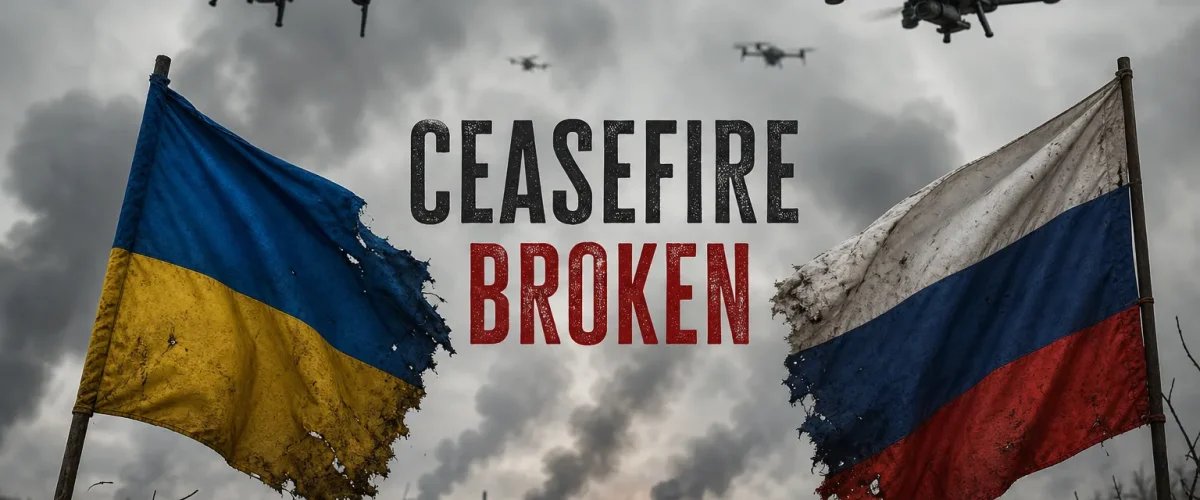
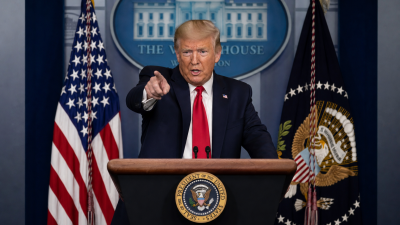
The three-day ceasefire between Russia and Ukraine, brokered by US President Donald Trump and announced with great fanfare just days ago, appeared to be unravelling rapidly on Sunday as both sides traded accusations of violations and battlefield violence continued across multiple fronts. Three civilians were killed in Russian drone strikes on Ukrainian territory, while Russia claimed to have shot down 57 Ukrainian drones and accused Kyiv of “flouting” the truce.
The ceasefire, which also includes a 1,000-prisoner swap from each side, was announced on Friday as part of a broader US-led push for peace that has so far failed to end the war despite months of shuttle diplomacy. The initial announcement had raised hopes that the conflict, now in its fourth year, might finally be moving toward resolution. Those hopes are now fading fast.
Violations on Both Sides
Ukrainian officials reported that three people were killed in Russian drone strikes on areas near the front line on Sunday. One person each in Ukraine’s Zaporizhzhia, Dnipropetrovsk, and Kherson regions were killed, according to regional governors and police reports. Additionally, more than 200 battlefield clashes had taken place since early Saturday, when the ceasefire was supposed to begin.
Ukrainian authorities, however, stopped short of explicitly accusing Russia of violating the US-brokered deal. The carefully calibrated language suggests that Kyiv is reluctant to be seen as the party that torpedoes the peace process, even as it documents continued Russian aggression. The diplomatic calculus is delicate: Ukraine needs continued Western support, and being perceived as obstructing peace efforts could undermine that support.
Russia’s Defence Ministry, for its part, accused Ukraine of flouting the ceasefire, claiming it had downed 57 Ukrainian drones over the past day and “responded in kind” on the battlefield. The Russian statement implied that Moscow’s actions were retaliatory rather than aggressive — a framing that has become standard in Russian communications whenever ceasefire violations are reported.
The Background: Duelling Ceasefires
The current situation is complicated by the fact that both sides had announced separate ceasefires earlier in the week. Ukraine declared a unilateral ceasefire starting on Wednesday, May 6, while Russia announced its own ceasefire to coincide with Victory Day celebrations on May 9. Trump’s three-day ceasefire, announced on Friday, was supposed to build on these earlier pauses, but the overlapping timelines and mutual distrust have made enforcement virtually impossible.
Ukraine had accused Russia of violating its unilateral ceasefire within hours of its announcement, reporting that Moscow launched 108 combat drones and three missiles at Ukrainian cities on Wednesday. President Volodymyr Zelenskyy denounced Moscow’s “cynicism” for continuing air strikes even as it publicly declared a ceasefire.
For his part, Russian President Vladimir Putin used the shifting political landscape in Europe as a backdrop to denounce NATO in his Victory Day speech, vowing that Russia would “emerge victorious in Ukraine.” The scaled-down Victory Day parade in Moscow was held under tight security without military hardware, amid fears of possible Ukrainian drone attacks on the capital.
The Prisoner Swap: Still Unclear
One of the key components of Trump’s ceasefire announcement was a 1,000-prisoner swap from each side. However, as of Sunday, it remained unclear when the exchange would take place. The logistics of exchanging 2,000 prisoners of war are complex, requiring coordination between military, intelligence, and humanitarian agencies on both sides, as well as the involvement of international organizations like the Red Cross.
Families of prisoners on both sides have been anxiously waiting for news, and the uncertainty over the swap’s timing has added to the sense of frustration and disillusionment with the peace process. The exchange was widely seen as a confidence-building measure that could pave the way for broader negotiations, but the ongoing ceasefire violations have cast doubt on whether either side is genuinely committed to de-escalation.
Ukraine’s Military Capabilities
Despite the ceasefire, Ukraine has continued to demonstrate its growing military capabilities. Earlier in the week, Ukrainian forces struck a critically important military-industrial complex in Cheboksary, approximately 1,000 kilometres inside Russian territory — one of the deepest strikes of the war. President Zelenskyy published video of launches of Ukraine’s domestically-made Flamingo cruise missiles, which he said covered a distance of more than 1,500 km to reach the target.
The strike capabilities suggest that Ukraine is not in a militarily weak position, which complicates the peace calculus. A country that can hit targets deep inside its adversary’s territory is unlikely to accept unfavourable peace terms, while Russia’s inability to prevent such strikes undermines its narrative of military superiority.
International Reactions
The international community has reacted with a mixture of concern and resignation to the ceasefire violations. European leaders, who have been pushing for a negotiated settlement, expressed frustration that neither side appears willing to fully commit to a pause in hostilities. Swedish Foreign Minister Tobias Billström said the focus should be on sanctions rather than talks with Moscow, reflecting a hardening of Nordic positions.
EU foreign policy chief Kaja Kallas ruled out former German Chancellor Gerhard Schröder as a potential mediator, despite Putin’s suggestion that the veteran politician could play a role. The rejection underscored the deep mistrust between Europe and Russia, which has made meaningful diplomatic engagement almost impossible.
Trump’s Diplomatic Challenge
For President Trump, the faltering ceasefire represents a significant diplomatic embarrassment. The three-day pause was announced as a major achievement, but its rapid unravelling exposes the limitations of US influence over the conflict. Trump is now facing criticism from both domestic opponents and international observers for over-promising and under-delivering on peace.
The situation is further complicated by Trump’s simultaneous focus on the Iran war, which is consuming the bulk of US diplomatic and military resources. With the President scheduled to visit China on May 13, attention and resources are being pulled in multiple directions, leaving the Ukraine peace process without the sustained high-level engagement it needs.
As the three-day ceasefire nears its expiry, the question is not whether it will hold — the evidence suggests it already has not — but whether it can serve as even a partial foundation for future negotiations. For the millions of Ukrainians and Russians affected by the war, the answer may determine whether the conflict continues for months, years, or even decades to come.

- Indian Army Gets New Chief as General Dwivedi Hands Over Command Amid Push for Indigenous Defence Tech - July 1, 2026
- Ayodhya Ram Temple Donation Scandal Deepens as Trustees Resign and SIT Arrests Eight - June 29, 2026
- Bengal Seven Weeks On: Modi’s Historic Win and the Questions That Won’t Go Away - June 28, 2026