Gold Shatters All Records in India as Price Crosses Rs 1.52 Lakh Per 10 Grams and Silver Breaches Rs 3 Lakh Per Kg for First Time in History

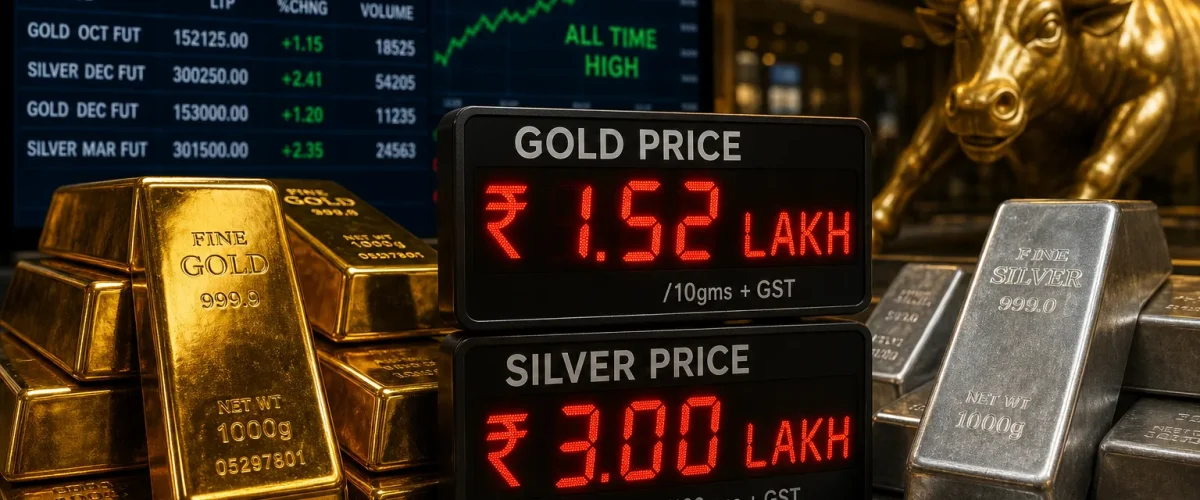
Precious metals markets in India entered uncharted territory on Wednesday, 13 May 2026, as gold prices surged past Rs 1,52,000 per 10 grams and silver crossed the psychologically significant Rs 3 lakh per kilogram mark for the first time in history. The record-breaking rally was fuelled by a confluence of factors including the Indian government’s emergency hike in import duties on gold and silver from 6 per cent to 15 per cent, sustained global safe-haven demand driven by the Iran war, and a weakening Indian rupee that has made dollar-denominated commodities more expensive in domestic markets.
On the Multi Commodity Exchange (MCX), gold futures traded at approximately Rs 1,52,000 per 10 grams during morning trade on Wednesday, incorporating the additional duty component. MCX silver futures surged by over Rs 22,000 to touch an intraday high of Rs 3,01,429 per kilogram — a gain of more than 6 per cent in a single session. Physical silver prices in major cities including Delhi, Mumbai, Chennai, Hyderabad, and Bengaluru rose to Rs 290 per gram, up from Rs 266 per gram the previous day.
How We Got Here
The gold rally in 2026 has been one of the most extraordinary in the metal’s history. At the start of the year, 10 grams of 24-carat gold was trading at approximately Rs 1,15,000 in India. By mid-May, the price has risen by over Rs 37,000 — a gain of more than 32 per cent in less than five months. The rally has been driven by several powerful and reinforcing trends.
The most significant driver has been the global energy crisis triggered by the US-Iran war and the closure of the Strait of Hormuz. The conflict, now in its 11th week, has disrupted global crude oil flows and sent Brent crude above $100 per barrel, creating economic uncertainty that has pushed investors into safe-haven assets. Gold, which has served as a store of value during geopolitical crises for centuries, has been the primary beneficiary of this flight to safety.
Central bank gold buying has added fuel to the rally. The Reserve Bank of India, along with central banks in China, Turkey, Poland, and several other countries, has been steadily increasing its gold reserves as part of a broader strategy to diversify away from US dollar-denominated assets. Global central bank gold purchases exceeded 1,000 tonnes in each of the past three years, a historically unprecedented pace that has tightened physical gold markets.
The Import Duty Shock
The Indian government’s decision on Wednesday to hike import duty on gold and silver from 6 per cent to 15 per cent — the largest single duty increase on precious metals in over a decade — added an immediate premium to domestic prices. Market participants estimated that the 9 percentage point increase translates to approximately Rs 12,000–14,000 per 10 grams at current international gold prices, which have been trading near all-time highs above $2,400 per ounce.
The duty hike came just two days after Prime Minister Narendra Modi publicly appealed to Indians to stop buying gold for at least a year, citing the strain on the country’s foreign exchange reserves. India’s forex reserves have declined by approximately $38 billion since February to around $690 billion, driven by RBI intervention to defend the rupee, higher oil import bills, and foreign portfolio investor outflows.
Silver’s Historic Milestone
While gold has captured the headlines, silver’s crossing of the Rs 3 lakh per kilogram mark represents an equally significant milestone. Silver has traditionally been seen as gold’s “poor cousin” but has outperformed gold on a percentage basis in 2026, rising from approximately Rs 2,10,000 per kilogram at the start of the year to over Rs 3,00,000 — a gain of more than 42 per cent.
Silver’s rally has been amplified by its dual nature as both a precious metal and an industrial commodity. Growing demand for silver in solar panel manufacturing, electronic components, and electric vehicle batteries has tightened the physical market at a time when investment demand is also surging. The government’s duty hike on silver to 15 per cent has added further upward pressure on domestic prices.
Impact on Consumers and the Jewellery Trade
For Indian consumers, the price surge has made gold jewellery — a traditional investment vehicle and wedding essential — significantly more expensive. A standard 22-carat gold chain that cost approximately Rs 50,000 at the start of the year now costs over Rs 65,000, while wedding jewellery sets that typically run into lakhs of rupees have seen proportional increases that are straining family budgets.
Jewellers across the country reported a sharp decline in walk-in traffic and sales on Wednesday as the duty hike took immediate effect. Titan Company, India’s largest organised jewellery retailer, saw its shares decline by over 4 per cent in early trade, while Kalyan Jewellers fell approximately 6 per cent. The broader equity market sentiment towards jewellery stocks has turned bearish as analysts cut revenue growth estimates for the sector.
The All India Gem and Jewellery Domestic Council warned that the duty hike could boost gold smuggling, which historically increases when the gap between domestic and international prices widens. The council estimated that smuggling could increase by 20–30 per cent if the duty differential makes informal channels economically attractive for bulk buyers.
Investment Perspective
For investors, the gold and silver rally has generated exceptional returns in 2026, but the question of whether to buy at current levels is generating intense debate. Bulls argue that the fundamental drivers of the rally — geopolitical uncertainty, central bank buying, rupee weakness, and now the duty hike creating a higher price floor — remain intact. They point to analysts’ predictions that global gold prices could reach $2,600–$3,000 per ounce if the Iran crisis escalates further or if the global economy enters a recession.
Bears, however, warn that gold prices are in “uncharted territory” and that the speed of the rally has created conditions ripe for a sharp correction. They note that a ceasefire in the Iran war, a stabilisation of oil prices, or a recovery in equity markets could trigger profit-taking that sends gold prices lower. The duty hike also creates a “lock-in” effect where investors who bought at the higher duty rate would face larger losses if prices decline.
Financial advisors are recommending a cautious approach. “Gold and silver have been excellent hedges in 2026, but buying at all-time highs carries inherent risk,” said Deepak Jasani, Head of Retail Research at HDFC Securities. “Investors with existing gold holdings should consider staying put, but fresh buying at these levels should be limited to 5–10 per cent of the portfolio through SIPs in gold ETFs rather than lump-sum purchases.”
What’s Next for Precious Metals?
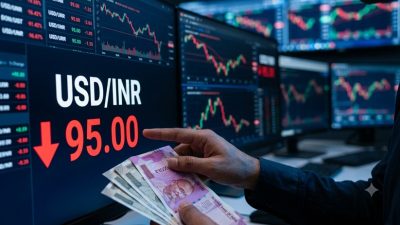
The trajectory of gold and silver prices in the coming weeks will depend on several factors. The direction of the Indian rupee — which has weakened sharply in 2026 — will influence domestic prices, as a further depreciation would add to the rupee-denominated cost of imported gold. The outcome of Trump’s state visit to China and any progress on the Iran crisis could either accelerate or dampen the safe-haven trade.
Domestically, the government’s willingness to maintain the elevated duty rate — or potentially increase it further if gold imports remain high — will be a key variable. The 2013 precedent, when import duties were similarly raised to 15 per cent, saw a temporary decline in official gold imports but a rise in smuggling. How effectively enforcement agencies prevent illegal imports will determine whether the duty hike achieves its macroeconomic objectives.
For now, India’s gold and silver markets have entered a new phase — one defined by record prices, unprecedented government intervention, and a global environment where uncertainty is the only certainty. Whether these records hold or are surpassed will depend on forces that extend far beyond India’s borders, from the battlefields of the Middle East to the corridors of central banks around the world.