Indian Rupee Crashes 139 Paise to 94.90 Against US Dollar as Crude Oil Surges and Trump Rejects Iran Ceasefire Proposal

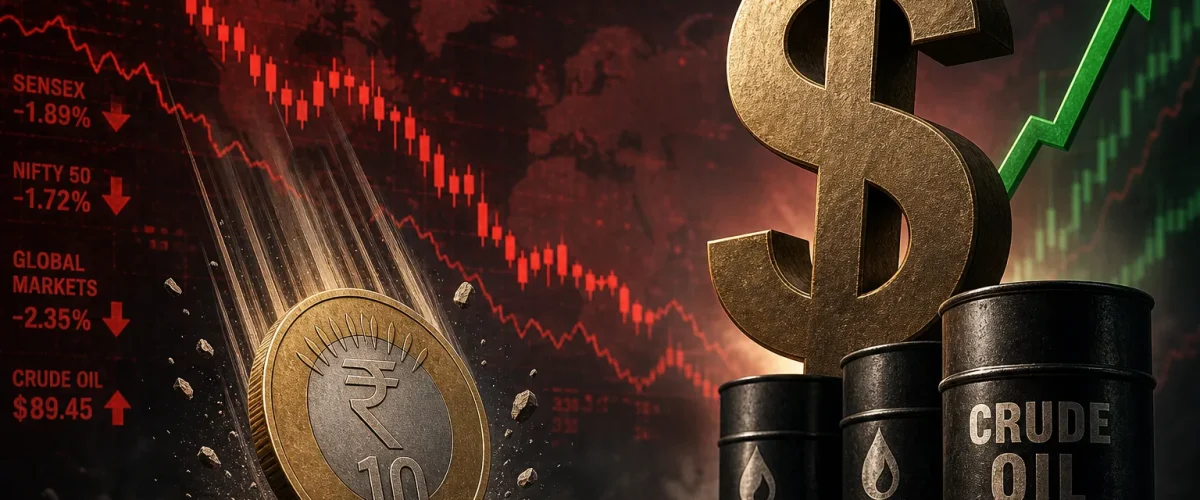
The Indian rupee suffered its worst single-session fall in months on Monday, crashing 139 paise to 94.90 against the US dollar in early interbank trading, as a perfect storm of negative factors converged to batter the local currency. The rupee opened at 94.97 before inching marginally higher, but the damage was done — the currency is now trading near its all-time low, breached just weeks ago when it crossed the 93 mark for the first time.
The immediate trigger for Monday’s crash was US President Donald Trump’s rejection of Iran’s response to the latest ceasefire proposal, which he described as “totally unacceptable.” The rejection shattered hopes of a diplomatic resolution to the three-month-old conflict and sent Brent crude surging 4.17 per cent to $105.5 per barrel in futures trade, delivering a body blow to India’s already stretched external balances.
The Perfect Storm
Multiple factors combined to produce Monday’s dramatic slide. The crude oil surge was the primary driver, but it was amplified by several other pressures:
FPI Outflows: Foreign portfolio investors have been fleeing Indian markets at an alarming rate. Over ₹14,231 crore was withdrawn in May alone, with the total 2026 outflow crossing the ₹2 lakh crore mark. The sustained selling pressure creates a natural demand for dollars as foreign investors repatriate their funds, weakening the rupee.
Dollar Strength: The dollar index, which measures the greenback against a basket of six major currencies, was trading at 98.20, up 0.20 per cent. A strengthening dollar makes all emerging market currencies more vulnerable, and the rupee — already under pressure from oil imports — is particularly exposed.
RBI Reserve Depletion: The Reserve Bank of India has been actively intervening in the forex market to defend the rupee, but its interventions are consuming precious foreign exchange reserves. On Friday, the RBI was reportedly present near the 94.70 level, buying rupees aggressively to push the closing rate higher to 93.51. But with Monday’s crash, the central bank faces difficult decisions about how much more ammunition it can expend.
Historical Context
To understand the magnitude of the current crisis, consider the rupee’s trajectory. At the start of 2026, the currency was trading at approximately 86 per dollar. The outbreak of the Iran war in February triggered an initial slide, and BofA Global Research had forecast a depreciation to 94 by June. That forecast, which seemed pessimistic at the time, has already been surpassed — three months ahead of schedule.
The rupee has now depreciated by approximately 10 per cent since the war began, making it one of the worst-performing Asian currencies during the crisis. Only the Pakistani rupee and the Sri Lankan rupee have fared worse, according to Bloomberg data. The International Energy Agency’s assessment that the current crisis is “worse than the two oil shocks of the 1970s combined” provides grim context for the currency’s trajectory.
Impact on the Economy
The rupee’s depreciation has cascading effects across the Indian economy. For consumers, it means higher prices for imported goods — from electronics to edible oil — and potentially higher fuel prices if the government allows the full pass-through of international crude prices. India’s crude oil import bill, already projected at approximately $180 billion for FY26, could balloon to over $220 billion at sustained prices above $100 per barrel.
For corporates, the weaker rupee increases the cost of servicing dollar-denominated debt. Indian companies have approximately $200 billion in outstanding foreign currency debt, and every rupee of depreciation increases the repayment burden. Companies that had not hedged their forex exposure are particularly vulnerable.
The banking sector, which had just reported record profits for FY26, faces potential asset quality challenges if the rupee depreciation triggers defaults among leveraged corporates. The State Bank of India and other major lenders have been building provisions, but a sustained currency crisis could test their buffers.
RBI’s Intervention Dilemma
The Reserve Bank of India faces a classic central banking dilemma. Aggressive intervention to defend the rupee depletes foreign exchange reserves, which stood at approximately $620 billion before the crisis began. While this is a substantial buffer, the rate of depletion — estimated at $3-5 billion per week during periods of heavy intervention — means that the RBI must be strategic about when and how it steps in.
Governor Sanjay Malhotra has signalled that the RBI will not allow “disorderly” currency movements, but the central bank has also made clear that it is not targeting any specific exchange rate. The distinction is important: the RBI will smooth volatility but will not fight fundamental trends driven by global factors beyond its control.
Some economists have called for the RBI to raise interest rates to defend the currency, but this would risk choking off domestic growth at a time when the economy needs support. The monetary policy committee’s decision at its next meeting will be closely watched for any shift in stance.
What Traders Are Watching
Forex traders are now focused on several key levels and events. The 95 level against the dollar is seen as a critical psychological barrier. If the rupee breaches this level on a closing basis, it could trigger a wave of stop-loss selling that pushes the currency even lower. The RBI is expected to defend this level aggressively.
The upcoming Trump-Xi summit on May 13-15 is another key event. Any progress on the Iran situation during the talks could provide relief to oil prices and, by extension, the rupee. Conversely, a breakdown in talks could trigger another wave of selling.
India’s trade data for April, due later this month, will also be closely scrutinised for evidence of the oil shock’s impact on the current account deficit. Analysts expect the deficit to widen sharply, potentially reaching 3 per cent of GDP if crude prices remain elevated — a level that would ring alarm bells among rating agencies and institutional investors.
A Vulnerable Position
India’s currency crisis is a stark reminder of the country’s structural vulnerability to external shocks. Despite decades of economic reforms, the nation remains heavily dependent on imported energy, and the current account deficit widens dangerously whenever oil prices spike. The government’s appeal for voluntary fuel conservation, while well-intentioned, is a stopgap measure that cannot substitute for the structural reforms needed to reduce India’s oil dependence.
For the millions of ordinary Indians who feel the impact through rising prices, a weaker rupee, and diminished purchasing power, the currency’s crash to 94.90 is more than just a number on a trading screen — it is a signal that the West Asia crisis is now hitting home in the most tangible way possible.