Supreme Court Raps NTA Over NEET-UG 2026 Cancellation — Says Agency Has Not Learnt Its Lesson from 2024 Paper Leak

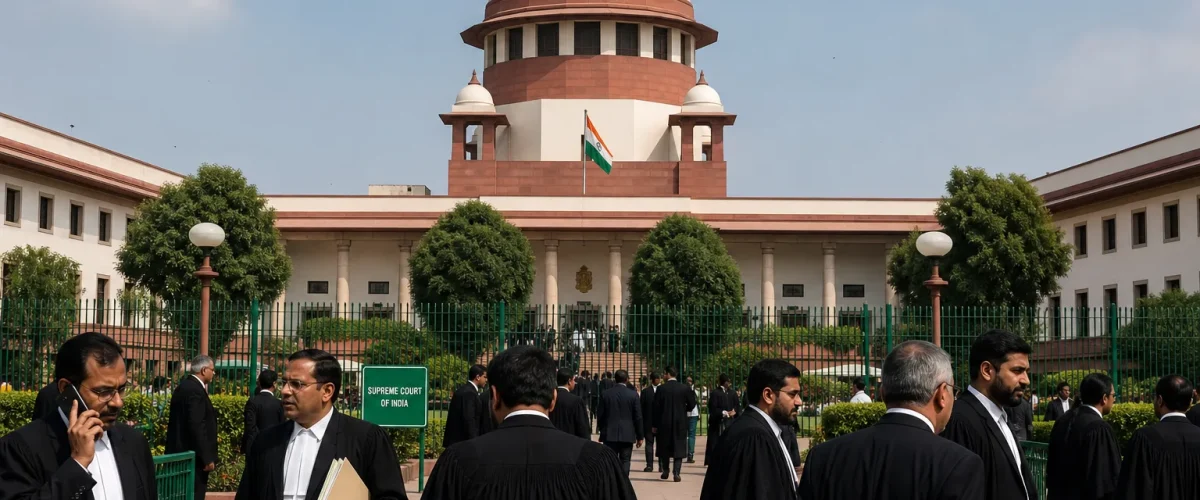
The Supreme Court of India on Sunday expressed deep anguish and frustration over the cancellation of NEET-UG 2026, remarking that the National Testing Agency (NTA) “hasn’t learnt its lesson” from the massive 2024 paper leak scandal that had rocked the country’s medical entrance examination system. The strong judicial rebuke came during a hearing on multiple petitions filed by medical associations and students seeking to replace the NTA with a more robust and accountable examination body.
Justice B.R. Narasimha, heading the bench hearing the matter, did not mince words: “We are so sad, they haven’t learnt their lessons. We passed an order directing the constitution of a committee to give recommendations, which was accepted.” The court’s remarks reflect a growing institutional frustration with the NTA’s inability to prevent paper leaks despite multiple reform directives issued after the 2024 debacle.
What Led to the NEET-UG 2026 Cancellation
NEET-UG 2026, which was scheduled for May 4, was cancelled after credible evidence emerged of yet another paper leak. While the NTA has not publicly disclosed the full details of how the breach occurred, reports suggest that the question paper was circulated on messaging platforms hours before the exam was set to begin, forcing authorities to cancel the test at the eleventh hour.
The cancellation affected approximately 24 lakh students who had registered for the exam — the sole gateway to undergraduate medical, dental, and AYUSH courses across India. Many students had travelled to examination centres in different cities, only to be turned away at the last moment. The emotional and financial toll on students and their families has been immense.
“My daughter has been preparing for NEET for two years,” said Suresh Verma, a government school teacher from Bihar whose daughter was registered for the exam. “She went to Patna, stayed in a hostel, and then found out the exam was cancelled. The cost, the stress — who is accountable for this?”
The 2024 Precedent
The current crisis is eerily reminiscent of the 2024 NEET-UG scandal, which became one of the year’s biggest national controversies. In 2024, allegations of widespread paper leaks, irregularities in scoring, and instances of students receiving abnormally high marks led to nationwide protests, parliamentary debates, and eventually, intervention by the Supreme Court.
In its landmark judgment in Vanshika Yadav v Union of India, the Supreme Court in 2024 stopped short of cancelling the entire exam but issued a series of sweeping directions aimed at reforming the testing mechanism. These included the constitution of a High-Powered Committee headed by Dr. K. Radhakrishnan, former ISRO chairman, to recommend structural reforms to the NTA’s examination process.
The committee submitted its report in November 2024, recommending measures including enhanced encryption of question papers, decentralized printing centres, real-time GPS tracking of paper transportation, biometric verification at exam centres, and a multi-layered digital security system for paper storage. The NTA was given a timeline to implement these recommendations before the 2025 and 2026 exam cycles.
What the Supreme Court Has Ordered
During Sunday’s hearing, the court issued several significant directions:
- Compliance Affidavit: The NTA has been directed to file an affidavit within three days detailing what steps it has taken to comply with the recommendations of the High-Powered Committee constituted following the 2024 judgment.
- Radhakrishnan Report: Dr. K. Radhakrishnan himself has been directed to file an affidavit indicating the steps taken to ensure compliance with the committee’s recommendations.
- Notice on Replacement Petitions: The court issued notice on petitions filed by the Federation of All India Medical Association (FAIMA) and others seeking to replace NTA entirely as the body conducting NEET.
The case has been listed for further hearing in two weeks, during which the court will examine the affidavits and decide on the way forward — including whether NTA should continue conducting NEET or whether an alternative body needs to be established.
Calls to Replace NTA Grow Louder
The NEET-UG 2026 cancellation has intensified calls from medical professionals, student bodies, and political parties to either fundamentally restructure or completely replace the NTA. FAIMA, in its petition, argued that “the NTA has repeatedly demonstrated its inability to conduct a fair and transparent examination” and urged the court to direct the government to establish an independent, technology-driven examination authority.
Opposition parties have seized on the issue, with Congress leader Rahul Gandhi calling the repeated paper leaks “a systematic failure of governance” and demanding a parliamentary investigation. Several state governments, including those in Tamil Nadu, West Bengal, and Kerala, have renewed their demand for scrapping NEET altogether and returning to state-level medical entrance examinations.
The ruling BJP, while defending the concept of a single national examination, has acknowledged that NTA’s execution has been “far from satisfactory.” Union Education Minister Dharmendra Pradhan told reporters that the government is “examining all options” to ensure the integrity of future exams.
Impact on Medical Education Timeline
The cancellation has thrown the 2026-27 medical admission cycle into disarray. With no confirmed date for a re-examination, medical colleges are facing the prospect of delayed admissions, which could push back the academic calendar by several months. The Medical Council of India (MCI) has urged the NTA to conduct the exam “at the earliest possible date” to minimize disruption.
Private medical colleges, which have their own financial and scheduling pressures, are particularly concerned. “Every month of delay costs colleges crores in operational expenses while generating zero tuition revenue,” said a representative of the Association of Private Medical and Dental Colleges.
Students in Limbo
For the 24 lakh students affected, the uncertainty is agonizing. Many have put their academic and personal lives on hold for years in pursuit of a medical career, and the repeated examination failures are testing their resilience. Mental health experts have warned of increased anxiety and depression among NEET aspirants, calling for dedicated counselling support.
“We are seeing a significant spike in calls from NEET aspirants on our helplines,” said Dr. Neerja Birla, founder of mental health platform Mpower. “The combination of intense preparation pressure and institutional failure is creating a mental health crisis that we cannot ignore.”
As the Supreme Court takes up the matter with increasing urgency, the future of India’s medical entrance examination system hangs in the balance. Whether the NTA can reform itself or whether a new institutional framework is needed, one thing is clear: India’s 24 lakh aspiring doctors deserve better than what they’ve received so far.
Related Articles
- Tamil Nadu CM Vijay Announces Farm Loan Waiver Worth Rs 2,044 Crore Benefiting 14.2 Lakh Farmers
- PM Modi Distributes Over 51,000 Appointment Letters at 19th Rozgar Mela — Total Crosses 12.5 Lakh
- Election Commission Announces Rajya Sabha Polls for 24 Seats Across 10 States on June 18 2026
Explore more: Culture & Lifestyle

- Indian Army Gets New Chief as General Dwivedi Hands Over Command Amid Push for Indigenous Defence Tech - July 1, 2026
- Ayodhya Ram Temple Donation Scandal Deepens as Trustees Resign and SIT Arrests Eight - June 29, 2026
- Bengal Seven Weeks On: Modi’s Historic Win and the Questions That Won’t Go Away - June 28, 2026