Gold Demand Crashes 70 Percent Across India After Modi Austerity Appeal and Import Duty Hike from 6 to 15 Percent

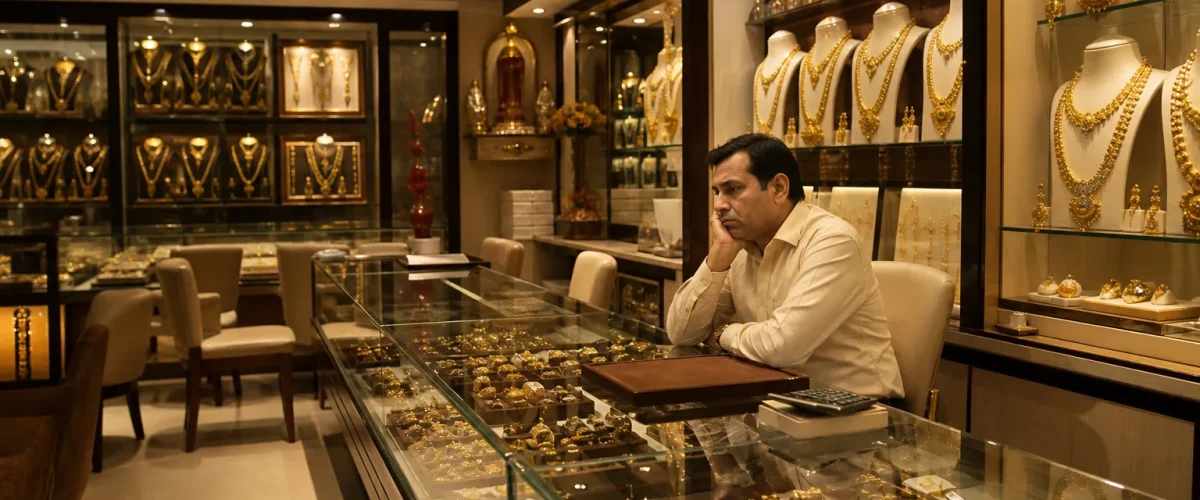
India’s gold demand has crashed approximately 70 percent since the government more than doubled import duties on the precious metal earlier this month, according to industry estimates from the India Bullion and Jewellers Association. The collapse in demand — the steepest in at least a decade — follows the government’s decision to raise the import duty on gold from 6 percent to 15 percent effective 13 May, a move compounded by Prime Minister Narendra Modi’s public appeal for citizens to voluntarily pause gold purchases for one year.
The combined effect of the duty hike, rising living costs driven by the Iran-related energy crisis, and the Prime Minister’s moral suasion has produced a demand destruction that has stunned even the most pessimistic industry observers. “Reports trickling in from jewellers across India show that there has been a 70 percent drop in demand after the import duty was hiked,” Surendra Mehta, national secretary of the India Bullion and Jewellers Association, told The Economic Times.
The Duty Hike — From 6 Percent to 15 Percent in One Stroke
The magnitude of the duty increase is unprecedented in recent Indian economic history. The effective tax burden on gold, including the 3 percent GST that applies at the retail level, has risen from 9.18 percent to 18.45 percent — effectively doubling the government’s take on every gram of gold sold in the country. For a consumer buying a standard 10-gram gold chain that costs approximately Rs 7.5 lakh at current international prices, the additional tax outflow is roughly Rs 70,000.
The government’s rationale is explicitly linked to the macroeconomic pressures arising from the Iran-Israel-US conflict. India imported approximately $46 billion worth of gold in FY26, making it the second-largest component of the current account deficit after crude oil. With the rupee under pressure from elevated oil prices and capital outflows, the government views reducing gold imports as a lever to protect the balance of payments.
Alongside the duty hike, the government has tightened import rules under the Advance Authorisation Scheme, which had allowed jewellery exporters to import gold at concessional rates. Several exporters had reportedly been misusing the scheme to import gold for domestic consumption while claiming the export concession — a loophole that the revised rules aim to close.
Modi’s Austerity Appeal — “Gold Can Wait a Year”
The duty hike might have been absorbed by the market over time — India’s gold demand has historically proved resilient to price and tax increases, driven by deep cultural attachment to the metal. What has made this episode different is the Prime Minister’s direct, public appeal for austerity.
On 10 May, three days before the duty hike took effect, Modi addressed the nation and asked citizens to practise “prudence on certain forms of consumption.” Among the specific suggestions were working from home wherever possible, cutting foreign travel and destination weddings, reducing edible oil and fertiliser use, buying swadeshi merchandise — and, most pointedly, pausing gold purchases for one year.
The appeal carries political weight in a country where the Prime Minister commands significant personal popularity and moral authority. Jewellers across the country report that customers are citing the PM’s appeal as a reason for deferring purchases, even for weddings — the single largest driver of gold demand in India.
“The Prime Minister’s appeal to stay away from gold for a year has impacted consumer sentiment in a big way,” Mehta said. “We are seeing a sharp fall in even bridal jewellery orders, which were previously considered recession-proof.”
Industry Impact — Jewellers, Refiners, and Gold Monetisation
The demand collapse has cascading effects across the gold value chain. Small and medium jewellers, who operate on thin margins and typically hold 15 to 30 days of inventory, are facing an immediate liquidity crunch. Several jewellers’ associations in Gujarat, Maharashtra, and Tamil Nadu — the three largest gold-consuming states — have written to the Finance Ministry requesting a rollback or phased implementation of the duty hike.
The government has shown no inclination to reverse course. Instead, there is talk of reviving the Gold Monetisation Scheme, an initiative launched in 2015 that allows individuals and institutions to deposit physical gold with banks in exchange for interest payments. The original scheme had limited uptake — Indians deposited barely 30 tonnes against an estimated 30,000 tonnes held by households — but the current environment of high duties and public pressure may create conditions for greater participation.
India’s two largest listed jewellery companies — Titan Company and Kalyan Jewellers — saw their stock prices decline between 8 and 12 percent in the two weeks following the duty hike announcement. Titan, which derives approximately 85 percent of its revenue from the Tanishq jewellery brand, reported in its Q4 FY26 earnings call that May footfall was down 35 percent year-on-year, with the second half of the month showing “virtually no discretionary purchasing.”
The Broader Economic Context — Austerity as War Footing
The gold demand story cannot be understood in isolation from the broader economic pressures created by the geopolitical tensions around the Strait of Hormuz. India’s import bill has ballooned as crude oil prices have risen from the low $70s to above $90 per barrel. The Centre’s recent windfall tax changes signalling broader fiscal recalibration and the CNG prices hiked three times in two weeks due to Iran war energy costs are all symptoms of the same underlying strain.
In this context, the gold duty hike is both an economic measure and a political signal. By framing gold austerity as a patriotic duty, Modi is preparing the public for a potentially prolonged period of economic difficulty — one in which consumption patterns may need to shift significantly to protect India’s external accounts.
Whether the 70 percent demand decline sustains through the wedding season in October-December — when approximately 40 percent of India’s annual gold demand is concentrated — will be the real test. History suggests that cultural imperatives eventually override price signals in the Indian gold market. But then again, history has never seen a duty hike of this magnitude combined with direct prime ministerial intervention. This time may genuinely be different.