RBI Holds Repo Rate at 5.25% — MPC Votes Unanimously to Maintain Neutral Stance Amid Global Uncertainty

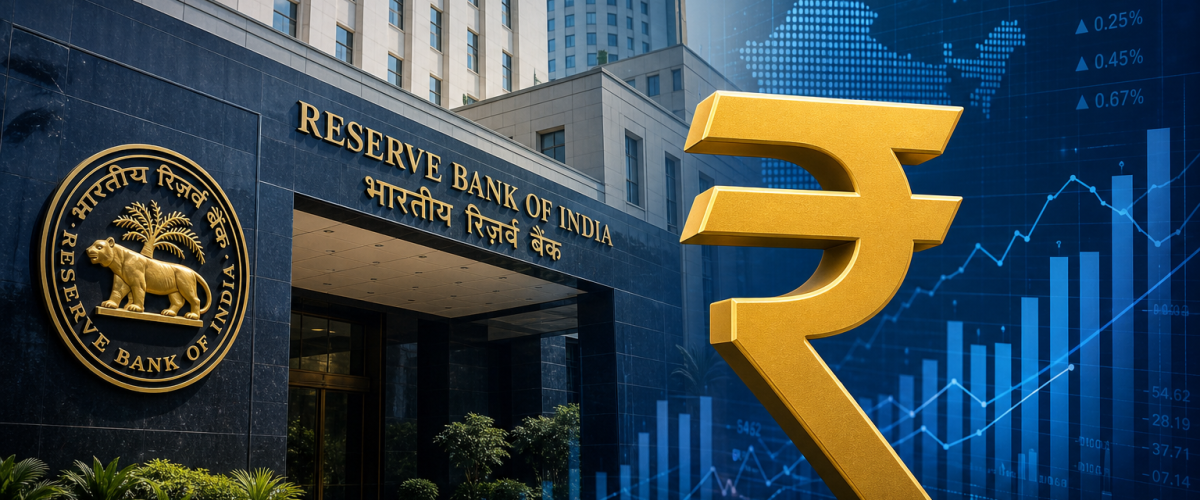
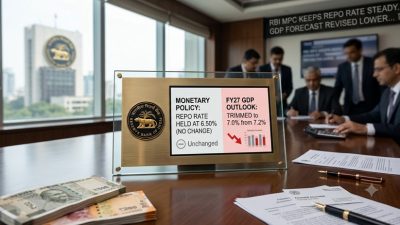
The Reserve Bank of India’s Monetary Policy Committee (MPC) on June 5, 2026, voted unanimously to keep the policy repo rate unchanged at 5.25%, maintaining its ‘neutral’ policy stance for the third consecutive meeting. RBI Governor Sanjay Malhotra, announcing the decision, cited the “delicate balance between supporting domestic growth and managing inflation risks arising from global geopolitical tensions” as the primary rationale.
The decision, widely anticipated by market participants, comes at a time when India’s economy is navigating multiple headwinds — from the fallout of the US-Iran war and elevated crude oil prices to a weakening rupee and tightening global financial conditions. The MPC’s unanimous vote signals a strong consensus among policymakers that this is not the time for either rate cuts or hikes.
Key Takeaways From the MPC Decision
The headline numbers from the June policy review are clear: the repo rate stays at 5.25%, the standing deposit facility (SDF) rate at 5.00%, the marginal standing facility (MSF) rate at 5.50%, and the bank rate at 5.50%. The cash reserve ratio (CRR) remains at 3%, providing banks with ample liquidity to support lending.
Governor Malhotra emphasised that the neutral stance gives the RBI “the flexibility to act in either direction” depending on how the macroeconomic situation evolves. “The global environment is fraught with uncertainty,” he said. “The Iran conflict, volatile oil prices, and shifting trade policies require us to remain vigilant and data-dependent.”
The RBI revised its GDP growth forecast for FY2026-27 marginally downward to 6.3% from 6.5%, reflecting the drag from higher energy costs and global demand slowdown. Inflation projections were kept at 4.2% for the full year, within the RBI’s target band of 2-6%, though the central bank flagged upside risks from food prices and the pass-through of higher crude oil costs.
What It Means for Borrowers and Investors
For home loan borrowers, the status quo means EMIs remain unchanged for now. Banks have passed on the cumulative 100 basis points of rate cuts delivered between February and October 2025, bringing effective lending rates to their lowest since 2022. However, with the RBI now on pause, further relief is unlikely in the near term.
Fixed deposit rates, which had been declining, are also expected to stabilise. Several banks have already stopped cutting FD rates in recent weeks, anticipating the pause. For equity investors, the decision was broadly positive — the Sensex jumped 500 points on the day, with banking and real estate stocks leading the rally.
The bond market reacted calmly, with the benchmark 10-year government security yield holding steady at 6.85%. Bond traders noted that the RBI’s dovish tone — emphasising support for growth — kept expectations alive for a possible rate cut later in the year if inflation remains contained.
The RBI’s Tightrope Walk
The RBI’s challenge is unusually complex. On one hand, domestic demand indicators are mixed — rural consumption is improving thanks to a good rabi harvest, but urban demand and private investment remain sluggish. The services sector continues to be a bright spot, with the PMI index consistently above 55, while manufacturing has been more subdued.
On the other hand, external risks are elevated. The US-Iran war has pushed oil prices above $100 per barrel for extended periods, threatening India’s current account deficit and import bill. The rupee’s depreciation to nearly 95 against the dollar has made imports more expensive, adding to inflationary pressures. And with the US Federal Reserve signalling possible rate hikes, capital outflows from emerging markets remain a concern.
“A rate hike is not the preferred course of action right now,” said Nitin Bhasin, head of institutional equities at Ambit Capital. “The RBI is rightly focused on supporting growth while keeping inflation expectations anchored. The neutral stance is the most prudent approach in this environment.”
Looking Ahead: August MPC Meeting
Market participants will now turn their attention to the August MPC meeting, by which time the monsoon’s progress, Q1 GDP data, and the trajectory of crude oil prices should provide greater clarity. The RBI has also asked banks to assess AI-related risks and draw up action plans by June-end — a directive that signals the central bank’s growing focus on technology-driven disruptions in the financial sector.
Also Read
- RBI Keeps Repo Rate Unchanged at 5.25 Percent as Monetary Policy Committee Projects GDP Growth at 6.9 Percent Amid Global Uncertainty
- RBI Holds Repo Rate at 5.25% as India’s FY26 GDP Hits 7.6% — But Trump Tariffs and Oil Shocks Cloud FY27
- RBI Holds Repo Rate at 5.25% in February 2026: What It Means for India’s Economy
- Aviation Fuel Prices Rise 10% in India
- US and Iran Launch Fresh Airstrikes
For now, the message from Mint Road is clear: hold steady, stay flexible, and be prepared to act when the data demands it. In an uncertain world, patience may well be the most prudent policy.