Aviation Fuel Prices Rise 10% in India — Government Launches Price Stabilisation Scheme at Rs 115 Per Litre for Airlines

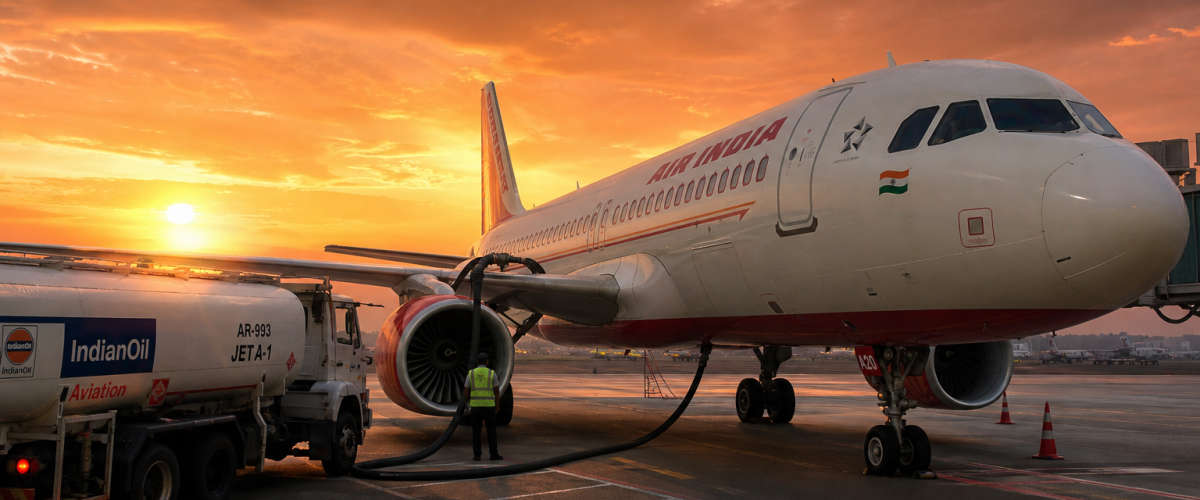
Aviation turbine fuel (ATF) prices in India have surged by 10% in June 2026, reflecting the continued impact of the US-Iran war on global crude oil markets. In a bid to shield domestic airlines from further cost shocks, the government has announced a price stabilisation scheme that locks in ATF rates at Rs 115 per litre for participating carriers for up to three years — a move that has been welcomed by the aviation industry but raises questions about its long-term fiscal implications.
The price hike, effective from June 1, brings ATF prices in Delhi to Rs 121.40 per litre, the highest level since the COVID-19 pandemic era. For airlines, fuel typically accounts for 35-45% of operating costs, making ATF prices one of the most critical determinants of profitability. The 10% increase, if fully absorbed, could wipe out margins across the industry, which has only recently returned to profitability after years of pandemic-related losses.
How the Stabilisation Scheme Works
The government’s price stabilisation scheme, announced by the Ministry of Petroleum and Natural Gas, is designed as a voluntary, market-based mechanism. Airlines that opt in will pay a fixed rate of Rs 115 per litre for ATF — below the current market price — for a period of up to three years. The difference between the fixed rate and the actual market price will be covered through interest-free advances from the government to oil marketing companies (OMCs) like Indian Oil, Bharat Petroleum, and Hindustan Petroleum.
If benchmark crude oil prices fall below a threshold of Rs 86.32 per litre (equivalent to roughly $75-80 per barrel of Brent crude), the government’s advance is automatically repaid as OMCs would be selling fuel above their cost. The scheme essentially creates a hedging mechanism backed by the government’s balance sheet, protecting airlines from upside risk while allowing the government to recover costs when prices normalise.
“This is a well-designed counter-cyclical intervention,” said Kapil Kaul, CEO of aviation consultancy CAPA South Asia. “Indian airlines don’t have sophisticated fuel hedging programmes like their global counterparts. The government stepping in as a de facto hedging partner is pragmatic, given the extraordinary circumstances of the Iran war.”
Impact on Airlines
India’s aviation sector, which has grown to become the third-largest domestic market globally, has been under intense pressure since the US-Iran conflict erupted in February. The combination of high fuel prices, a weak rupee (which makes dollar-denominated fuel imports more expensive), and disrupted Gulf airspace has squeezed both low-cost and full-service carriers.
IndiGo, India’s largest airline by market share, had already warned investors in its Q4 earnings call that fuel costs could impact its FY27 profitability. The stabilisation scheme provides significant relief — at Rs 115 per litre versus the market rate of Rs 121.40, IndiGo alone could save hundreds of crores annually. Air India, Vistara (now merged with Air India), SpiceJet, and Akasa Air are also expected to opt into the scheme.
Aviation stocks rallied on the announcement, with IndiGo shares rising 3.5% and Air India’s parent Tata Group-linked aviation companies seeing positive momentum. Analysts noted that the scheme effectively puts a floor under airline profitability, making Indian aviation stocks more attractive despite the global uncertainty.
Fiscal Risks and Criticisms
Not everyone is convinced the scheme is without risks. Opposition parties have questioned the fiscal prudence of the government effectively subsidising private airlines. “The government can’t find money for MGNREGA or farmer loan waivers, but it can subsidise billionaire airline operators,” said Congress spokesperson Supriya Shrinate. “This is a clear case of misplaced priorities.”
Economists have also raised concerns about the contingent liability the scheme creates. If crude oil prices remain elevated for an extended period — a realistic scenario given the ongoing Iran conflict — the government’s interest-free advances could balloon into a significant fiscal burden. The scheme’s three-year lock-in period means the government is essentially betting that oil prices will normalise within that timeframe.
However, the alternative — allowing airlines to either absorb the costs (potentially leading to bankruptcies) or pass them on to consumers (making air travel unaffordable for millions) — is equally unattractive. The government appears to have calculated that maintaining a functioning, affordable aviation sector is worth the fiscal risk.
Passengers: Relief or More Expensive Tickets?
For air travellers, the scheme’s impact is mixed. Airlines that opt in will face lower fuel costs, which should theoretically prevent the steepest fare increases. However, the scheme does not mandate that savings be passed on to consumers, and airlines may use the margin relief to shore up their balance sheets rather than reduce fares.
Current airfares have already risen 15-25% compared to a year ago, with popular routes like Delhi-Mumbai, Bangalore-Delhi, and Kolkata-Chennai seeing particularly sharp increases. Industry observers expect fares to stabilise at current levels rather than decline, as airlines balance fuel savings against other rising costs including airport charges, crew expenses, and the weak rupee.
Also Read
- Indian Airlines Warn Government They May Stop Operations as Aviation Turbine Fuel Prices Surge to 55-60 Per Cent of Total Costs
- Cabinet Approves Rs 10,000 Crore ATF Price Stabilization Fund to Shield Airlines from Iran War Fuel Surge
- PM Modi Urges Work From Home and Fuel Conservation as West Asia Oil Crisis Deepens and Crude Surges Past 105 Dollars Per Barrel
- US and Iran Launch Fresh Airstrikes
- RBI Holds Repo Rate at 5.25%
As India’s aviation sector navigates one of its most challenging periods, the ATF stabilisation scheme represents a significant — if imperfect — policy intervention. Whether it succeeds in its goal of keeping India’s skies affordable and its airlines solvent will depend largely on factors beyond anyone’s control: the trajectory of the Iran war and the price of crude oil.