Nipah Virus Returns to Kerala — First Case of 2026 Confirmed, State Declares High Alert

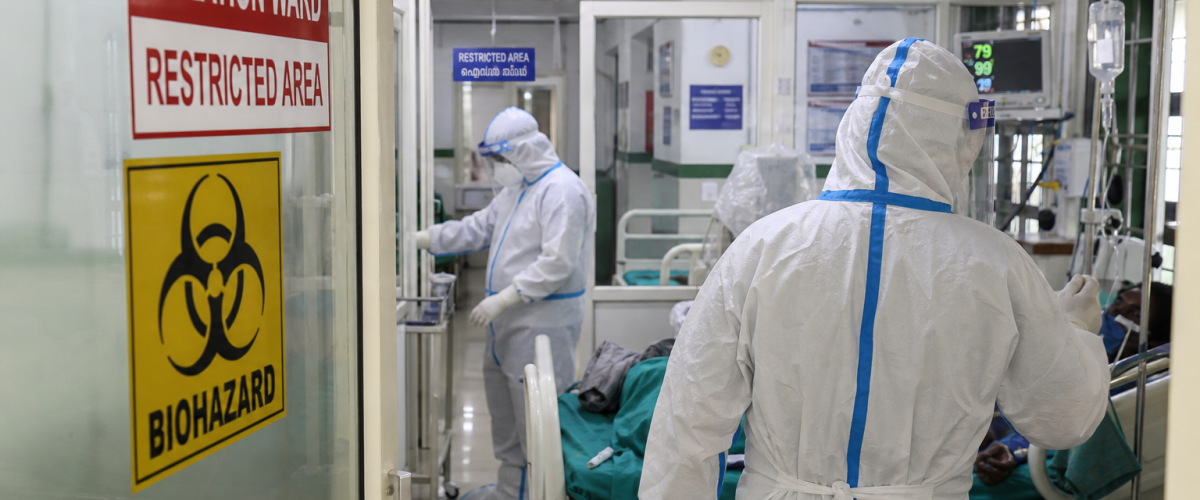
Kerala is on high alert after the state confirmed its first case of Nipah virus infection in 2026, with the patient currently on ventilator support at a government hospital. The state health department has activated its infectious disease response protocol, placing multiple districts under surveillance and quarantining hospital staff who had contact with the patient. The development has raised fears of a potential outbreak in the southern state, which has battled multiple Nipah episodes in recent years.
The patient, reported to be a middle-aged man, was admitted to hospital with symptoms including high fever, severe headache, and respiratory distress. Samples sent to the National Institute of Virology (NIV) in Pune returned positive for the Nipah virus, prompting immediate containment measures. The patient’s condition is described as critical, with doctors administering supportive care and experimental antiviral treatments.
What Is Nipah Virus?
The Nipah virus (NiV) is a zoonotic pathogen — meaning it can jump from animals to humans — that was first identified during an outbreak in Malaysia in 1998-99. The virus is carried naturally by fruit bats of the Pteropodidae family, and can be transmitted to humans through direct contact with infected bats, consumption of contaminated fruits or date palm sap, or person-to-person transmission through close contact with infected individuals’ bodily fluids.
Nipah is classified by the World Health Organization as a priority pathogen due to its high fatality rate — which ranges from 40% to 75% depending on the outbreak — its potential for person-to-person transmission, and the absence of any approved vaccine or specific treatment. The virus causes a range of symptoms from asymptomatic infection to acute respiratory illness and fatal encephalitis (brain inflammation).
The incubation period is typically 4 to 14 days, though it can extend up to 45 days, making contact tracing particularly challenging. The long incubation period means that infected individuals may travel widely and come into contact with many people before showing symptoms, increasing the risk of wider transmission.
Kerala’s History With Nipah
Kerala has been the epicentre of Nipah outbreaks in India, with confirmed cases reported in 2018, 2019, 2021, and 2023. The 2018 outbreak in Kozhikode district was the most severe, claiming 17 lives and causing widespread panic across the state. The response to that outbreak — led by the state health department with support from the WHO and NIV — became a model for infectious disease management in India, with aggressive contact tracing, quarantine measures, and community engagement credited with containing the virus. (Related: Southwest Monsoon 2026 Advances Into 12 States — I…)
The recurring nature of the outbreaks in Kerala is linked to the state’s ecology. Kerala’s dense tropical forests are home to large populations of fruit bats, and the state’s agricultural practices — including fruit cultivation and toddy tapping — bring humans into regular contact with bat habitats. Climate change and deforestation are also believed to be increasing the frequency of spillover events, as bats are displaced from their natural habitats into closer proximity with human settlements.
Health Minister Veena George held an emergency meeting with senior officials and directed the establishment of a control room in the affected district. “We have dealt with Nipah before and we know how to contain it,” she told reporters. “The key is early detection, aggressive contact tracing, and strict isolation. We are implementing all protocols immediately.”
Containment Measures
The state has activated a multi-layered containment strategy. All individuals who had contact with the patient — including family members, neighbours, healthcare workers, and fellow travellers — are being identified and placed under quarantine for 21 days. The hospital where the patient is being treated has been designated as a containment zone, with separate entry and exit points, and all staff involved in the patient’s care are using full personal protective equipment. (Related: Hantavirus Outbreak on MV Hondius Cruise Ship Kill…)
Testing has been ramped up, with mobile collection units deployed in the affected area to collect samples from symptomatic individuals and close contacts. The NIV in Pune is providing rapid testing support, with results available within 24-48 hours. The Indian Council of Medical Research (ICMR) has also been notified and is coordinating national-level surveillance.
Surveillance of fruit bat populations in the area has been intensified, with wildlife officials collecting bat samples to determine the prevalence of the virus in the local bat population. Residents have been advised not to consume fallen fruits, to avoid contact with bats, and to wash all fruits thoroughly before eating.
The Bigger Picture
The Nipah outbreak comes at a time when global health authorities are increasingly concerned about the risk of zoonotic diseases — infections that jump from animals to humans. The COVID-19 pandemic, which is believed to have originated from a zoonotic spillover event, demonstrated the devastating potential of such diseases. Nipah, with its higher fatality rate and lack of a vaccine, is considered one of the most dangerous potential pandemic pathogens.
Several pharmaceutical companies and research institutions are working on Nipah vaccines. The most advanced candidate, developed by the Serum Institute of India in collaboration with Oxford University and the Coalition for Epidemic Preparedness Innovations (CEPI), is currently in Phase II clinical trials. However, an approved vaccine is still likely years away.
For Kerala, the immediate priority is containing the current case and preventing further transmission. The state’s experience with previous outbreaks gives it a significant advantage in this effort. But as long as the ecological conditions that enable bat-to-human spillover persist — and as climate change continues to alter those conditions — the threat of Nipah will remain a recurring challenge for the state and the nation.
Also Read
- Southwest Monsoon 2026 Advances Into 12 States — IMD Issues Red Alert for Coastal Karnataka, Heatwave Grips North India
- Hantavirus Outbreak on MV Hondius Cruise Ship Kills 3 Passengers as WHO Monitors 6 Confirmed Cases and Global Alarm Grows
- Kerala Election Results 2026: Congress-Led UDF Returns to Power as Left Front’s Historic Bid for Consecutive Terms Falls Short
- India Real Estate 2026: Housing Sales Hit Record High as Luxury Segment Outpaces Affordable Market
- Amit Shah Chairs High-Level Security Meeting for Amarnath Yatra 2026 — Multi-Layered Security Plan Activated

- Fentanyl Vaccine Breakthrough: Scripps Research Develops Shot That Blocks Deadly Overdoses Before They Reach the Brain - June 13, 2026
- Nipah Virus Returns to Kerala — First Case of 2026 Confirmed, State Declares High Alert - June 12, 2026
- Jill Biden Reveals She Wanted to Keep PM Modi’s 7.5-Carat Diamond Gift but Returned It After State Department Valued It at $20,000 - June 8, 2026