NEET-UG 2026 Retest Underway: 22 Lakh Students Appear Amid Unprecedented Security

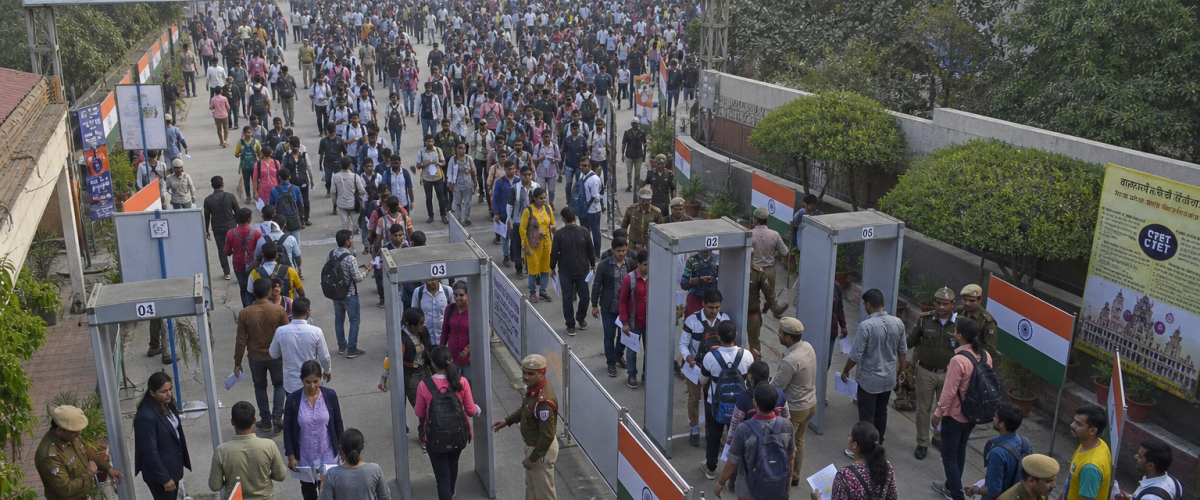
The NEET-UG 2026 re-examination is underway across India as 22 lakh medical aspirants sit for the country’s most heavily secured competitive exam in history. The retest, being conducted at 5,440 centres across 551 cities in India and 14 cities abroad, began with candidates entering exam halls after clearing multi-layered security checkpoints involving Delhi Police personnel, frisking units, and dog squads — a level of vigilance never before seen for a national entrance examination.
The exam, which runs from 2:00 PM to 5:15 PM, replaces the original May 3 examination that was cancelled after allegations of question paper leaks through the Telegram messaging platform — which remains banned across India until tomorrow. The National Testing Agency (NTA) has declared itself “fully prepared” for the smooth and secure conduct of the retest.
Fortress-Level Security
The security apparatus deployed for today’s NEET retest is extraordinary by any standard — and unprecedented for a civilian examination:
Police and Paramilitary: Delhi Police and state police forces across all 551 cities have deployed dedicated teams to examination centres. In several states, paramilitary personnel have been stationed at larger centres. Frisking units with metal detectors are screening every candidate before entry, while sniffer dog squads have swept centres for electronic devices and contraband.
Air Force Support: In what may be a first for any examination globally, the Indian Air Force has been involved in the logistical chain for question paper distribution. Papers were transported under armed escort with GPS tracking and tamper-evident packaging, with a shortened chain of custody designed to minimise leak risk.
Digital Lockdown: The Telegram ban — affecting 150 million Indian users — remains in effect through the examination period, ensuring that the platform that facilitated the original paper leak cannot be used. The ban will be lifted tomorrow, June 22.
Biometric Verification: Several centres have implemented biometric verification to prevent proxy candidates — a cheating method that has plagued Indian competitive exams for years. Candidates’ photographs on admit cards are being cross-referenced with physical appearance at multiple checkpoints.
Inside the Examination Centres
Reports from centres across India paint a picture of nervous anticipation mixed with relief:
Student Reactions: Candidates who have spoken to media outside centres describe feeling both anxious and optimistic. Many said the visible security presence — while initially intimidating — actually provided reassurance that the exam would be conducted fairly. “Last time, we didn’t know if the paper was already leaked before we opened it. Today, at least we know they’ve tried everything,” one candidate in Delhi told reporters.
Parent Vigils: Outside centres across India, thousands of parents are maintaining anxious vigils, many of them having travelled hundreds of kilometres to accompany their children to the exam city. The scene outside major centres — with parents praying, exchanging anxious looks, and refreshing news feeds — captures the emotional weight that NEET carries for Indian families.
The Exam Pattern
The NEET-UG 2026 retest follows the standard pattern: 200 questions across Physics, Chemistry, and Biology (Botany and Zoology), with candidates required to attempt 180 questions over a three-hour duration. Each correct answer carries 4 marks, with 1 mark deducted for each incorrect response. The total marks remain 720.
Education experts note that the retest paper is expected to maintain a comparable difficulty level to the original May 3 exam, ensuring that candidates are neither advantaged nor disadvantaged by the re-examination.
After the Exam
Results are expected within four to six weeks, with the counselling process for approximately 1.1 lakh MBBS and BDS seats to follow shortly after. The Supreme Court has deferred larger questions about NTA reforms to a July hearing, but this is expected to address systemic improvements rather than challenge the retest results.
For the 22 lakh students currently sitting in examination halls across India, the next three hours will determine the trajectory of their medical careers. The government, the NTA, and the nation are watching — hoping that the extraordinary security measures will deliver what the original exam could not: a fair, credible, and leak-proof examination.
Also Read
- NEET 2026: Lakhs of Students Set to Appear for Medical Entrance Exam on May 3 Under AI Surveillance and Zero Leak Policy as NTA Deploys Unprecedented Security
- NEET-UG 2026 D-Day Tomorrow: 22 Lakh Students Face High-Security Retest on June 21
- NEET-UG 2026 Retest in 2 Days: 22 Lakh Students Prepare for June 21 Amid Legal, Security Uncertainty
- NEET 2026 Paper Leak: Cockroach Janta Party Protests at Jantar Mantar Demanding Education Minister Dharmendra Pradhan Resignation
- NEET UG 2026 Paper Leak — Supreme Court Slams NTA, Says ‘Lessons Not Learnt’ as Re-Exam Set for June 21