NEET-UG 2026 D-Day Tomorrow: 22 Lakh Students Face High-Security Retest on June 21

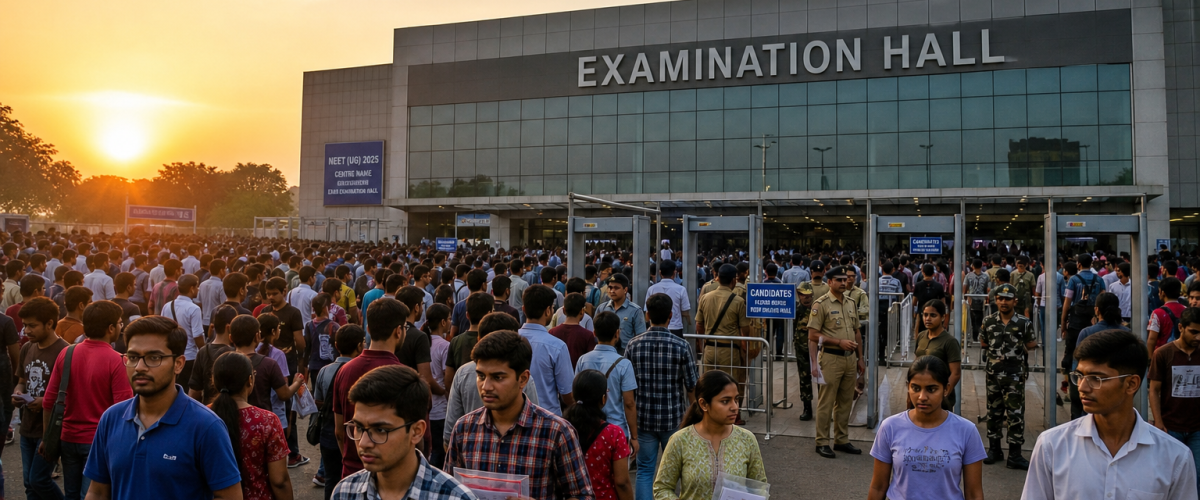
In fewer than 24 hours, approximately 22 lakh medical aspirants will sit for the NEET-UG 2026 re-examination — one of the most heavily secured competitive exams in Indian history. The retest, scheduled for Saturday, June 21, follows the cancellation of the original May 3 examination after devastating allegations that question papers were leaked through the Telegram messaging platform, which remains banned across India until June 22.
With the Delhi High Court’s Friday verdict upholding the Telegram ban, the CBI’s active investigation into the original leak, and an unprecedented multi-layered security apparatus in place, the stage is set for an examination day that will test not just students’ knowledge — but the government’s ability to restore public trust in India’s most consequential medical entrance test.
What Makes Tomorrow Different
The June 21 retest is unlike any NEET examination previously conducted. The scale of the security operation — both digital and physical — reflects the depth of the crisis created by the May 3 paper leak:
Telegram Ban: The government’s decision to ban Telegram for nearly a week — affecting 150 million Indian users — is the most aggressive digital intervention ever undertaken for examination security in India. The Delhi High Court’s Friday ruling that the ban is “well-founded” has settled the legal question, at least for now, ensuring the platform remains inaccessible through the examination period.
CBI Oversight: The Central Bureau of Investigation, which is actively investigating the original paper leak and has made several arrests, will have observers at select examination centres across the country. This represents the first time that India’s premier investigative agency has been deployed in a supervisory capacity during a national competitive examination.
Redesigned Paper Security: The NTA has completely overhauled its question paper distribution process. Papers will be transported under armed escort with GPS tracking, tamper-evident packaging, and a shortened chain of custody that minimises the number of individuals with access to the papers before the exam begins.
The Final Hours: What Students Should Know
For the 22 lakh students who will walk into examination centres tomorrow morning, the final hours are about preparation, logistics, and mental readiness:
Documents and Logistics: Students must carry their admit card, valid photo ID, and a passport-sized photograph in a transparent bag. Mobile phones, smartwatches, and all electronic devices are strictly prohibited. Students should arrive at their centres at least 60 minutes before the scheduled start time to clear the enhanced security checks.
Exam Pattern: The NEET-UG 2026 retest follows the standard format: 200 questions across Physics, Chemistry, and Biology, with 180 to be attempted, over a three-hour duration. Negative marking of one mark per incorrect answer applies. The total marks remain 720.
Mental Preparation: Education counsellors emphasise that the most important preparation in the final 24 hours is psychological. Students who performed well in the original May 3 exam should take confidence from their preparation level. Those who struggled should view the retest as a fresh opportunity — a clean slate with the same syllabus they have spent months mastering.
The Political Stakes
The NEET retest carries enormous political weight. The opposition has used the paper leak scandal to attack the government’s competence, while the ruling party has pointed to the aggressive security measures — including the Telegram ban — as evidence of its determination to ensure examination integrity.
A smooth, credible retest on June 21 would provide the government with a powerful counter-narrative: that it identified the problem, investigated it through the CBI, took unprecedented corrective action, and delivered a secure examination. A repeat controversy — even a minor security breach — would be politically devastating.
After the Exam
The NEET-UG 2026 results are expected within four to six weeks of the June 21 examination. The counselling process for approximately 1.1 lakh MBBS and BDS seats across India will follow shortly after. Students should note that the Supreme Court has deferred larger questions about NTA processes and accountability to a July hearing — but this is widely expected to address systemic reforms rather than challenge the validity of the June 21 results.
The Telegram ban will be lifted on June 22 — one day after the exam. For 150 million Indian Telegram users, normalcy returns on Monday. For 22 lakh NEET aspirants, the real anxiety begins: the wait for results that will determine whether years of preparation have secured them a place in India’s fiercely competitive medical education system.
Also Read
- NEET 2026: Lakhs of Students Set to Appear for Medical Entrance Exam on May 3 Under AI Surveillance and Zero Leak Policy as NTA Deploys Unprecedented Security
- NTA Cancels NEET UG 2026 Examination After Paper Leak Allegations in Rajasthan as Centre Orders CBI Probe and Re-Exam
- NEET-UG 2026 Retest in 2 Days: 22 Lakh Students Prepare for June 21 Amid Legal, Security Uncertainty
- Delhi HC Upholds Telegram Ban: ‘Centre’s Order Is Well-Founded,’ Dismisses Platform’s Plea Before NEET Retest
- Supreme Court Refuses to Stay NEET Retest on June 21, Defers Hearing to July — 22 Lakh Students in Limbo