Delhi NCR Mandates Only Electric Three-Wheelers From October 2026 as Commission for Air Quality Orders Phased Rollout to Combat Pollution Crisis

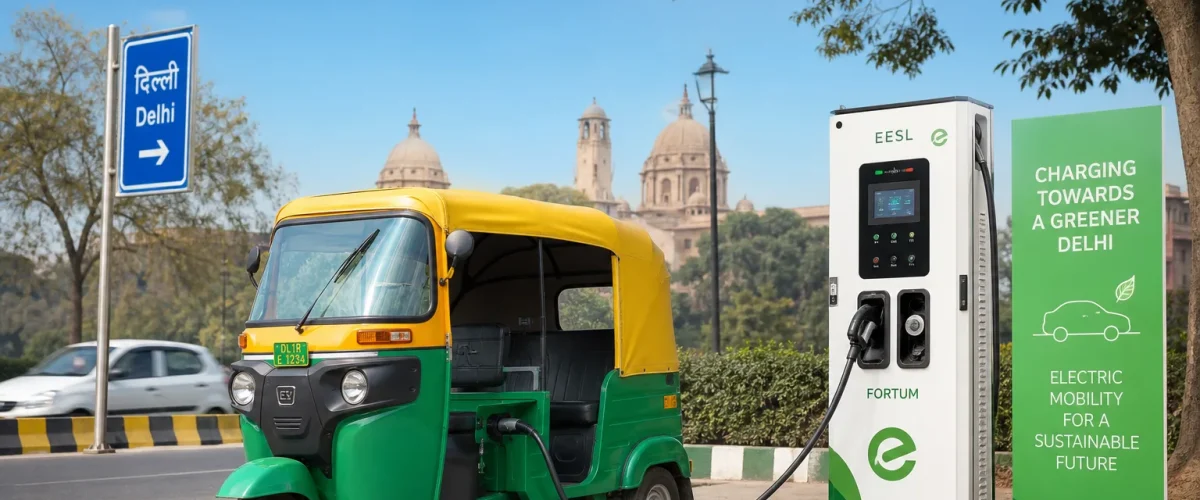
The Commission for Air Quality Management (CAQM) in the National Capital Region and adjoining areas on Friday, 16 May 2026, announced a sweeping mandate requiring all three-wheelers operating in the Delhi-NCR region to be fully electric from 1 October 2026, as part of a comprehensive air quality improvement plan. The decision, which affects an estimated 1.5 lakh auto-rickshaws and goods carriers across Delhi, Gurugram, Noida, Ghaziabad and Faridabad, represents one of the most aggressive urban transport decarbonisation moves by any Indian government body.
Alongside the electric three-wheeler mandate, the CAQM announced that with effect from 1 October 2026, no fuel shall be dispensed at any fuel station across the NCR to vehicles that do not possess a valid Pollution Under Control Certificate (PUCC). This effectively creates a dual enforcement mechanism — three-wheelers must be electric, while all other vehicles must demonstrate compliance with emission standards to access fuel.
What the Mandate Means for Auto-Rickshaw Drivers
The mandate will primarily affect the approximately 90,000 registered auto-rickshaw drivers in Delhi and an additional 60,000 in the broader NCR. Currently, the vast majority of auto-rickshaws in the region run on CNG (compressed natural gas), which replaced diesel and petrol autos in the early 2000s following a Supreme Court directive. The shift to electric will require drivers to either purchase new electric three-wheelers or convert their existing CNG vehicles — both of which involve significant upfront costs.
To cushion the financial impact, the CAQM said it would work with the Delhi government and neighbouring state governments to expand existing subsidies under the FAME-III scheme and introduce dedicated low-interest loan programmes for auto-rickshaw drivers. “We are committed to ensuring that no driver is left behind in this transition,” said CAQM chairperson M.M. Kutty. “The objective is cleaner air, not economic hardship for the working class.”
Electric three-wheeler manufacturers, including Mahindra Electric, Piaggio, and startups like Euler Motors, Omega Seiki and Altigreen, have been expanding production capacity in anticipation of such a mandate. Prices for electric autos currently range from Rs 2.5 lakh to Rs 4 lakh, compared to Rs 3-4 lakh for new CNG autos, though the running cost of electric vehicles is substantially lower. Industry estimates suggest that an electric auto saves its owner Rs 15,000-20,000 per month in fuel costs compared to a CNG vehicle, meaning the higher upfront cost can be recovered within 12-18 months.
PUCC Enforcement: A Game-Changer for All Vehicles
The PUCC enforcement directive is arguably even more significant than the three-wheeler mandate, as it affects all vehicle categories across the NCR. Under the current system, while PUCCs are technically mandatory, enforcement has been lax, with millions of vehicles operating without valid certificates. By linking fuel dispensing to PUCC possession, the CAQM has created a market-based enforcement mechanism that is far more effective than police checks.
Fuel station operators have been given until 1 September 2026 to install PUCC verification systems — which will involve either manual checking of certificates or integration with the government’s digital vehicle registration database (Vahan). The Indian Oil Corporation, Bharat Petroleum and Hindustan Petroleum have been directed to issue implementation guidelines to their franchisees within 30 days. With fuel prices already at record highs following the recent Rs 3 per litre hike, the additional requirement for PUCC compliance adds another layer of cost awareness for vehicle owners.
Delhi’s Air Quality Crisis
The mandate comes against the backdrop of Delhi’s persistent air quality crisis. The national capital consistently ranks among the world’s most polluted cities, with particulate matter (PM2.5) levels regularly exceeding World Health Organization (WHO) safe limits by 10-20 times during the winter months. While pollution peaks during the October-December period due to agricultural stubble burning, construction dust and weather patterns, vehicular emissions remain a year-round contributor, accounting for an estimated 28-35 per cent of total PM2.5 emissions in the NCR.
Three-wheelers, while not the largest category of polluting vehicles, are disproportionately visible in residential and commercial areas, often operating in congested urban spaces where their emissions directly affect pedestrians and street vendors. The switch to electric three-wheelers is expected to eliminate approximately 5,000 tonnes of CO2 equivalent emissions per year and significantly reduce local air pollution in high-traffic areas.
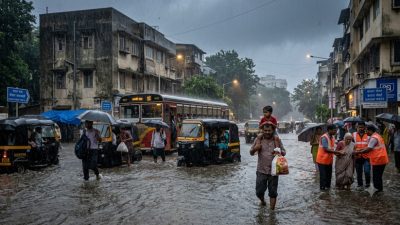
The CAQM also cited public health data in its decision. According to the Centre for Science and Environment (CSE), air pollution is responsible for approximately 2.3 million premature deaths in India annually, with Delhi-NCR residents losing an average of 11.9 years of life expectancy due to poor air quality. “This is not just an environmental issue — it is a public health emergency,” said Kutty. “Every measure that reduces emissions, however small, contributes to saving lives.” Environmental challenges are intensifying across Indian cities, from Delhi’s air quality to Mumbai’s water crisis.
Industry and Political Reactions
The electric vehicle industry predictably welcomed the mandate. “This is exactly the kind of policy push that the EV sector has been waiting for,” said Suman Mishra, CEO of Mahindra Last Mile Mobility. “We have the production capacity and the technology to support this transition, and we are confident that drivers will see the economic benefits within the first year of ownership.”
Auto-rickshaw unions, however, expressed mixed reactions. The Delhi Auto-Rickshaw Sangh acknowledged the environmental benefits but demanded that the government provide upfront subsidies of at least Rs 1 lakh per vehicle and establish sufficient charging infrastructure before the October deadline. “We support clean air, but not at the cost of our livelihoods,” said union leader Rajendra Soni. “The government must walk the talk on subsidies and infrastructure.”
Political reactions largely followed partisan lines. The BJP-led central government and the CAQM framed the decision as a proactive environmental step, while AAP — which governs Delhi — criticised the timeline as “too aggressive” and called for a six-month extension. Congress asked the government to “put its money where its mouth is” by ensuring that subsidies are disbursed before the mandate kicks in. India’s environmental policy landscape continues to evolve rapidly as climate concerns intersect with urban governance and public health priorities.