9 Killed After Suspected AC Blast Sparks Devastating Fire in Delhi’s Vivek Vihar Building: How Grilled Windows Trapped Sleeping Families in Four-Storey Inferno

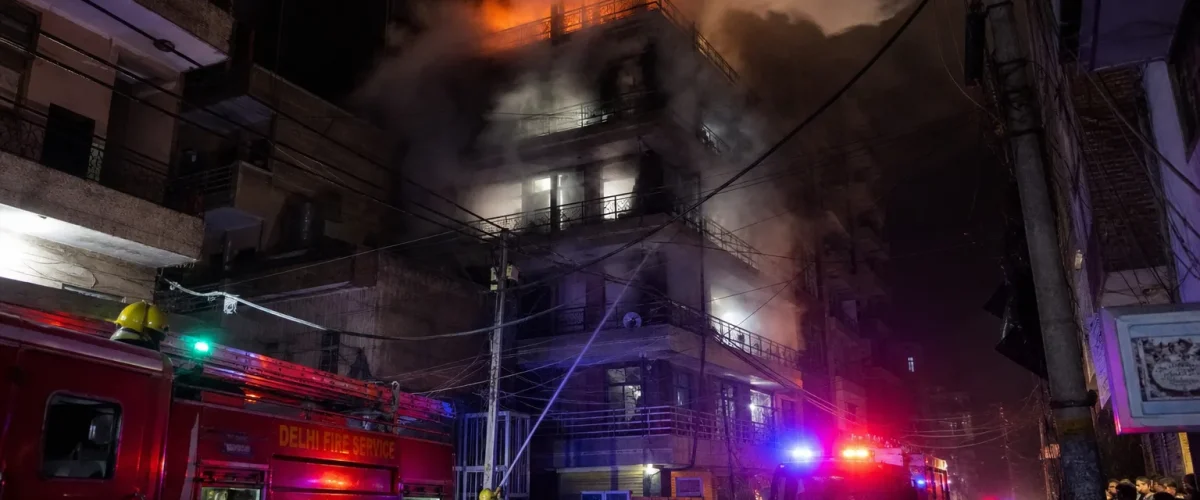
Devastating Fire Kills Nine in East Delhi’s Vivek Vihar as Families Sleep
Nine people, including a toddler, were killed and several others injured when a massive fire ripped through a four-storey residential building in Vivek Vihar Phase-I, east Delhi’s Shahdara district, in the early hours of Sunday, 3 May 2026. Preliminary investigations suggest the blaze may have been triggered by an AC blast or electrical short circuit sometime between 3:13 AM and 3:45 AM, while most residents were fast asleep. The fire engulfed flats on the second, third, and fourth floors and took nearly four hours to bring under control.
According to the Delhi Fire Service (DFS) and Delhi Police, a PCR distress call was received at approximately 3:47 AM, following which multiple fire tenders, police teams, and disaster management personnel rushed to the scene. Fire officer Mukesh Verma, who led the operation, said that around 15 people were rescued from the building using ladders, cutting tools, and a specialised turntable ladder. Nine bodies were recovered from different parts of the structure, most from the rear side where the fire was most intense.
Who Were the Victims: Two Families Wiped Out
The tragedy claimed the lives of members of two separate families. On the second floor, five members of a single family perished: Arvind (60), his wife Anita (58), their son Nishant (35), daughter-in-law Anchal (33), and their 1.5-year-old grandson Akash. The youngest victim was found alongside his parents, suggesting the family was likely sleeping together when the fire broke out.
On the third floor, another family of three was killed: Nitin Jain (50), his wife Shailey (48), and their son Samyak (25). On the first floor, Shikha Jain (45) was also among the deceased, bringing the total to nine fatalities. One injured person, Naveen Jain (48), sustained approximately 30 per cent burn injuries and was admitted to Guru Teg Bahadur (GTB) Hospital in critical condition.
Officials confirmed that in some cases, identification of victims may require DNA testing due to the extent of burn injuries. Charred bodies were recovered from the first and second floors as well as a staircase area, indicating that some residents may have been attempting to flee when they were overcome by smoke and flames.
How Grilled Windows and Locked Doors Turned Flats Into Death Traps
What made this fire particularly deadly was the presence of protective iron grilles on windows and barred exits that prevented residents from escaping. Multiple eyewitness accounts from the local community describe desperate scenes of families trapped behind metal bars as flames engulfed their homes. Several residents could not unlock doors or break through window grilles quickly enough, and rescuers were similarly hindered in reaching those trapped inside.
The building housed 4BHK flats on each floor, and the fire spread rapidly through domestic furnishings, curtains, and other combustible materials in at least six flats. The upward spread of the fire through the stairwell effectively cut off the primary escape route for upper-floor residents. Local accounts suggest that many occupants were asleep when the fire started, giving them virtually no time to react before smoke and flames reached their bedrooms.
Fire safety experts have long warned about the dangers of metal grilles on residential windows in Indian buildings. While installed to prevent burglary, these grilles routinely turn homes into cages during fire emergencies. The series of recent tragedies across Indian states — from storms to building collapses — has renewed calls for stricter enforcement of fire safety norms in residential buildings.
Timeline of the Fire and Rescue Operation
According to residents and emergency officials, the fire may have originated between 3:13 AM and 3:45 AM, possibly from an air conditioning unit or an electrical short circuit on one of the upper floors. The PCR call was logged at 3:47 AM, and fire tenders from multiple stations were dispatched immediately.
The Delhi Fire Service deployed multiple units including a specialised turntable ladder truck that allowed firefighters to conduct simultaneous rescue and firefighting operations from the exterior. Despite these efforts, the intensity of the blaze and the structural barriers meant that many residents could not be reached in time.
A “stop” message, indicating that the fire had been brought under control, was issued at approximately 8:00 AM — nearly four hours after the first alarm. Cooling operations continued for several hours afterward to prevent re-ignition, and forensic teams entered the building later in the morning to begin their investigation into the exact cause.
Investigation and Safety Concerns
Delhi Police have registered a case and are investigating whether the fire was caused by a faulty air conditioning unit, an electrical short circuit, or another trigger. The building’s electrical wiring and AC installations are being examined. Local residents told media that the building was densely occupied and that electrical loads on the ageing wiring may have exceeded safe limits, a common problem in older Delhi residential colonies.
This tragedy comes amid growing concerns about fire safety in Indian cities. Earlier this year, a boat capsized on the Narmada River near Bargi Dam due to inadequate safety measures, killing at least six people. The pattern of preventable deaths due to poor infrastructure safety standards has prompted experts to call for mandatory fire audits of all residential buildings above two storeys.
Delhi Chief Minister and other political leaders expressed condolences and announced compensation for the families of the victims. The Delhi government has ordered a detailed inquiry into the fire and directed the fire department to conduct safety audits of similar residential buildings across east Delhi. Additionally, authorities are examining whether the ongoing summer heat conditions across India may have contributed to the electrical overload that potentially triggered the blaze, as millions of households run air conditioners continuously during the peak summer months.
What Residents Can Do to Prevent Such Tragedies
Fire safety officials have issued advisories urging residents to ensure that at least one window in every room can be opened without tools in an emergency. They recommend installing quick-release mechanisms on iron grilles and keeping fire extinguishers on every floor. Regular maintenance of air conditioning units and electrical wiring, particularly in buildings more than 15 years old, is also critical. The tragic deaths in Vivek Vihar serve as a stark reminder that fire safety in Indian homes remains dangerously inadequate and that urgent reforms are needed to prevent similar disasters.

- Fentanyl Vaccine Breakthrough: Scripps Research Develops Shot That Blocks Deadly Overdoses Before They Reach the Brain - June 13, 2026
- Nipah Virus Returns to Kerala — First Case of 2026 Confirmed, State Declares High Alert - June 12, 2026
- Jill Biden Reveals She Wanted to Keep PM Modi’s 7.5-Carat Diamond Gift but Returned It After State Department Valued It at $20,000 - June 8, 2026