Noida University Ragging Case: Viral Video of Female Students Slapping and Harassing Junior Sparks Nationwide Outrage and Campus Safety Debate

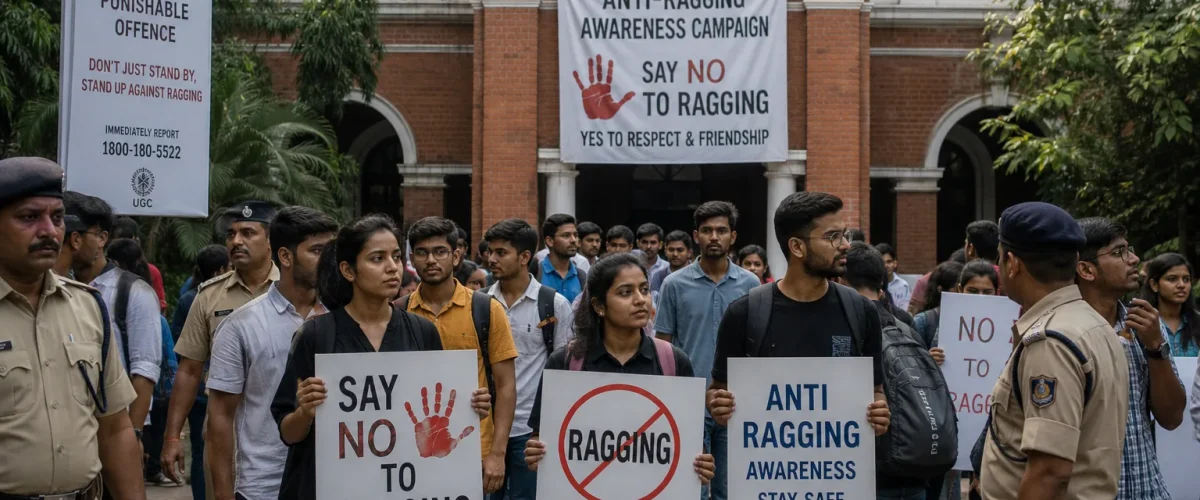
Disturbing Footage From Greater Noida Private University Shows Group of Senior Students Assaulting Junior in Alleged Ragging Incident
A deeply disturbing video showing a group of female students assaulting another student at a private university in Greater Noida has gone viral on social media, triggering widespread outrage and reigniting the national debate on ragging, campus safety, and the failure of educational institutions to protect vulnerable students. The footage, which shows seniors pulling the victim’s hair, slapping her repeatedly, and verbally abusing her while bystanders watch, has been viewed millions of times across platforms.
The incident reportedly took place at a university in the Dadri police station area of Greater Noida and appears to be approximately 10 to 12 days old, according to police officials. The university administration has formed an internal enquiry committee to investigate the matter, while local police have acknowledged the incident but noted that no formal complaint has been filed yet — either by the institution or the victim. Browse more on Social Trends for the latest developments.
What the Video Shows
The viral clip, which runs for several minutes, depicts a group of senior female students confronting a visibly distressed junior in what appears to be a hostel or university premises. The footage shows:
- The victim being cornered by multiple students
- Her hair being pulled aggressively
- Multiple slaps delivered to her face
- Sustained verbal abuse and intimidation
- Other students standing by, watching, and in some cases recording the incident on their phones
The victim appears terrified throughout, not resisting or fighting back — a common trauma response in ragging situations where power dynamics make any resistance seemingly futile. The casual manner in which the assault is carried out, with no apparent fear of consequences, has particularly shocked viewers.
University and Police Response
Following the video’s circulation, the university administration acted swiftly — at least on paper. An internal enquiry committee has been constituted to examine the authenticity of the video, identify those involved, and submit a detailed report within four to five days. Based on the committee’s findings, the university has promised that “appropriate action” will be taken.
However, critics have pointed out that the very fact that no formal complaint has been filed — despite the video evidence being in the public domain — raises serious questions about institutional accountability. “When a video this clear is available, why hasn’t the university filed an FIR?” asked Swati Maliwal, former DCW chairperson, on social media. “The delay in filing a complaint suggests the institution is more concerned about its reputation than student safety.” Read also: NEET UG 2026 Records Historic 96.92% Attendance.
Police Statement
ACP Dadri Prashali Gangwar stated that authorities are “closely monitoring the situation” and that “appropriate legal and disciplinary measures will be pursued once the university’s internal investigation report is submitted and the facts are established.” The police also noted that the video appeared to be 10-12 days old, raising questions about why it took so long to surface.
India’s Ragging Problem: The Numbers
Ragging remains one of the most persistent challenges facing Indian educational institutions despite decades of legislation and anti-ragging campaigns. According to the University Grants Commission’s (UGC) anti-ragging helpline data:
- Over 10,000 ragging complaints were received in the 2024-25 academic year alone
- Physical assault accounted for approximately 35 per cent of all reported incidents
- Sexual harassment comprised another 12 per cent
- The actual numbers are believed to be significantly higher due to underreporting
The Supreme Court of India, in its landmark 2009 judgment in the Raghavan Committee case, laid down comprehensive guidelines for preventing and punishing ragging. These include mandatory anti-ragging committees in every institution, criminal penalties for perpetrators, and the power to cancel admissions and withdraw degrees of those found guilty.
Why Ragging Persists Despite Laws
Despite the legal framework, ragging continues to thrive in Indian institutions for several reasons:
Institutional Cover-ups
Many universities and colleges prioritise their reputation over student safety, discouraging victims from filing complaints and handling incidents “internally” to avoid negative publicity. The Greater Noida case is a textbook example — the video appears to be nearly two weeks old, yet neither the institution nor the victim filed a police complaint.
Normalisation of Hazing Culture
Ragging is often dismissed as a “rite of passage” or “harmless fun” by seniors, alumni, and even some faculty members. This cultural normalisation makes it difficult for victims to speak up, as they fear being labelled as “weak” or “oversensitive.” Related: Delhi Vivek Vihar Fire: 9 Killed After AC Blast.
Power Dynamics and Fear of Retaliation
Victims often fear that reporting ragging will lead to further harassment, social ostracisation, or academic repercussions. In many cases, the perpetrators are well-connected students whose families have influence within the institution.
Weak Enforcement
While anti-ragging laws exist on paper, enforcement remains inconsistent. Anti-ragging committees in many institutions are perfunctory, meeting rarely and taking minimal action even when complaints are received.
Social Media Reaction
The video has generated an enormous response on social media, with hashtags related to the incident trending across X, Instagram, and Facebook. Reactions have ranged from anger and disgust to calls for criminal prosecution of the perpetrators.
“This is not ragging. This is assault. These students should be in jail, not in a university,” wrote one user. Another commented: “The bystanders who watched and recorded are equally guilty. Where was the intervention?” Several users also criticised the police for not registering an FIR suo motu (on their own initiative) given the clear video evidence of assault. See also: India Launches Cell Broadcast Emergency Alert System.
What Needs to Change
Experts and activists have outlined several measures that could help address the ragging problem:
- Mandatory CCTV coverage in all common areas of hostels and campuses
- Anonymous reporting mechanisms that bypass institutional gatekeepers
- Swift criminal prosecution based on video evidence, without waiting for institutional reports
- Financial penalties for institutions that fail to prevent or report ragging
- Debarment from examinations and degrees for students found guilty of ragging
- Awareness campaigns targeting incoming freshers about their rights and available support
The Greater Noida incident has once again brought the issue into sharp focus. Whether it leads to meaningful change — or fades from public memory like countless similar incidents before it — will depend on the actions of police, the judiciary, and the university in the coming weeks.
If you or someone you know is facing ragging, contact the UGC Anti-Ragging Helpline at 1800-180-5522 or email helpline@antiragging.in. Follow dailytips.in for updates on this developing story.