G7 Launches Critical Minerals Push: Coordinated Stockpiling to Cut China Dependency by 2030

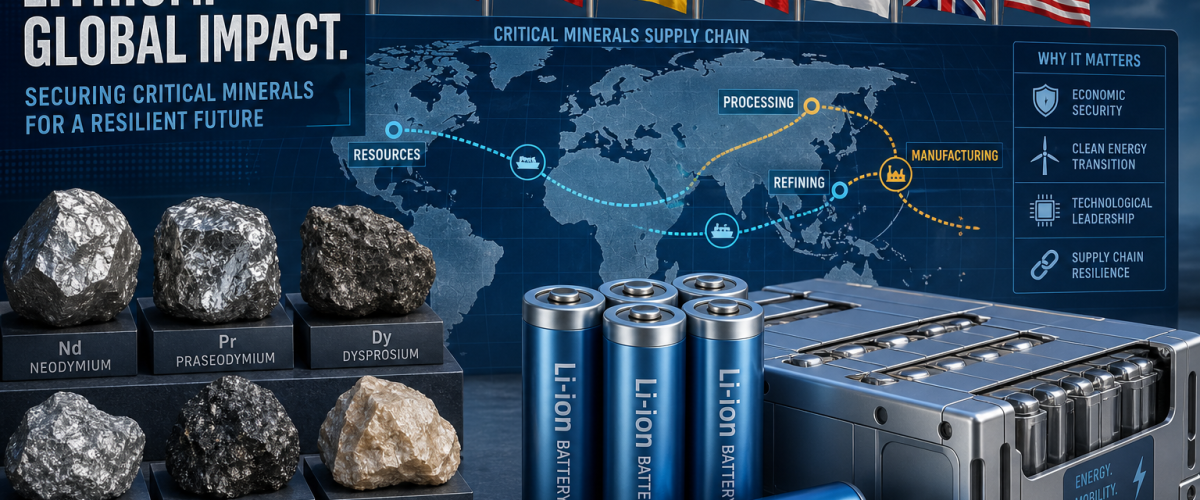
G7 leaders have unveiled an ambitious plan to reduce dependence on China for critical minerals essential to defence, green technology, and the digital economy, announcing coordinated stockpiling, enhanced recycling programmes, and a new platform with the International Energy Agency (IEA) aimed at cutting single-supplier dependency significantly by 2030. The initiative, adopted at the G7 summit in Évian-les-Bains, France, represents the most concrete action yet by major democracies to address what has become one of the defining economic security challenges of the decade.
Critical minerals — including lithium, cobalt, nickel, rare earth elements, and graphite — are essential inputs for electric vehicles, batteries, semiconductors, defence systems, and renewable energy infrastructure. China currently dominates the processing and refining of many of these minerals, controlling an estimated 60-90% of global processing capacity for several critical materials. This concentration creates a strategic vulnerability that G7 nations have identified as a priority threat to economic security.
The G7 Plan: Key Elements
Coordinated Stockpiling: G7 nations will establish strategic reserves of critical minerals, similar to the Strategic Petroleum Reserves that protect against oil supply disruptions. The stockpiling programme will focus on minerals where supply concentration is highest and disruption risk is most acute, including rare earth elements used in defence applications and lithium used in battery production.
IEA Platform: A new platform hosted by the International Energy Agency will coordinate G7 efforts on critical minerals, providing data, analysis, and early warning capabilities that help member nations anticipate and respond to supply disruptions. The IEA, which already plays a similar role for oil markets, brings institutional expertise and credibility to the initiative.
Enhanced Recycling: The G7 plan includes commitments to develop domestic recycling capabilities for critical minerals, reducing the need for primary extraction and decreasing dependence on imported raw materials. Urban mining — the recovery of minerals from electronic waste, batteries, and industrial byproducts — is a key focus area.
Diversified Sourcing: G7 nations will work together to develop alternative sources of critical minerals in Africa, Latin America, Australia, and Central Asia, reducing the current concentration on Chinese processing. This includes investment in mining, processing, and refining capacity in partner countries, combined with environmental and social safeguards.
Why This Matters for India
India’s interest in the G7 critical minerals initiative is significant, given the country’s own exposure to Chinese mineral supply chains and its ambitious plans for electric vehicle adoption, renewable energy, and electronics manufacturing.
India possesses significant reserves of several critical minerals, including rare earth elements, lithium, and titanium, but has historically underinvested in processing and refining capacity. The G7 initiative creates opportunities for India to attract investment in domestic mineral processing, participate in diversified supply chains, and reduce its own dependence on Chinese inputs.
PM Modi’s participation in the G7 summit — and the India-France Innovation Roadmap 2030, which includes technology cooperation provisions — positions India to benefit from the minerals diversification push. Indian companies in the mining, refining, and battery sectors could see increased interest from G7 investors seeking to build non-Chinese supply chains.
China’s Response
China has not formally responded to the G7 initiative, but Beijing has previously signalled its willingness to use its mineral dominance as a geopolitical tool. In recent years, China has imposed export restrictions on gallium, germanium, and other minerals in response to US and European technology export controls, demonstrating that the risk of supply disruption is not theoretical.
The G7’s goal of significantly cutting single-supplier dependency by 2030 is ambitious but faces practical challenges. Building new mining and processing capacity requires years of investment, environmental permitting, and workforce development. And Chinese companies, which have built their dominance over decades, have significant cost and scale advantages that will be difficult to match in the short term.
Nonetheless, the G7 initiative represents a step change in the seriousness with which major democracies are treating the critical minerals challenge. The combination of stockpiling, recycling, diversified sourcing, and institutional coordination provides a comprehensive framework that — if implemented with sustained political commitment — could meaningfully reduce the strategic vulnerability that currently exists.
Also Read
- G7 Summit Final Day: Modi-Trump Bilateral in Évian — Trade, Defence and Iran on the Table
- G7 Summit 2026 Opens in Évian-les-Bains — PM Modi Joins World Leaders, Trump Bilateral Expected
- China Approves World First Commercial Brain-Computer Interface — NEO Chip Beats Neuralink to Market
- Mission Sudarshan Chakra Gets Fresh Push: Rajnath Singh Unveils India’s Multi-Layer Missile Defence Roadmap
- Singapore Blocks 14 Anti-Indian Social Media Posts Likely Originating From China-Based Platform

- Indian Army Gets New Chief as General Dwivedi Hands Over Command Amid Push for Indigenous Defence Tech - July 1, 2026
- Ayodhya Ram Temple Donation Scandal Deepens as Trustees Resign and SIT Arrests Eight - June 29, 2026
- Bengal Seven Weeks On: Modi’s Historic Win and the Questions That Won’t Go Away - June 28, 2026