Indus Waters Treaty Dispute: Arbitration Court Reaffirms Jurisdiction as India Rejects ‘Illegal’ Ruling

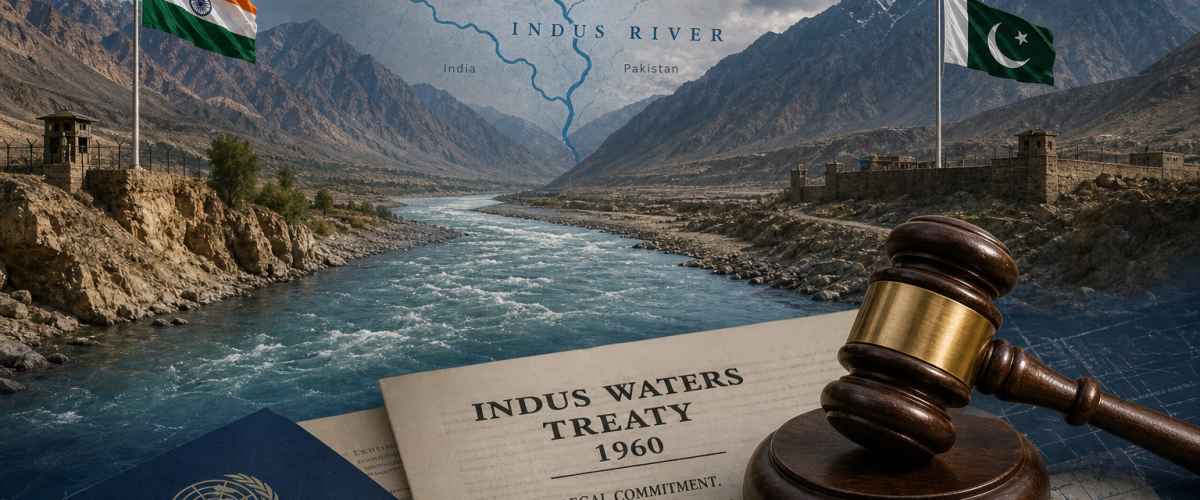
The long-simmering Indus Waters Treaty dispute between India and Pakistan has entered a new phase of escalation, with the international Court of Arbitration reaffirming its jurisdiction over the dispute even as India rejects the ruling as “illegal” and maintains its unprecedented decision to hold the 1960 treaty in abeyance. The dispute — over the waters of the Indus River system that sustains hundreds of millions of people in both countries — has become one of the most consequential flashpoints in India-Pakistan relations.
Pakistan’s Foreign Minister Ishaq Dar has issued a strong response to India’s position, describing the suspension of the treaty as an “illegal move” that violates international law and the rights of Pakistan’s people to the waters allocated to them under the treaty. The exchange marks a significant deterioration in one of the few functional channels of cooperation between the two nuclear-armed neighbours.
Background: The Indus Waters Treaty
The Indus Waters Treaty, signed on September 19, 1960, and brokered by the World Bank, is one of the most enduring international water-sharing agreements in history. The treaty divided the waters of the six rivers of the Indus system between India and Pakistan: the eastern rivers (Ravi, Beas, Sutlej) were allocated to India, while the western rivers (Indus, Jhelum, Chenab) were assigned to Pakistan.
For over six decades, the treaty survived wars, nuclear tests, terrorist attacks, and diplomatic crises — a testament to its importance for both countries’ agricultural economies and water security. The treaty’s resilience made it a model of international cooperation in one of the world’s most contentious bilateral relationships.
What Changed: India’s Abeyance Decision
In April 2025, following a devastating terror attack on civilians in Kashmir, India announced that it would hold the Indus Waters Treaty in abeyance — the first time in the treaty’s history that either party had taken such a step. The decision was described by Indian officials as a proportionate response to Pakistan’s failure to address cross-border terrorism, but was viewed in Pakistan and by many international observers as an unprecedented escalation that undermined the treaty’s foundational principle of unconditional water sharing.
India’s legal position is that the decision to hold the treaty in abeyance is a sovereign right, exercised in response to changed circumstances and Pakistan’s breach of its obligations to prevent terrorism. Pakistan’s position is that the treaty does not provide for unilateral abeyance and that India’s action violates international law.
The Arbitration Court’s Ruling
The Court of Arbitration, constituted under the treaty’s dispute resolution mechanism, issued a supplemental award in June 2025 holding that the treaty does not provide for unilateral abeyance and reaffirming its jurisdiction over the dispute. India rejected the ruling, describing the court as “illegal” and refusing to participate in the proceedings — a position it has maintained through 2026.
In May 2026, the court issued a further award concerning matters of jurisdiction and procedure, with Pakistan as the only party filing submissions. India’s refusal to participate has created a legal vacuum: the court continues to function and issue rulings, but without India’s cooperation, the practical enforceability of those rulings is limited.
Water Security: The Human Stakes
The Indus system’s waters are a lifeline for both countries. Pakistan’s agriculture — the backbone of its economy — depends heavily on the western rivers, particularly for irrigation in Punjab and Sindh provinces. India’s northern states similarly depend on the eastern rivers for agriculture, hydropower, and domestic water supply.
Climate change is intensifying the stakes. Himalayan glaciers, which feed the Indus system, are retreating at an accelerating rate, reducing long-term water availability. At the same time, growing populations and expanding agricultural and industrial demand are increasing pressure on existing water resources. The treaty’s framework, designed for a different era of climate stability and lower demand, may not be adequate for the challenges ahead.
Diplomatic Implications
The Indus Waters dispute is both a cause and a symptom of the broader breakdown in India-Pakistan relations. The two countries have not had a substantive diplomatic dialogue since the 2025 Kashmir attack, and the treaty dispute has become entangled with issues of terrorism, territorial sovereignty, and nuclear deterrence that make resolution extremely difficult.
For the international community, the dispute is a test of whether rules-based mechanisms can manage conflicts between nuclear-armed states. The World Bank, which brokered the original treaty, has been cautious about intervening, aware that its role as an honest broker depends on both parties’ willingness to engage. The path forward remains uncertain, but the human stakes — water for hundreds of millions — make resolution not just desirable but essential.
Also Read
- India Tears Into Pakistan at UN Security Council Over ‘Fitna al-Hindustan’ — Calls It ‘Organised Factory of Hate’
- ICC Women’s T20 World Cup 2026 Kicks Off in England — India Set for Blockbuster Pakistan Clash on June 14
- Supreme Court Upholds 28% GST on Online Fantasy Gaming — Landmark Verdict Could Wipe Out India’s Rs 1 Lakh Crore Online Gaming Industry
- India’s Reservoir Levels Crash Below 45 Per Cent as CWC Data Reveals Water Emergency Across 20 River Basins Before Peak Summer
- India’s Most Searched Summer Travel Destinations for 2026: Kashmir Tulips, Spiti Valley, Sikkim Blooms and More

- Indian Army Gets New Chief as General Dwivedi Hands Over Command Amid Push for Indigenous Defence Tech - July 1, 2026
- Ayodhya Ram Temple Donation Scandal Deepens as Trustees Resign and SIT Arrests Eight - June 29, 2026
- Bengal Seven Weeks On: Modi’s Historic Win and the Questions That Won’t Go Away - June 28, 2026