India Real Estate 2026: Housing Sales Hit Record High as Luxury Segment Outpaces Affordable Market

India’s real estate market has shattered sales records in the first quarter of 2026, with housing sales across the top seven metropolitan markets reaching their highest quarterly volume since tracking began. But the headline numbers conceal a stark divergence: luxury and premium properties are driving the boom, while the affordable housing segment — homes priced below Rs 45 lakh — has stagnated. The contrast reveals a housing market increasingly shaped by wealth concentration, lifestyle aspirations, and investment demand rather than basic shelter needs.
India Real Estate 2026 Housing Sales: The Record Quarter
Data from Anarock Property Consultants shows that combined housing sales across Mumbai Metropolitan Region (MMR), Bengaluru, Hyderabad, Pune, NCR (Delhi-Gurgaon-Noida), Chennai, and Kolkata reached approximately 1.45 lakh units in Q1 2026 (January-March). This represents a 14 per cent increase over the same period in 2025 and exceeds the previous quarterly record set in Q4 2024.
Mumbai continues to lead in absolute sales volume, accounting for roughly 30 per cent of total transactions. Bengaluru and Hyderabad are the fastest-growing markets, with annual sales growth exceeding 20 per cent, driven by the IT industry workforce and the expansion of global capability centres that have concentrated high-salary employment in these cities.
The property investment landscape has fundamentally shifted toward organised developers who can offer RERA-compliant projects with transparent timelines, quality construction, and amenity-rich lifestyle propositions. Buyers are willing to pay premium prices for reliability and brand reputation.
Luxury Segment: Rs 1 Crore-Plus Properties See 40 Per Cent Growth
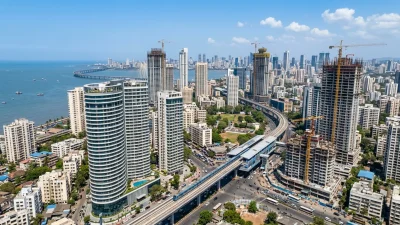
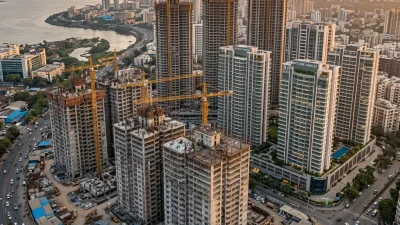
The most dramatic trend is the explosion in luxury property sales. Homes priced above Rs 1 crore now account for over 40 per cent of total unit sales in metropolitan markets, up from approximately 25 per cent in 2021. In Mumbai’s premium micro-markets — Bandra, Worli, Lower Parel, and Andheri West — average transaction values have crossed Rs 3 crore, with ultra-luxury sales exceeding Rs 10 crore becoming routine.
The drivers are multiple. Post-pandemic lifestyle preferences have increased demand for larger homes with dedicated work spaces, balconies, and access to amenities such as swimming pools, gyms, and co-working facilities. India’s growing high-net-worth population — individuals with investable assets exceeding $1 million — has expanded to over 4 lakh families, creating a deep demand pool for premium properties.
Non-resident Indian (NRI) buyers are also active, taking advantage of a weaker rupee that makes Indian real estate relatively affordable when purchased with dollar, dirham, or pound earnings. Developers report that NRI inquiries have increased 35 per cent year-on-year, with Dubai-based and US-based Indians the most active buyer segments.
Affordable Housing: The Forgotten Segment
In sharp contrast, affordable housing sales have declined for the third consecutive year in relative terms. Homes priced below Rs 45 lakh now account for less than 20 per cent of total metropolitan sales, down from over 40 per cent in 2019. Developers cite rising land costs, construction material inflation, and regulatory compliance expenses as factors making affordable housing economically unviable in major cities.
The affordable segment’s difficulties are a policy concern. India’s urban housing shortage is estimated at 10-12 million units, overwhelmingly concentrated in the lower income brackets. The Pradhan Mantri Awas Yojana (PMAY) urban component has achieved significant success in subsidising home purchases, but the scheme’s credit-linked subsidy structure works best when developers are building affordable units — and fewer are doing so.
Several state governments have responded with targeted interventions. Maharashtra has introduced additional floor space index (FSI) incentives for affordable housing projects, while Karnataka has reduced stamp duty on properties below Rs 35 lakh. Whether these measures are sufficient to reverse the segment’s decline remains to be seen.
Commercial Real Estate: Office Demand Defies Work-From-Home Predictions
India’s commercial real estate market continues to defy predictions that remote work would permanently reduce office demand. Gross office leasing across the top six cities reached 64 million square feet in calendar year 2025, and Q1 2026 data suggests a further 8 per cent annual increase. Global capability centres (GCCs) — offshore operations of multinational companies — account for over 40 per cent of new leasing.
Bengaluru remains India’s largest office market, followed by Hyderabad and Mumbai. The growth of GCCs has been particularly transformative for Hyderabad’s HITECH City and Bengaluru’s Outer Ring Road corridors, where vacancy rates have dropped below 5 per cent and rental growth exceeds 10 per cent annually.
The investment opportunities in Indian markets extend well beyond residential property, with commercial real estate investment trusts (REITs) — Embassy Office Parks and Mindspace Business Parks — delivering steady yields to retail investors.
RERA’s Impact: A Decade of Transformation
The Real Estate Regulation and Development Act (RERA), which came into force in 2016, has completed a decade of operation. Its impact on the industry has been profound. Project delays, once endemic in Indian real estate, have decreased significantly. The proportion of projects delivered on time has risen from approximately 30 per cent pre-RERA to over 70 per cent in RERA-compliant states.
Buyer confidence has increased as a result. The transparency requirements — escrow accounts for construction funds, mandatory project registration, and penalties for delays — have shifted the power balance toward consumers. Smaller, undercapitalised developers who relied on buyer advances to fund construction have been squeezed out, with market share consolidating among larger, better-capitalised firms.
However, RERA implementation remains uneven across states. Maharashtra and Karnataka have robust regulatory machinery, while several other states have been slow to establish fully functional RERA authorities. The central government has urged lagging states to strengthen implementation, recognising that national housing policy depends on consistent state-level execution.
Interest Rates and Housing Finance
Home loan interest rates in the 8.5-9.0 per cent range have become the new normal after the RBI’s rate hiking cycle of 2022-24. While rates are higher than the ultra-low levels of 2020-21, they remain historically moderate and have not significantly dampened demand in the premium segment where buyers tend to be less rate-sensitive. The digital finance revolution has also streamlined mortgage processing, with approval times at major banks reducing from weeks to days.
For the affordable segment, however, even small interest rate differences materially affect EMI affordability. A 50 basis point reduction in rates would make approximately 8 million additional households eligible for home loans under standard affordability criteria. This is one reason why rate cut expectations remain central to the affordable housing recovery story.
India’s real estate market in 2026 is healthy by most conventional metrics — sales volumes, price growth, construction activity, and commercial leasing are all strong. The challenge is ensuring that this prosperity extends beyond the premium segments to address the housing needs of India’s aspirational middle class. Until affordable housing becomes commercially viable again, the market’s record numbers will tell only half the story.