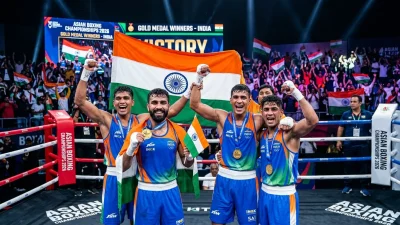
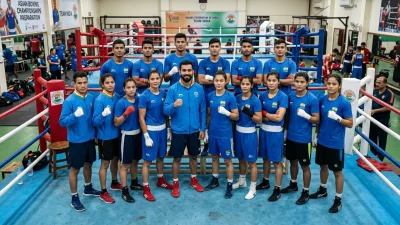
Neeraj Goyat Signs Historic UFC Contract as Indian Boxing Eyes Olympic Glory at Los Angeles 2028

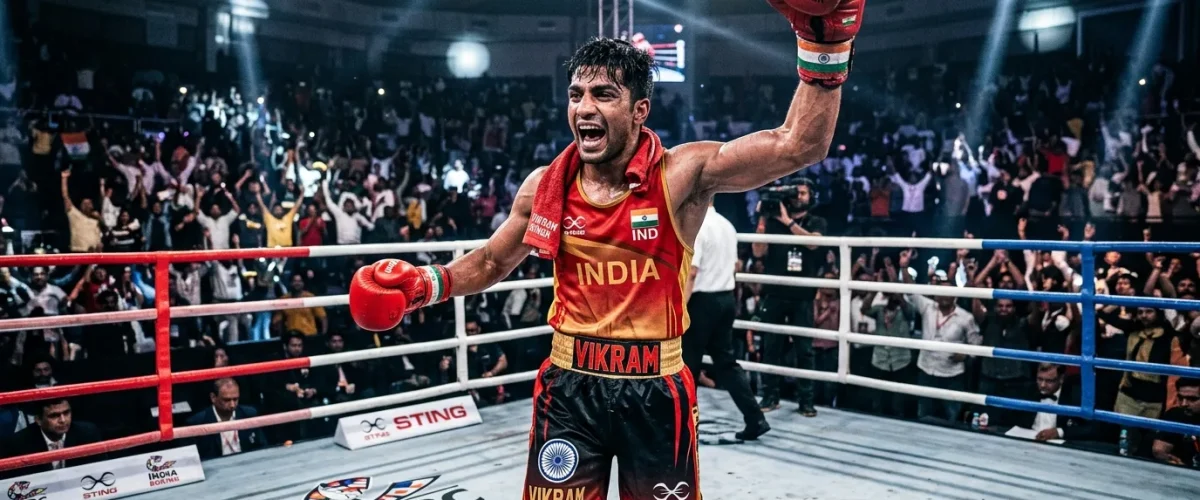
India’s Boxing Renaissance Gathers Pace in 2026
Indian boxing is experiencing its most electrifying phase in decades. Neeraj Goyat, the WBC Asia welterweight champion, has signed a landmark multi-fight contract with the UFC’s parent company, making him the first Indian boxer to secure such a deal with the world’s premier combat sports organisation. The announcement, confirmed at a press conference in Mumbai on 25 March 2026, signals a dramatic shift in how Indian fighters are perceived on the global stage.
Meanwhile, Nikhat Zareen continues to dominate the amateur circuit, defending her IBA World Championship title in Istanbul earlier this month with a unanimous decision victory over Turkey’s Buse Naz Çakıroğlu. Her success, combined with Goyat’s crossover appeal, has ignited fresh conversations about boxing’s commercial potential in a country that has traditionally reserved its sporting passion for cricket and football.
Goyat’s UFC Deal: What It Means for Indian Combat Sports
The 32-year-old Goyat, who holds a professional record of 18 wins, 4 losses and 2 draws, has long campaigned for greater recognition of Indian boxers in international circuits. His UFC deal, reportedly worth upwards of Rs 25 crore across three bouts, places him alongside fighters from established boxing nations such as Mexico, the Philippines and the United Kingdom.
“This contract is not just for me — it’s for every young kid in Haryana and Punjab who dreams of fighting on the world stage,” Goyat said at the announcement. “Indian boxers have the skill. Now we have the platform.”
Industry analysts point to the deal as a watershed moment for Indian combat sports. Viacom18’s acquisition of UFC broadcasting rights for the Indian subcontinent in late 2025 has already driven a 340 per cent increase in UFC viewership in India, according to data from JioStar. Goyat’s involvement is expected to push those numbers further, creating a virtuous cycle of sponsorship and grassroots investment. The Indian wrestling news space has seen a similar uplift following India’s Olympic medal run, and boxing hopes to replicate that trajectory.
Nikhat Zareen and the Olympic Dream
While Goyat captures headlines in the professional circuit, the amateur boxing programme is quietly building its strongest-ever squad for the 2028 Los Angeles Olympics. Nikhat Zareen, at 29, remains the fulcrum of India’s women’s boxing ambitions. Her Istanbul triumph marked her third consecutive world title in the 50 kg category, a feat matched only by Mary Kom in Indian boxing history.
Zareen’s training camp, currently based at the Sports Authority of India centre in Patiala, has adopted a data-driven approach under head coach Bhaskar Bhatt. Wearable sensors track punch velocity and reaction times during sparring sessions, while AI-powered video analysis breaks down opponents’ patterns weeks before competition. This blend of traditional Indian boxing grit and modern sports science has been credited with India’s improved medal conversion rate at recent international tournaments.
On the men’s side, Amit Panghal and Sachin Siwach are leading the charge. Panghal, a former world silver medallist, has switched to the 54 kg category to avoid crowded weight classes, while 20-year-old Siwach, the reigning Asian Youth champion, is considered India’s brightest prospect since Vijender Singh’s 2008 Olympic bronze.
Boxing Federation’s Rs 200 Crore Development Push
The Boxing Federation of India (BFI) announced in February a Rs 200 crore development plan spanning 2026 to 2030. The plan includes the construction of five regional high-performance centres in Haryana, Manipur, Assam, Kerala and Maharashtra — states that have historically produced India’s best boxers.
Each centre will feature altitude simulation chambers, cryotherapy recovery suites and full-time nutritionists — facilities that Indian boxers previously accessed only during overseas training stints. The centres are scheduled to be operational by mid-2027, giving athletes nearly a full year of acclimatisation before the Los Angeles Games.
BFI president Ajay Singh told reporters that corporate sponsorship for boxing has doubled in the past 18 months. “Brands now see boxing as aspirational. The Goyat effect, combined with Nikhat’s dominance, has made this sport marketable in a way it never was before.” Recent developments in athletics updates from India show a similar pattern of increased corporate investment following medal success on the world stage.
Grassroots Growth and the Khelo India Factor
At the grassroots level, the Khelo India programme has allocated Rs 45 crore specifically for boxing in 2026-27, up from Rs 28 crore in the previous fiscal year. District-level competitions now attract over 15,000 registered boxers annually, a figure that has tripled since 2020. The northeast states of Manipur and Mizoram, which have produced champions such as Mary Kom and L. Sarita Devi, continue to supply a disproportionate share of talent relative to their populations.
The introduction of school boxing leagues in seven states, modelled on the Pro Kabaddi League coverage format with franchise teams and televised finals, has also helped normalise the sport among younger demographics. Viewership of the inaugural National School Boxing Championship on Disney+ Hotstar exceeded 2.8 million concurrent viewers during the boys’ heavyweight final.
Challenges Remain: Governance, Doping and Pay Disparity
Despite the positive momentum, Indian boxing faces familiar obstacles. The IBA’s ongoing governance crisis — the organisation was stripped of Olympic recognition by the IOC in 2023 — means that Indian boxers compete under the World Boxing umbrella at the Games, creating administrative confusion at domestic federation level.
Doping remains a concern as well. NADA India recorded seven boxing-related anti-doping violations in 2025, the highest among all Olympic sports in the country. The BFI has responded by mandating quarterly whereabouts filings for all national campers and partnering with the National Institute of Pharmaceutical Education and Research for supplement screening.
Pay disparity between men’s and women’s boxing continues to draw criticism. Zareen, despite her three world titles, earns roughly one-fifth of what Goyat commands in appearance fees and sponsorship. Advocacy groups including the badminton stars shaping Indian sport community have called for equal prize money at national competitions, a demand the BFI says it will address in its 2027 budget cycle.
Looking Ahead: Can India Win Multiple Boxing Medals in 2028?
The 2028 Los Angeles Olympics will feature ten boxing weight categories for both men and women, and India is targeting qualification in at least eight. If latest cricket news and IPL updates are anything to go by in terms of sheer passion and investment driving results, boxing’s recent surge suggests the country is closer than ever to a multi-medal haul.
Goyat’s UFC venture, while separate from the Olympic programme, raises the sport’s profile in living rooms across India. Zareen’s consistency provides a proven medal contender. And the pipeline of young talent coming through Khelo India ensures the programme is not reliant on one or two athletes.
For a sport that has often been overshadowed by cricket’s commercial might and football’s growing fanbase, 2026 feels like a turning point. Indian boxing is no longer content with occasional heroics — it is building an institution.

- Indian Army Gets New Chief as General Dwivedi Hands Over Command Amid Push for Indigenous Defence Tech - July 1, 2026
- Ayodhya Ram Temple Donation Scandal Deepens as Trustees Resign and SIT Arrests Eight - June 29, 2026
- Bengal Seven Weeks On: Modi’s Historic Win and the Questions That Won’t Go Away - June 28, 2026