TCS Nashik Controversy: Multiple FIRs Filed as Women Employees Allege Sexual Harassment and Forced Religious Conversion — Six Arrested, BJP Calls It ‘Corporate Jihad’

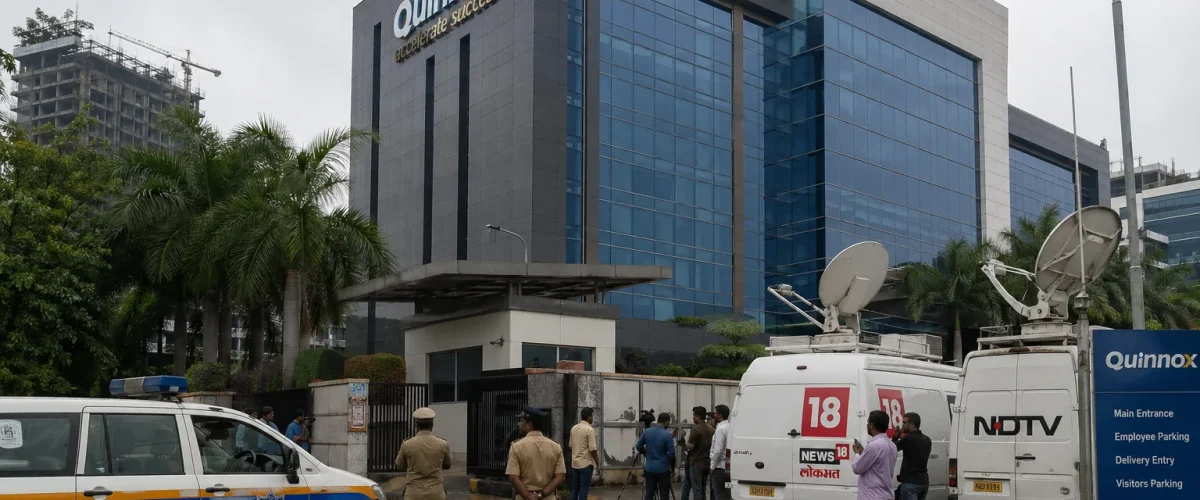
A massive controversy has erupted around Tata Consultancy Services’ Nashik facility in Maharashtra after multiple women employees came forward with allegations of sexual harassment and forced religious conversion by their team leaders and senior engineers. At least six people — including team leaders and engineers at the facility — have been arrested by Nashik police following the registration of multiple First Information Reports (FIRs) across police stations in Maharashtra, including one charge of rape. The alleged incidents are said to have taken place over a period of two to three years, beginning around 2022, and have affected women employees aged between 18 and 25.
The case has taken on significant political dimensions, with BJP leaders in Maharashtra describing it as an instance of “corporate jihad” and demanding a thorough investigation into what they allege is a pattern of exploitation under the guise of workplace mentoring. The controversy has raised uncomfortable questions about workplace safety in India’s IT sector, the effectiveness of internal complaint mechanisms, and the intersection of religion and corporate power dynamics.
What the Women Employees Have Alleged
According to the FIRs registered with Nashik police, multiple women employees — reported to be between 18 and 25 years old — have alleged that their team leaders and senior engineers subjected them to sexual harassment, molestation, and attempts at religious conversion over an extended period. The accused, who held supervisory positions at the TCS Nashik facility, are alleged to have exploited their authority over the complainants’ work assignments, performance reviews, and career progression to coerce compliance.
The complaints describe a pattern of behaviour that began with what appeared to be professional mentoring and gradually escalated into inappropriate personal demands. Several complainants have alleged that they were pressured to participate in religious practices, including offering namaz and observing roza. They have also alleged that the accused used promises of job security, good salaries, and career advancement as inducements, while using the threat of adverse performance reviews and termination as leverage.
One of the FIRs includes a charge of rape, though the specific details of this allegation have been partially redacted to protect the identity of the complainant. The police investigation is ongoing, and investigators have indicated that additional charges may be filed as more evidence is gathered and more complainants come forward. For more details, read about meta plans biggest layoff in history: 8,000 jobs to be cut on may 20.
Police Investigation and Arrests
Nashik police have moved swiftly following the registration of FIRs. Six individuals — including team leaders and software engineers employed at the TCS facility — have been arrested and are currently in judicial custody. The investigation is being led by a team of senior officers, and police have confirmed that they are examining digital evidence including internal communications, email exchanges, and CCTV footage from the facility.
Additional Commissioner of Police (Nashik) confirmed that the investigation is comprehensive and that the police are looking at whether the alleged activities were part of an organised pattern or represented individual acts of misconduct. “We are taking all complaints very seriously and ensuring that the investigation is thorough and fair,” he told reporters. “We urge any other employees who may have faced similar experiences to come forward and cooperate with the investigation.” For more details, read about apple races to shift all us-bound iphone production to india.
The police have also coordinated with TCS’s internal investigation team, though they have emphasised that the criminal investigation is independent of any corporate inquiry. Sources in the police department have indicated that the number of complainants may increase as the investigation progresses, with several more women reportedly considering filing formal complaints.
Political Fallout and the ‘Corporate Jihad’ Label
The controversy has been seized upon by political parties, particularly the BJP, which governs Maharashtra as part of the ruling coalition. Maharashtra minister and BJP leader Girish Mahajan has described the case as an instance of “corporate jihad,” alleging that “four to five Muslim company workers and some officers lured the girls by promising them jobs and good salaries” before attempting to convert them. The term has been widely used in BJP’s communications about the case and has generated intense debate on social media and news channels.
Opposition parties, including the NCP (Sharad Pawar faction) and Congress, have called for a thorough investigation but cautioned against communalising the issue. They have argued that the case should be treated as a matter of workplace safety and criminal law rather than being framed through a religious lens. Women’s rights organisations have echoed this concern, noting that the focus on religious conversion risks overshadowing the core allegations of sexual harassment and exploitation.
The political discourse around the case reflects broader tensions in Maharashtra politics, where issues of religious identity, communal harmony, and corporate governance often intersect in complex ways. Legal experts have noted that while both sexual harassment and coercive religious conversion are criminal offences under Indian law, they require separate legal treatment and should not be conflated in either investigation or public discussion.
TCS’s Response and Corporate Accountability
Tata Consultancy Services, India’s largest IT company by market capitalisation and a subsidiary of the Tata Group, has issued a statement confirming that it is cooperating fully with the police investigation and has initiated its own internal inquiry. The company has stated that it has a “zero tolerance” policy towards harassment of any kind and that any employee found to have violated its code of conduct will face severe consequences, including termination.
The company has also activated its Internal Complaints Committee (ICC) as mandated under the Sexual Harassment of Women at Workplace Act, 2013. However, questions have been raised about why the ICC did not detect or act on the alleged pattern of harassment earlier, given that the complaints span a period of two to three years. Workplace safety advocates have argued that this points to systemic weaknesses in the internal complaint mechanism — a problem that is not unique to TCS but affects many large organisations where power imbalances between managers and junior employees can suppress reporting.
Industry body NASSCOM has not issued a specific statement on the TCS case but has reiterated its commitment to workplace safety across the IT sector. The body has previously published guidelines on prevention of sexual harassment and diversity and inclusion, though enforcement and compliance vary significantly across the industry’s thousands of companies.
Broader Implications for India’s IT Industry
The TCS Nashik controversy comes at a time when India’s IT industry is already navigating significant challenges, including AI-driven workforce restructuring, global economic uncertainty, and increasing regulatory scrutiny. The case has shone a spotlight on working conditions at IT facilities in smaller cities, which have proliferated as companies seek to reduce costs by moving operations away from expensive metro centres like Bengaluru, Hyderabad, and Pune.
Nashik — known primarily for its wine industry and religious significance — has emerged as a secondary IT hub in recent years, with TCS, Infosys, and other companies establishing delivery centres in the city. While these facilities bring employment opportunities to smaller towns, critics argue that they may lack the robust HR infrastructure and oversight mechanisms that characterise operations in major IT hubs.
The case is also likely to reignite discussions about the effectiveness of India’s sexual harassment laws and their implementation in the private sector. While the POSH Act (Prevention of Sexual Harassment at Workplace Act, 2013) provides a comprehensive legal framework, compliance audits conducted by various NGOs have found that many companies — particularly in the SME and services sectors — have inadequate internal complaint mechanisms and insufficient training on workplace conduct.

- Fentanyl Vaccine Breakthrough: Scripps Research Develops Shot That Blocks Deadly Overdoses Before They Reach the Brain - June 13, 2026
- Nipah Virus Returns to Kerala — First Case of 2026 Confirmed, State Declares High Alert - June 12, 2026
- Jill Biden Reveals She Wanted to Keep PM Modi’s 7.5-Carat Diamond Gift but Returned It After State Department Valued It at $20,000 - June 8, 2026