OPEC Plus Agrees to Raise Oil Output Targets by 188000 Barrels Per Day for June Despite Strait of Hormuz Blockade and UAE Exit From the Group


OPEC Plus Presses Ahead With Third Monthly Output Increase Despite Hormuz Closure
The OPEC+ alliance has agreed in principle to raise oil output targets by approximately 188,000 barrels per day (bpd) for June 2026, marking the third consecutive monthly production increase, according to sources familiar with the group’s deliberations. The decision, finalised ahead of a virtual policy meeting on Sunday, 3 May 2026, comes despite the ongoing US-Iran war that has effectively closed the Strait of Hormuz and the surprise departure of the United Arab Emirates from the organisation earlier in the week.
Seven major OPEC+ nations — led by Saudi Arabia, Russia, Iraq, Kuwait, Algeria, and Kazakhstan — have agreed to the symbolic production increase, even though much of the additional output will remain on paper. With the Strait of Hormuz blocked, Gulf producers cannot physically export the oil, and countries like Kuwait have seen their oil exports drop to effectively zero. Sources described the increase as a forward-looking measure that would be useful once the conflict ends and producers revive production.
Why Raise Output When Exports Are Impossible
The decision to raise quotas amid an active military conflict that has shut down the world’s most important oil chokepoint may seem contradictory, but industry analysts say it reflects OPEC+’s strategic thinking. By continuing to adjust quotas on paper, the group maintains the appearance of normalcy and signals to global energy markets that it remains committed to the process of gradually restoring output that was curtailed years ago during the pandemic-era production cuts.
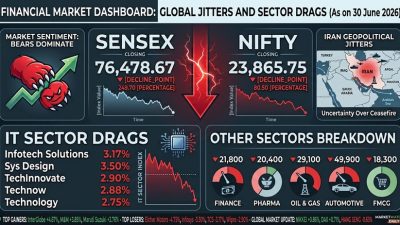
The Strait of Hormuz, through which approximately 20 per cent of the world’s oil supply normally transits, has been effectively shut since the escalation of the US-Iran conflict. The dual naval blockade has forced Gulf exporters including Saudi Arabia, Kuwait, and Iraq to shutter vast swathes of production, creating a supply shock that has driven Brent crude prices above $120 per barrel. The Indian stock market’s sharp decline on April 30, with the Sensex dropping 583 points, was partly attributed to these elevated oil prices.
Raising output quotas now also serves a diplomatic purpose. It demonstrates that OPEC+ can function — at least procedurally — without the UAE, whose departure on 1 May shocked energy markets. The UAE’s exit from OPEC came after years of frustration over production constraints that prevented Abu Dhabi from capitalising on its massive spare capacity. By proceeding with the scheduled increase, the remaining members signal continuity and cohesion.
Impact on Global Oil Prices and India
The practical impact of the output increase on global oil supplies will be minimal as long as the Hormuz blockade continues. However, the announcement could have a modest psychological effect on oil futures markets, where traders are pricing in prolonged supply disruptions. Any signal that additional barrels could come online quickly once the conflict resolves helps temper the most extreme price expectations.
For India, the world’s third-largest oil importer, the Hormuz crisis has created a significant energy security challenge. The country has been drawing on its strategic petroleum reserves and has been diversifying its import sources to reduce dependence on Gulf supplies. An India-linked LPG tanker recently made a rare successful transit through the Strait of Hormuz, highlighting both the risks and the critical importance of maintaining energy supply chains.
The record Rs 993 per cylinder hike in commercial LPG prices on 1 May was a direct consequence of the elevated global energy costs. Indian consumers and businesses are bearing the brunt of the crisis through higher fuel and gas prices, and the government is reportedly considering a Rs 4-5 per litre increase in petrol and diesel prices — which would be the first fuel price revision in four years.
India’s Energy Diversification Strategy
In response to the Hormuz crisis, India has accelerated its efforts to secure oil supplies from non-Gulf sources. Imports from the United States, Guyana, Brazil, and West Africa have increased significantly in recent months. The government has also fast-tracked negotiations for long-term supply agreements with producing nations outside the conflict zone and is exploring emergency fuel-sharing arrangements with strategic partners including Japan and South Korea.
India’s strategic petroleum reserves, located at Visakhapatnam, Mangalore, and Padur, currently hold approximately 45 days of import cover, which officials have described as adequate for the near term. However, a prolonged Hormuz closure could strain these reserves, particularly if the conflict extends through the monsoon season when maritime fuel logistics become more complex.
What Comes Next for OPEC Plus
The OPEC+ decision also reflects the group’s attempt to maintain relevance in a rapidly changing global energy landscape. The UAE’s departure has raised questions about the long-term viability of the production alliance, particularly if other members with significant spare capacity grow frustrated with output constraints. Kazakhstan, which has repeatedly exceeded its production quota, could be the next flashpoint.
For now, the oil market’s focus remains squarely on the US-Iran conflict and the fate of the Strait of Hormuz. Diplomatic efforts to secure a ceasefire have so far failed, and military analysts suggest the blockade could persist for weeks or months. Until the strait reopens, OPEC+’s output increases will remain largely theoretical — a symbolic gesture in a market where physical supply is being determined not by quotas but by geopolitics and military strategy.
Global energy consumers, particularly major importers like India, will be watching closely for any signs of de-escalation that could bring Gulf oil supplies back online and provide relief from the highest crude prices seen in years.

- Indian Army Gets New Chief as General Dwivedi Hands Over Command Amid Push for Indigenous Defence Tech - July 1, 2026
- Ayodhya Ram Temple Donation Scandal Deepens as Trustees Resign and SIT Arrests Eight - June 29, 2026
- Bengal Seven Weeks On: Modi’s Historic Win and the Questions That Won’t Go Away - June 28, 2026