PM Modi Departs on Six-Day UAE and Four-Nation Europe Tour Seeking Energy Security Tech Partnerships and Strategic Ties Amid Iran War Crisis

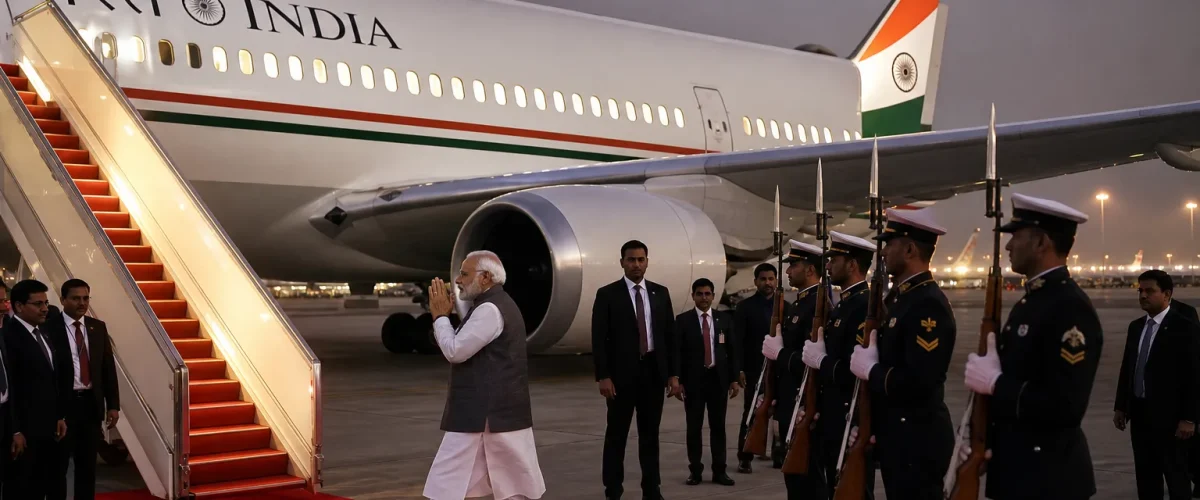
Prime Minister Narendra Modi departed on Thursday evening, 15 May 2026, for a crucial six-day foreign tour covering five nations — the United Arab Emirates, the Netherlands, Sweden, Norway, and Italy — in what is being described as his most significant diplomatic journey since the US-Iran conflict began disrupting global energy markets and geopolitical equations in late February. The tour, which comes just hours after India hiked petrol and diesel prices for the first time in four years, is centred on securing India’s energy interests, deepening technology partnerships and strengthening strategic ties with key European and Gulf partners.
The Prime Minister’s Office (PMO) said the visit would focus on “energy security, technology cooperation, and strengthening India’s partnerships with key nations at a time of significant global uncertainty.” The tour comes after India and the European Union sealed a landmark free trade agreement in January 2026 — described by Modi as the “mother of all deals” — and at a moment when the Iran war has made energy diversification an urgent national priority.
UAE Stop: Energy Security Takes Centre Stage
Modi’s first stop is the United Arab Emirates, where energy security is expected to dominate discussions. India is the UAE’s third-largest trading partner, and the Gulf nation is one of India’s top five crude oil suppliers. With the Strait of Hormuz — through which much of India’s Gulf oil imports pass — effectively under threat due to the Iran conflict, Modi is expected to discuss alternative shipping routes, strategic petroleum reserve arrangements, and long-term energy supply contracts that could insulate India from future disruptions.
The UAE visit also comes against the backdrop of Modi’s recent domestic appeal for fuel conservation and austerity measures, which included reducing government vehicle usage, promoting work from home, and urging citizens to cut discretionary fuel consumption by 10 per cent. The UAE, which has maintained a careful diplomatic balance during the Iran conflict, is seen as a key partner in India’s efforts to secure stable energy supplies despite the regional turmoil.
Beyond energy, Modi is expected to review progress on the India-Middle East-Europe Economic Corridor (IMEC), a landmark infrastructure project connecting India to Europe via the Gulf, which was announced at the G20 summit in New Delhi in 2023. The corridor — which includes rail, port and digital connectivity links — is seen as strategically vital for India’s trade diversification, but its implementation has been complicated by the regional conflict.
Netherlands: Semiconductor and Tech Cooperation
The Netherlands stopover is expected to focus on semiconductor technology and advanced manufacturing. The Dutch city of Eindhoven is home to ASML, the world’s only manufacturer of extreme ultraviolet (EUV) lithography machines that are essential for producing the most advanced semiconductor chips. India has been actively courting ASML and other Dutch tech companies to support its ambitious semiconductor manufacturing programme, which includes incentives for chip fabrication plants under the India Semiconductor Mission.
With the global semiconductor industry increasingly caught up in US-China geopolitical competition — as highlighted by the Nvidia chip sales discussions at the ongoing Trump-Xi summit in Beijing — India sees the Netherlands as a critical technology partner that can help it develop an independent chip supply chain. Modi is expected to sign cooperation agreements on semiconductor research, clean energy technology and digital infrastructure during the visit.
Nordic Nations: Green Energy and Innovation
Sweden and Norway — two of the world’s leading clean energy innovators — are on Modi’s itinerary as India accelerates its renewable energy transition. Sweden is home to major companies in electric vehicles (Volvo), telecommunications (Ericsson) and sustainable manufacturing, while Norway is a global leader in hydropower, offshore wind energy and battery technology. India has set ambitious targets for renewable energy capacity — 500 GW by 2030 — and partnerships with Nordic nations can provide both technology and investment to achieve these goals.
The energy dimension of the Nordic visit is particularly significant given the current oil crisis. India’s dependence on imported fossil fuels has been brutally exposed by the Iran conflict, and the government has signalled that accelerating the renewable energy transition is now a matter of national security, not just environmental policy. India’s emergency measures to protect forex reserves — including the recent hike in gold and silver import duties — reflect the economic strain that energy import dependence creates during global crises.
In Norway, Modi is also expected to discuss Arctic cooperation, fisheries and ocean economy. Norway’s expertise in sustainable fishing and marine resource management is relevant for India’s vast coastline and the millions of livelihoods that depend on the fishing industry. The two countries are also exploring cooperation in green hydrogen, a technology that could transform India’s industrial energy consumption.
Italy: EU Trade Deal Implementation and G7 Engagement
The final leg of Modi’s tour takes him to Italy, where discussions are expected to focus on implementing the India-EU free trade agreement, defence cooperation and strategic coordination on regional security issues. Italy, as one of the EU’s largest economies and a key Mediterranean power, is an important partner for India’s engagement with the European bloc.
Modi’s Italy visit may also include engagement with the G7 framework, as Italy has signalled its support for India’s closer integration with the group of advanced democracies. The visit comes at a time when the global order is being reshaped by the US-Iran war, the US-China trade competition and the ongoing Ukraine conflict, making India’s diplomatic engagement with multiple power centres more important than ever.
Domestic Context: Tour Follows Fuel Hike and Storm Deaths
The PM’s departure comes on a day when India confronted multiple domestic challenges — the first fuel price hike in four years, the rising death toll from storms in Uttar Pradesh, and continued fallout from the NEET paper leak scandal. Opposition parties have criticised the timing of the foreign visit, arguing that the PM should be addressing these urgent domestic issues before travelling abroad.
However, the government has countered that the foreign tour is directly linked to addressing India’s most pressing domestic challenge — energy security. “This is not a routine diplomatic visit,” a senior PMO official said. “Every meeting on this tour is designed to strengthen India’s energy resilience and reduce our vulnerability to the kind of global shocks we are experiencing right now.”
As President Trump engages with China in Beijing and BRICS foreign ministers meet in New Delhi, Modi’s parallel European and Gulf tour represents India’s multi-vector diplomatic strategy — engaging with all major power centres simultaneously to protect and advance its national interests in an increasingly volatile global order.

- Indian Army Gets New Chief as General Dwivedi Hands Over Command Amid Push for Indigenous Defence Tech - July 1, 2026
- Ayodhya Ram Temple Donation Scandal Deepens as Trustees Resign and SIT Arrests Eight - June 29, 2026
- Bengal Seven Weeks On: Modi’s Historic Win and the Questions That Won’t Go Away - June 28, 2026