IAF An-32 Transport Aircraft Crashes at Jorhat in Assam — Five Personnel Killed, Co-Pilot Survives

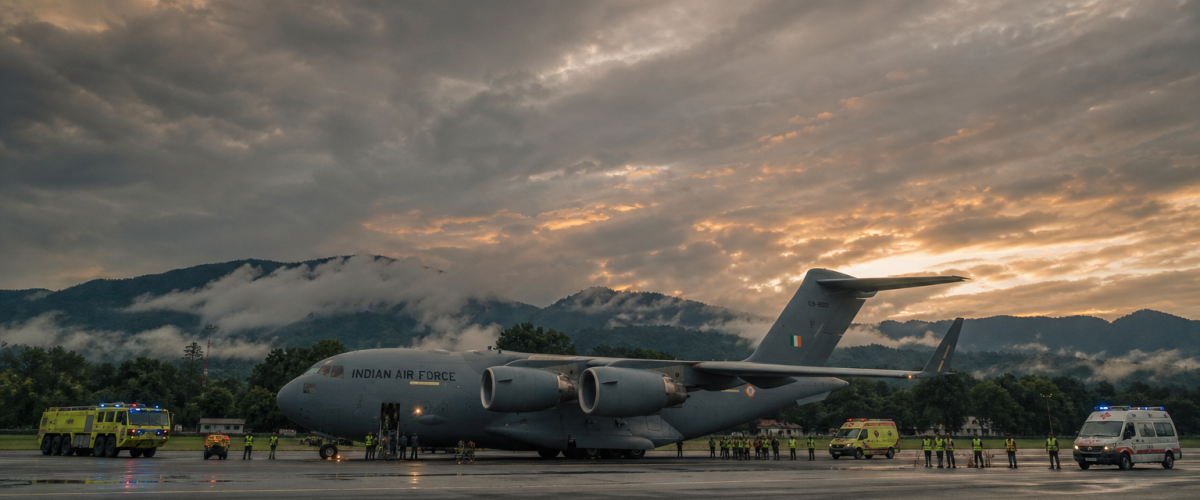
Five Indian Air Force personnel were killed when their An-32 transport aircraft crashed while landing at the Jorhat air base in Assam on Saturday morning, marking one of the deadliest IAF accidents in recent years and reigniting urgent questions about the safety of the ageing fleet. One crew member — the co-pilot — survived the crash and has been hospitalised with injuries.
The aircraft, carrying six personnel and ammunition, went down at approximately 10 AM while attempting to land at the Jorhat base, which serves as a critical logistics hub for military operations in India’s northeast. Eyewitnesses reported seeing the aircraft approach the runway at an unusual angle before it struck the ground short of the landing strip, breaking apart on impact and catching fire.
Details of the Crash
According to an official IAF statement, the An-32 was on a routine transport mission carrying supplies and ammunition to the Jorhat base from another northeastern airfield. The aircraft experienced what officials described as an “anomaly during the landing phase,” though the exact cause of the crash remains under investigation.
Rescue teams and fire tenders were deployed within minutes of the crash. The surviving co-pilot was extracted from the wreckage and airlifted to the Army Hospital in Guwahati, where his condition is reported to be stable but serious. The five deceased personnel have been identified, and their families have been informed. The Defence Ministry has announced ex-gratia compensation and full military honours for the deceased.
A Court of Inquiry has been constituted to investigate the accident, with a team of technical experts expected to examine the aircraft’s flight data recorder and cockpit voice recorder. Weather conditions at the time of the crash were reported to be clear, ruling out visibility as a primary factor, though pre-monsoon gusts in the region could have played a role.
The An-32: An Ageing Workhorse Under Scrutiny
The Antonov An-32 is a Soviet-era twin-turboprop military transport aircraft that has been the backbone of the IAF’s medium transport fleet for nearly four decades. India inducted its first An-32s in the mid-1980s, and the fleet — currently numbering approximately 100 aircraft — has served extensively in some of the most challenging terrains in the world, including high-altitude airstrips in Ladakh, the Siachen Glacier region, and the mountainous northeast.
However, the fleet’s age — with most aircraft now approaching or exceeding 35 years of service — has been a growing concern. The An-32 has been involved in several serious incidents over the years, including the 2019 crash in Arunachal Pradesh that killed all 13 personnel on board. That aircraft was never found for months despite extensive search operations in dense jungle terrain, and the tragedy highlighted both the risks of operating in the northeast and the vulnerabilities of the ageing fleet.
The IAF undertook a major re-lifing and upgrade programme for the An-32 fleet in partnership with Ukraine’s Antonov company, extending the aircraft’s service life and modernising avionics and systems. However, critics argue that upgrades cannot fully compensate for the inherent limitations of an airframe designed in the 1970s, and have called for accelerated induction of replacement aircraft.
Replacement Programme: The C-295 Factor
India has been in the process of replacing the An-32 fleet with the Airbus C-295 medium transport aircraft, manufactured in India under a landmark deal with Tata Advanced Systems. The first Indian-manufactured C-295s are expected to begin entering service in 2026-2027, but the full replacement of the An-32 fleet will take several years.
Defence analysts argue that Saturday’s crash underscores the urgency of accelerating the C-295 programme. “Every year of delay in replacing the An-32 fleet carries risk,” said Rajesh Basrur, a defence analyst at the National University of Singapore. “These aircraft have served India with distinction, but metal fatigue, component degradation, and the sheer stress of operating in extreme conditions take their toll over decades.”
Jorhat: A Strategic Northeast Hub
The Jorhat air base is one of the IAF’s most important installations in the northeast, supporting both operational and logistic requirements across the region. The base handles a significant volume of transport flights carrying supplies, equipment, and personnel to forward positions in Arunachal Pradesh, Nagaland, and other northeastern states.
The terrain in the northeast makes air transport essential — many remote military posts are inaccessible by road, particularly during the monsoon season when landslides and flooding regularly cut off surface supply routes. The An-32, with its ability to operate from short and semi-prepared runways, has been particularly suited to this role, which makes its eventual retirement a complex logistical challenge for the IAF.
Tributes and National Response
Defence Minister Rajnath Singh expressed “deep sorrow” at the loss of five IAF personnel and praised their service to the nation. “These brave airmen gave their lives in the line of duty. Their sacrifice will not be forgotten,” Singh said in a statement. The Air Chief Marshal and senior IAF leadership have been briefed on the crash and are monitoring the investigation.
The tragedy comes during a period of heightened military activity, with tensions along India’s northern borders and increased operational tempo across the armed forces. The IAF’s accident rate, while significantly improved from earlier decades, remains a subject of concern given the fleet’s age profile and the demanding conditions in which it operates.
For the families of the five personnel who lost their lives at Jorhat, and for the IAF community that mourns alongside them, Saturday’s crash is a painful reminder of the risks that military aviation personnel face every day — and of the urgent need to modernise India’s ageing defence infrastructure.
Also Read
- India First AI Combat Aircraft Kaal Bhairava to Be Manufactured in Portugal in Historic International Defence Manufacturing Deal
- India Fast-Tracks Rs 27000 Crore Military Satellite Constellation With 52 Satellites for Round-the-Clock Defence Surveillance Across Indo-Pacific
- DRDO and Indian Air Force Successfully Test TARA Indigenous Glide Weapon System Off Odisha Coast in Major Defence Milestone
- Russia and North Korea Agree Long-Term Military Cooperation Plan for 2027-2031 as Defence Minister Belousov Meets Kim Jong Un in Pyongyang
- India Plans 55-Satellite Military Constellation for Round-the-Clock Defence Surveillance

- Indian Army Gets New Chief as General Dwivedi Hands Over Command Amid Push for Indigenous Defence Tech - July 1, 2026
- Ayodhya Ram Temple Donation Scandal Deepens as Trustees Resign and SIT Arrests Eight - June 29, 2026
- Bengal Seven Weeks On: Modi’s Historic Win and the Questions That Won’t Go Away - June 28, 2026