Odisha CM Mohan Majhi Announces Free KG-to-PG Education for Economically Weaker Students as BJP Government Turns Two

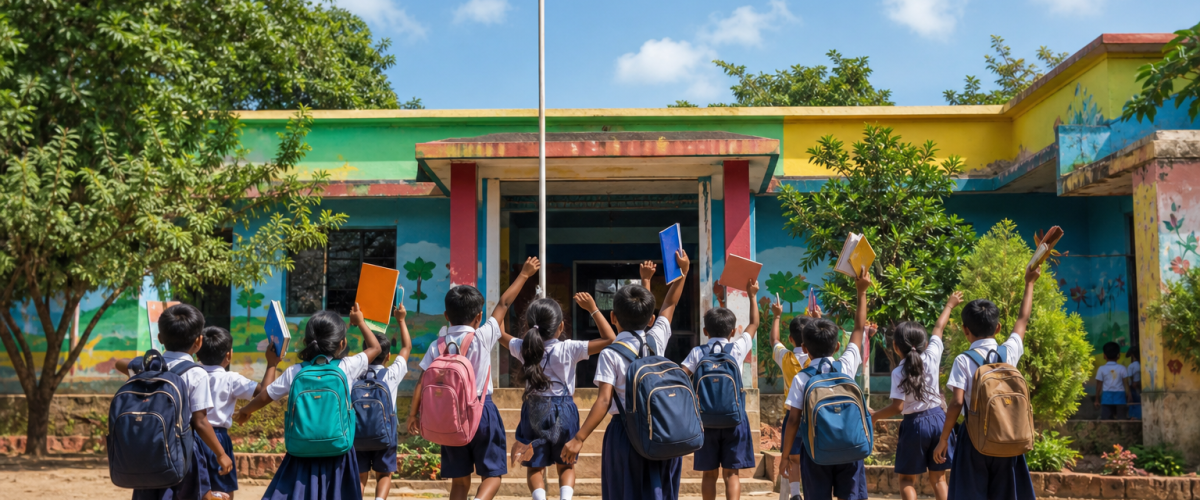
Odisha Chief Minister Mohan Charan Majhi on Friday made a landmark announcement of free education from kindergarten to post-graduation (KG to PG) for students from economically weaker sections, as the BJP government in the state completed two years in office. The announcement, made during a special ceremony in Bhubaneswar, marks one of the most ambitious education reform promises by any Indian state government in recent memory.
The scheme aims to ensure that no student in Odisha is denied higher education due to financial constraints. Under the programme, eligible students will receive fully subsidised tuition, examination fees, and essential study materials across government and government-aided institutions at every level — from nursery through undergraduate and postgraduate degrees.
Who Benefits?
The free education programme targets students from economically weaker families, though the specific income threshold for eligibility is yet to be formally defined. State officials indicated that the scheme will likely use existing Below Poverty Line (BPL) criteria as a baseline, with possible extensions to families earning below ₹2.5 lakh per annum.
CM Majhi emphasised that the programme is designed to break the cycle of poverty through education. “A child’s right to learn should not be limited by their parents’ income,” he said during the announcement. “This government believes that education is the most powerful tool for social transformation, and we will ensure that every child in Odisha can access it.”
Scope and Implementation
The scheme covers all government schools, colleges, and universities in Odisha, as well as government-aided private institutions. Students enrolled in professional courses such as engineering, medicine, and law at state institutions will also be eligible, significantly expanding access to high-demand career pathways for underprivileged students.
The state government is planning to implement the scheme in phases. The first phase, covering primary and secondary education (KG to Class 12), is expected to be operational from the upcoming academic session. The higher education component (undergraduate and postgraduate) will follow in the next academic year, giving the government time to build the necessary administrative infrastructure.
Officials estimate that the programme will benefit approximately 15-20 lakh students across the state, with an annual budget allocation expected to be in the range of ₹3,000-4,000 crore. The funding will be sourced from a combination of state budget allocations and central government education schemes.
BJP’s Two-Year Report Card
The education announcement came as the BJP government highlighted its achievements during its first two years in power. The party swept to power in Odisha in 2024, ending the Biju Janata Dal’s 24-year reign under Naveen Patnaik and installing Mohan Charan Majhi — a tribal leader from the Santhal community — as the state’s first BJP Chief Minister.
Among the key achievements highlighted by the government were significant improvements in road infrastructure, with over 12,000 kilometres of new and upgraded roads completed; expansion of piped water supply under the Jal Jeevan Mission, reaching an additional 25 lakh rural households; and the launch of several new industrial corridors aimed at creating employment opportunities in the state.
The government also pointed to improvements in the mining sector, where streamlined licensing procedures have attracted new investment, and in the healthcare sector, where 150 new health sub-centres have been established in tribal and remote areas. The state’s GDP growth rate has exceeded 8% in both years, outperforming the national average.
Education Landscape in Odisha
Odisha’s education sector has historically faced challenges. While the state has made significant progress in improving primary school enrolment rates — now exceeding 95% — retention rates at the secondary and higher secondary levels remain below the national average. The dropout rate, particularly among students from ST/SC communities and rural areas, has been a persistent concern.
Higher education access is even more skewed. Odisha’s Gross Enrolment Ratio (GER) in higher education stands at approximately 22%, significantly below the national average of 28.4% and far from the National Education Policy 2020’s target of 50% by 2035. Financial constraints are consistently cited as the primary reason for students not pursuing higher education.
The free KG-to-PG scheme directly addresses this barrier. By removing the financial burden entirely, the government hopes to dramatically increase the GER and create a more educated, skilled workforce that can drive Odisha’s economic transformation.
Comparisons With Other States
Several Indian states have implemented versions of free education programmes, but few have attempted the comprehensive KG-to-PG scope that Odisha is proposing. Tamil Nadu and Kerala have long offered heavily subsidised higher education, contributing to their relatively high literacy rates and human development indicators.
Rajasthan under the previous Congress government had announced free education up to the postgraduate level in government institutions, though the scheme faced implementation challenges. Andhra Pradesh’s Jagananna Vidya Deevena scheme provided fee reimbursement to eligible students in both government and private institutions.
Odisha’s scheme distinguishes itself by covering the entire educational journey — from kindergarten through post-graduation — in a single, unified programme. If successfully implemented, it could serve as a model for other states seeking to democratise access to education.
Challenges Ahead
While the announcement has been widely welcomed, education experts have flagged potential challenges. The most significant is ensuring that the quality of education in government institutions matches the ambition of the access programme. Free education is only truly transformative if the institutions delivering it are adequately funded, staffed, and equipped.
Teacher shortages in government schools and colleges remain a chronic problem in Odisha, as in most Indian states. The government will need to undertake a massive recruitment drive to fill thousands of vacant teaching positions if the scheme is to deliver on its promise. Infrastructure upgrades — including modernising classrooms, laboratories, and libraries — will also be essential.
Nevertheless, the announcement has been widely praised as a bold, progressive step. As Odisha’s BJP government enters its third year, the free education scheme could become its signature legacy — and a potential game-changer for millions of students across the state.
Also Read
- Aviation Fuel Prices Rise 10% in India — Government Launches Price Stabilisation Scheme at Rs 115 Per Litre for Airlines
- New West Bengal CM Shubhendu Adhikari Begins Reversing Mamata Banerjee’s Key Policies — BJP Government’s First Major Moves
- West Bengal BJP Cabinet Expansion — 35 MLAs Take Oath as Ministers in Suvendu Adhikari Government, Total Strength Rises to 41
- OpenAI Signs First National Government Deal With Malta to Give Every Citizen Free Access to ChatGPT Plus for One Year
- West Bengal Governor Dissolves State Assembly After Mamata Banerjee Refuses to Resign as BJP Prepares to Form Government