Delhi HC Questions Telegram Ban: ‘How Can Rights of 150 Million Users Be Curtailed?’ — Verdict Reserved

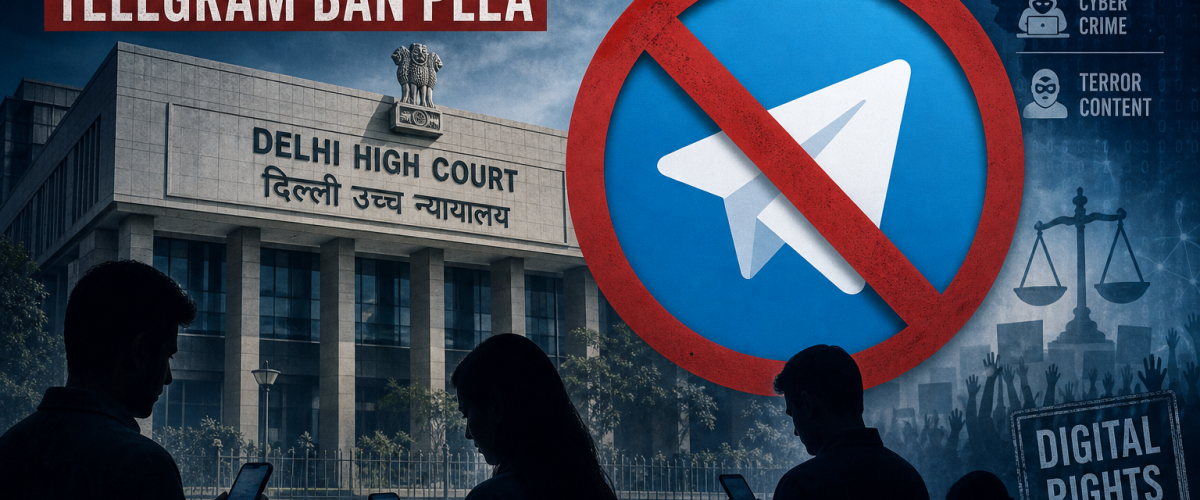
The Delhi High Court has reserved its verdict on Telegram’s challenge to the Indian government’s decision to temporarily block the messaging platform ahead of the NEET-UG 2026 re-examination on June 21, with the Court sharply questioning how the rights of nearly 150 million Indian users could be curtailed based on concerns about potential misuse by a few. The hearing, before a vacation bench of Justice Tejas Karia, has become a landmark test case for digital rights, platform governance, and the limits of state power in India’s evolving internet regulation landscape.
The government’s order — which restricts access to Telegram across India until June 22 — was issued to prevent the circulation of leaked question papers through the platform’s encrypted channels, following allegations that the original NEET-UG 2026 exam was compromised through Telegram-based distribution of papers. Telegram has challenged the ban as disproportionate, unconstitutional, and technically ineffective.
The Court’s Key Questions
Justice Karia’s observations during the hearing signal the Court’s concerns about the breadth and proportionality of the government’s action:
“How can the rights of 150 million users be curtailed?” — The Court questioned whether a blanket ban on a platform used by 150 million Indians is a proportionate response to the risk of exam paper leaks, given that the overwhelming majority of users have no connection to examination fraud.
Related: India-Bangladesh Border Tensions Rise After Stone-Pelting Standoff at Meghalaya Frontier
Proportionality: The Court examined whether less restrictive alternatives — such as blocking specific channels or requiring Telegram to cooperate with takedown requests — could achieve the government’s objective without affecting all users. This line of questioning draws on the proportionality doctrine established in the landmark Anuradha Bhasin case regarding internet shutdowns in Kashmir.
Technical Effectiveness: The Court also considered whether the ban would actually prevent paper leaks, given that users can circumvent platform-level blocks through VPNs, alternative platforms, and other technical means. If the ban is not effective at achieving its stated purpose, the justification for the restriction is weakened.
Telegram’s Arguments
Telegram, represented through Indian legal counsel, made several arguments against the ban:
The platform argued that it has consistently cooperated with Indian authorities on content takedown requests and that a blanket ban is not necessary when targeted enforcement mechanisms are available. Telegram also pointed to the impact on businesses, educators, news organisations, and community groups that rely on the platform for legitimate purposes.
The company’s CEO, Pavel Durov, had earlier made headlines by accusing Reliance Jio of BGP hijacking to implement the ban — an allegation that added a corporate dimension to the legal dispute. While the Court did not address the BGP hijacking claim directly, it forms part of the broader narrative about how India’s digital regulation is being implemented in practice.
The Government’s Defence
The government defended the ban as a temporary, emergency measure necessary to protect the integrity of the NEET re-examination, which will be taken by approximately 22 lakh students across the country. Officials argued that the NEET paper leak of 2024 — which led to nationwide protests and Supreme Court intervention — demonstrated the severity of the threat and the need for decisive preventive action.
The government also argued that the ban is limited in duration (until June 22, one day after the exam) and therefore imposes a minimal burden on users compared to the harm that a paper leak would cause to millions of medical aspirants.
Digital Rights at Stake
The Telegram ban case raises fundamental questions about the Indian government’s authority to restrict access to communication platforms. India has a history of internet shutdowns — it leads the world in the number of internet shutdowns ordered annually — and the courts have been gradually developing a jurisprudence that limits government power by requiring proportionality, necessity, and temporal limitations.
The Delhi HC’s verdict, when it comes, could set important precedents for how India regulates access to digital platforms. If the Court finds the ban disproportionate, it could constrain future government actions against messaging and social media platforms. If it upholds the ban, it could open the door to broader platform restrictions in the name of examination security — a precedent with significant implications for digital rights in India.
For the 150 million Telegram users in India, the verdict is both immediate and symbolic: immediate because it determines whether they regain access to their platform before the weekend, and symbolic because it will signal whether Indian courts are willing to protect digital rights even in the face of legitimate security concerns.
Also Read
- India Bans Telegram Before NEET Re-Test; CEO Pavel Durov Accuses Reliance of Global Sabotage
- Delhi High Court Allows Vinesh Phogat to Compete in Asian Games 2026 Wrestling Trials — Overrules WFI Controversial Eligibility Rules
- Delhi High Court Fines Google Rs 30 Lakh in Landmark Trademark Ruling — Hindware Keyword Case Could Reshape Digital Advertising in India
- Dabang Delhi Win PKL Season 12 Title With Thrilling 31-28 Victory Over Puneri Paltan — Ashu Malik Leads Historic Home Triumph
- Netanyahu Defies US-Iran Deal — Vows Israeli Forces Will Stay in Lebanon Buffer Zone Indefinitely