Himanta Biswa Sarma Elected as Assam Chief Minister for Second Term as BJP-Led NDA Secures Two-Thirds Majority in 126-Member Assembly

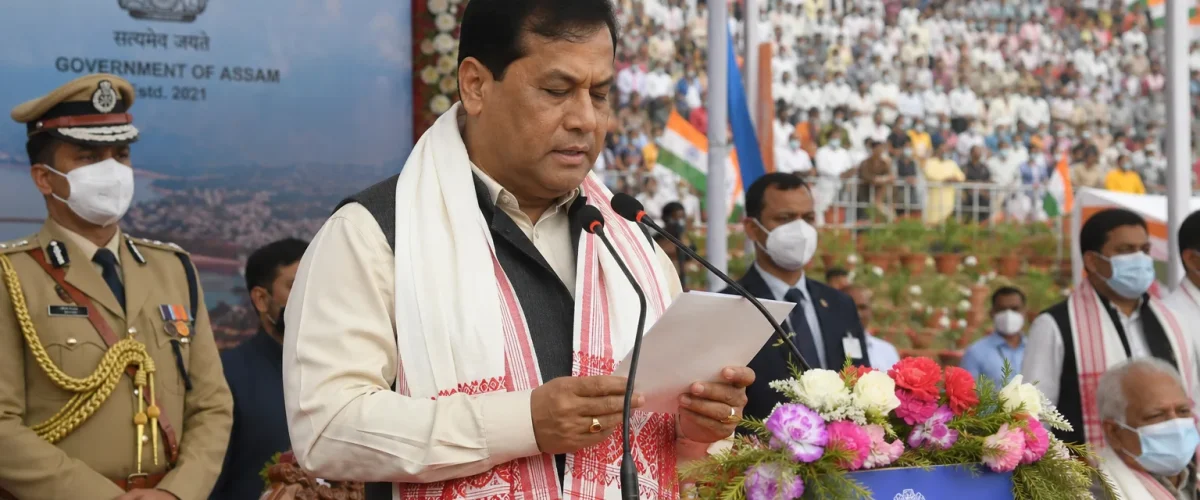
Himanta Biswa Sarma is set to return as the Chief Minister of Assam for a second consecutive term after being unanimously elected as the leader of the BJP-led National Democratic Alliance (NDA) in the state assembly on Sunday. The 57-year-old politician, who has led the northeastern state since May 2021, will take the oath of office on May 12 at 11:40 AM at the Veterinary College Field in Khanapara, Guwahati, alongside members of his new Council of Ministers.
The ceremony marks the continuation of BJP’s dominance in Assam, where the party has now governed for three consecutive terms — a feat that was considered virtually impossible when the saffron party first won the state in 2016. The NDA’s sweeping victories across multiple states, including Bihar’s recent cabinet expansion, underscore the alliance’s growing dominance in Indian politics.
A Commanding Mandate
The BJP-led NDA secured a two-thirds majority in the 126-member Assam Legislative Assembly, winning 102 seats in an emphatic performance that exceeded most pre-election predictions. The BJP alone won a clear majority, with its alliance partners — including the Asom Gana Parishad (AGP) and the United People’s Party Liberal (UPPL) — adding to the coalition’s commanding numbers.
The election results were announced earlier this month, and Sarma had resigned along with his cabinet colleagues on Wednesday, paving the way for the formation of a new government. The BJP’s legislative party meeting in Guwahati on Sunday was a formality, with all MLAs unanimously choosing Sarma as their leader. Union Minister JP Nadda confirmed that the AGP had also extended its support to Sarma, completing the coalition formalities.
“Following the formal notification of the results of Assam Elections 2026 and to enable the formation of the new government, Dr Himanta Biswa Sarma tendered his resignation as Chief Minister along with that of the council of Ministers to Hon’ble Governor Shri Laxman Prasad Acharya today at Lok Bhawan,” the Chief Minister’s Office said in a post on X.
The Road to a Second Term
Sarma’s journey to a second term was marked by a campaign that focused heavily on development, identity politics, and the protection of Assamese culture. The incumbent chief minister leveraged his first-term achievements, including flood management initiatives, healthcare reforms, and anti-encroachment drives, to build a narrative of governance delivery that resonated with voters across the state.
The opposition, led by the Congress party and the All India United Democratic Front (AIUDF), failed to mount a coherent challenge. Congress, which once dominated Assam politics for decades, saw its seat share shrink further, continuing a decline that began with the BJP’s first victory in the state in 2016. The AIUDF, led by Badruddin Ajmal, also lost ground, with the party’s traditional Muslim vote bank showing signs of fragmentation.
The result is significant in the broader context of Indian politics. It represents the NDA’s “hat-trick” in Assam — three consecutive terms in a state that was once considered a Congress stronghold. Combined with the BJP’s historic victory in West Bengal, where Suvendu Adhikari recently took oath as the state’s first BJP Chief Minister, the party has now consolidated its grip on eastern India.
PM Modi Expected to Attend
The swearing-in ceremony on May 12 is expected to be a grand affair, with Prime Minister Narendra Modi confirmed to attend along with more than 40 Chief Ministers and Deputy Chief Ministers from NDA-ruled states. The event at the Veterinary College Field has been chosen to accommodate the massive gathering expected for the occasion, with security arrangements being coordinated by the Assam Police, CRPF, and SSB.
Modi’s presence at the ceremony is seen as a symbolic endorsement of Sarma’s leadership and a signal that the BJP views the northeastern region as a critical pillar of its national strategy. The Prime Minister has visited Assam multiple times during his tenure, and the state has been a major beneficiary of central government schemes under both the NDA government and Sarma’s state administration.
Challenges Ahead for Sarma 2.0
While the mandate is overwhelming, Sarma’s second term faces significant challenges. The state continues to grapple with annual flooding that displaces millions of residents along the Brahmaputra basin. The National Register of Citizens (NRC) exercise, which identified nearly 19 lakh people as non-citizens, remains unresolved, with the updated list yet to be finalized and the future of excluded individuals unclear.
Economic development is another pressing concern. Assam’s per capita income, while improving, remains below the national average, and the state needs sustained investment in infrastructure, education, and healthcare to close the gap. The wave of political change sweeping India — from Tamil Nadu to West Bengal to Assam — has raised voter expectations, and Sarma will need to deliver on promises of governance and development to maintain the BJP’s credibility.
Additionally, the ongoing West Asia oil crisis poses economic risks for Assam, which relies heavily on central transfers and is exposed to inflation pressures from rising fuel costs. Sarma has already indicated that his government will implement fuel subsidy measures for vulnerable populations, though the details are yet to be announced.
Cabinet Formation: Key Names to Watch
The composition of Sarma’s new cabinet is being closely watched. While the Chief Minister has not publicly disclosed his cabinet picks, political observers expect a mix of continuity and change. Key ministers from the first term, including those handling home, finance, and education portfolios, are expected to retain their positions, while new faces from the 2026 winning cohort may be inducted to reward electoral performers.
The AGP is expected to receive at least two cabinet berths as part of the coalition agreement, while the UPPL may get one. The allocation of portfolios will be a delicate balancing act, as Sarma must accommodate caste, tribal, and regional considerations while maintaining a cabinet capable of delivering on his governance agenda.
A Political Survivor’s Triumph
Sarma’s political journey is one of the most remarkable in contemporary Indian politics. A former Congress leader who served as a powerful minister under Tarun Gogoi’s government, he switched to the BJP in 2015 and quickly became the party’s most influential leader in the northeast. His ability to win elections, manage coalitions, and deliver governance has made him one of the most powerful regional leaders in the NDA ecosystem.
As he prepares to take oath for a second time on Monday, Sarma’s position within the BJP has never been stronger. The two-thirds majority gives him the legislative power to push through ambitious reforms, and the support of the central leadership ensures that resources and political capital will flow to Assam. Whether he can translate this mandate into transformative governance will define not just his legacy but also the BJP’s future in India’s northeast.

- Indian Army Gets New Chief as General Dwivedi Hands Over Command Amid Push for Indigenous Defence Tech - July 1, 2026
- Ayodhya Ram Temple Donation Scandal Deepens as Trustees Resign and SIT Arrests Eight - June 29, 2026
- Bengal Seven Weeks On: Modi’s Historic Win and the Questions That Won’t Go Away - June 28, 2026