BRICS NSA Meeting Concludes: Doval and Wang Yi Lead Talks on Counter-Terrorism and AI Security

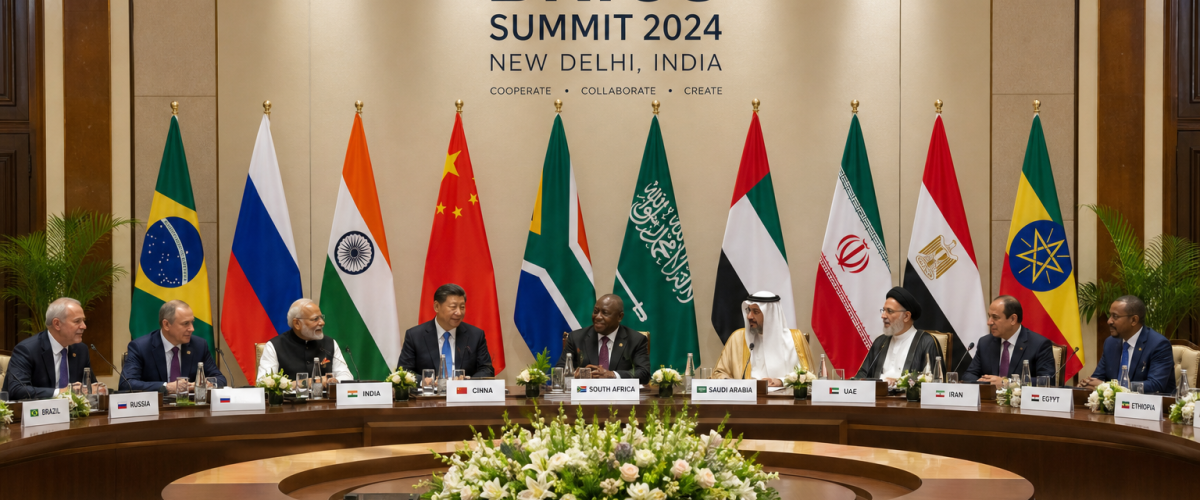
The BRICS National Security Advisers’ Meeting concluded its two-day session in New Delhi on Monday with a joint commitment to strengthen cooperation on counter-terrorism, cybersecurity, and the governance of artificial intelligence — outcomes that reflect both the ambition of India’s BRICS Chairship and the practical challenges of building consensus among ten nations with frequently divergent interests. National Security Adviser Ajit Doval chaired the closing session alongside Chinese Foreign Minister Wang Yi, Russian Security Council Secretary Sergei Shoigu, and security chiefs from all ten member states.
The meeting — one of the marquee events under India’s 2026 BRICS presidency — has produced a Delhi Declaration on Non-Traditional Security Challenges that establishes frameworks for intelligence-sharing, joint cyber-response protocols, and principles for the responsible development of AI-powered security technologies.
Key Outcomes
The Delhi Declaration covers three primary domains:
Counter-Terrorism Framework: The NSAs agreed to enhance the BRICS Counter-Terrorism Working Group’s mandate, including the establishment of a real-time intelligence-sharing mechanism for terror financing networks. The framework specifically addresses the exploitation of cryptocurrency and digital payment systems by terrorist organisations — a growing concern that requires coordinated international response.
Related: India-France Adopt Innovation Roadmap 2030 and Launch New Economic Security Dialogue
Cybersecurity Protocols: The declaration includes provisions for coordinated response to cyberattacks on critical infrastructure — power grids, financial systems, healthcare networks — that affect BRICS member states. The protocol establishes communication channels and response timelines designed to enable rapid collective action when member states face state-sponsored or non-state cyber threats.
AI Governance Principles: Perhaps the most forward-looking outcome, the declaration establishes BRICS principles for the responsible use of AI in national security. These include commitments to transparency in AI-powered surveillance systems, restrictions on fully autonomous weapons systems, and frameworks for addressing AI-generated misinformation.
The Doval-Wang Yi Dynamic
The bilateral interaction between Doval and Wang Yi was the most closely watched element of the summit:
Border Discussion: Sources indicated that Doval and Wang Yi held a separate bilateral meeting on the margins of the BRICS session, during which the India-China border situation in eastern Ladakh was discussed. While no specific breakthroughs were announced, the very fact that a senior-level border discussion took place within a multilateral framework represents a positive signal for the management of the relationship.
Strategic Balancing: India’s ability to simultaneously chair a meeting that included both China and Russia — while maintaining its partnerships with Western nations — underscored New Delhi’s unique diplomatic position. Doval’s chairing of the session positioned India as the indispensable convener of global security dialogue.
Russia and Iran’s Engagement
Russia’s Sergei Shoigu and Iran’s Deputy Secretary of the Supreme National Security Council Ghadir Nezamipour both participated actively in the discussions. Shoigu’s presence — despite Russia’s ongoing international isolation over Ukraine — highlighted BRICS’s role as an alternative diplomatic space where geopolitical rivals can engage on shared security concerns.
India’s BRICS Chairship
The successful conclusion of the NSA meeting strengthens India’s case for a permanent UN Security Council seat — a long-standing objective that the BRICS Chairship has been strategically designed to advance. The Delhi Declaration will be presented at the BRICS Leaders’ Summit later this year, where its recommendations will be considered for formal adoption at the heads-of-state level.
Also Read
- BRICS NSA Meeting Begins: Ajit Doval Chairs 10-Nation Security Summit in New Delhi
- BRICS NSA Meeting Tomorrow: India’s Biggest Security Dialogue Under Ajit Doval
- India to Host BRICS Security Advisers’ Meet: Ajit Doval Chairs June 22-23 Talks on Cyber Threats
- BRICS Agriculture Ministers to Meet in Indore — Five-Day Summit to Focus on Food Security, Smart Farming and AI in Agriculture
- US-Iran MOU Explained: What the Framework Deal Covers and Why It Matters for India’s Energy Security

- Indian Army Gets New Chief as General Dwivedi Hands Over Command Amid Push for Indigenous Defence Tech - July 1, 2026
- Ayodhya Ram Temple Donation Scandal Deepens as Trustees Resign and SIT Arrests Eight - June 29, 2026
- Bengal Seven Weeks On: Modi’s Historic Win and the Questions That Won’t Go Away - June 28, 2026